
Social skills are often the area where children with autism struggle most visibly — and where families feel most helpless. Turn-taking, waiting, making eye contact, starting a conversation, greeting someone — these skills do not come naturally to many children with autism.
But they can be taught. Systematically, step by step, using the right worksheets and the right methods.
Why Social Skills Must Be Explicitly Taught
Neurotypical children pick up social skills by watching others, imitating, and receiving social feedback. Children with autism often miss these signals entirely. For them, social skills must be broken down, named, practised, and reinforced explicitly — just like any academic skill.
Core Social Skills to Teach at Home
Requesting
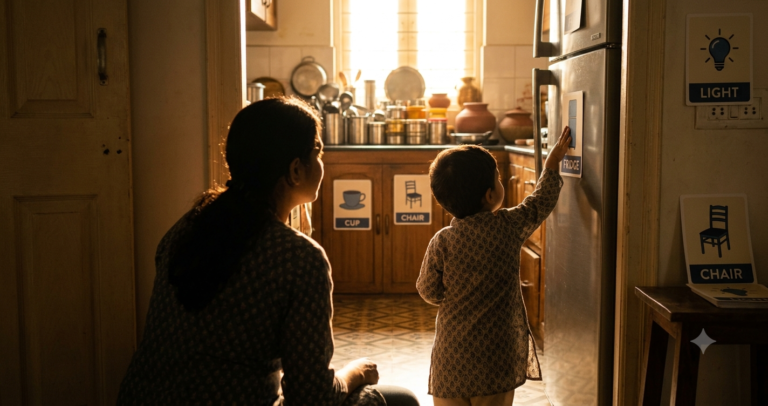
Learning to ask for what they want — using words, phrases, or communication symbols — is the most fundamental social skill. Before turn-taking, before greetings, a child must be able to make a request. Practise this at mealtimes, during play, and throughout the day.
Turn-Taking
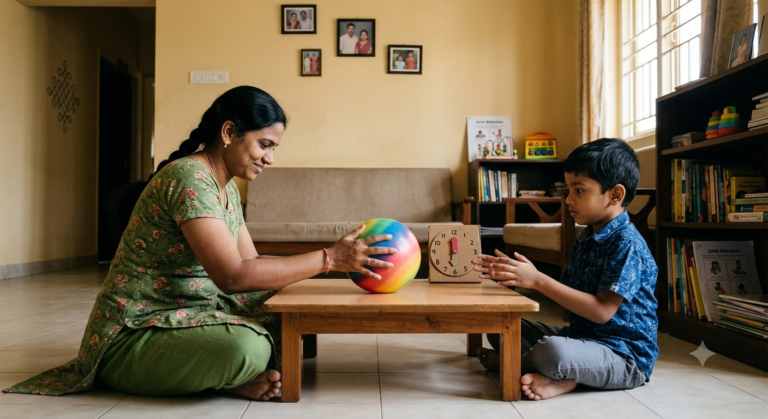
Playing a simple game, taking turns with an object, waiting for their turn in a conversation — these are teachable skills. Start with highly motivating activities where turn-taking leads to something your child wants.
Waiting
Waiting is a social skill, not just a behaviour issue. Teach it explicitly: “First wait, then get.” Start with very short waits (5 seconds) and build gradually over weeks.
Greetings
Saying hello, waving, saying goodbye — structured practice of greetings builds connection and social confidence. Indian-specific greetings (namaste, hello, aap kaise hain) should be included in any culturally appropriate curriculum.
Following Social Rules
Understanding that there are rules in social situations — don’t grab, use words, wait your turn — needs to be explicitly taught through social stories, role play, and consistent reinforcement.
How Structured Worksheets Help
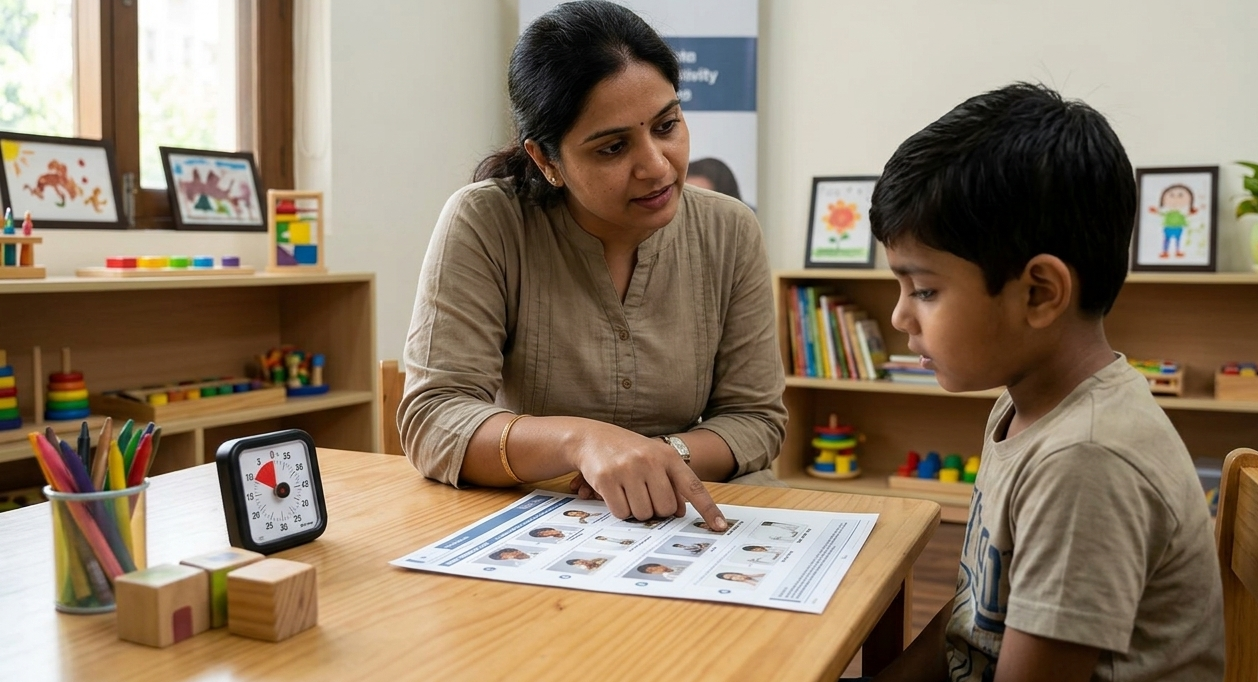
A well-designed social skills worksheet gives your child a visual, structured way to practise a social scenario before experiencing it in real life. It reduces anxiety by creating predictability. Your child knows what to expect and what to do.
Consistency is everything. The worksheet builds the understanding. Daily life provides the practice. Your prompting and encouragement provide the reinforcement.
Explore the Able Marga Social and Communication Skills curriculum at ablemarga.com.