Full-year structure
Units follow a deliberate sequence instead of leaving the adult to decide what comes next every week.
All four Level 1 subjects are live — structured printable PDFs for functional learning. Explore Level 1 →
A full-year structured curriculum for children with special needs aged 2 and up. Teach Life Skills, Functional Maths, Functional English and Social & Communication Skills through clear printable activities across six ability-based levels.
Level 1 is live in all four subjects. Made in India for home, school and therapy use worldwide.
It covers Life Skills, Functional Maths, Functional English and Social & Communication across six ability-based levels. Level 1 is live in all four subjects, with early activities allowing simpler response methods before later levels add tracing, writing and reading.
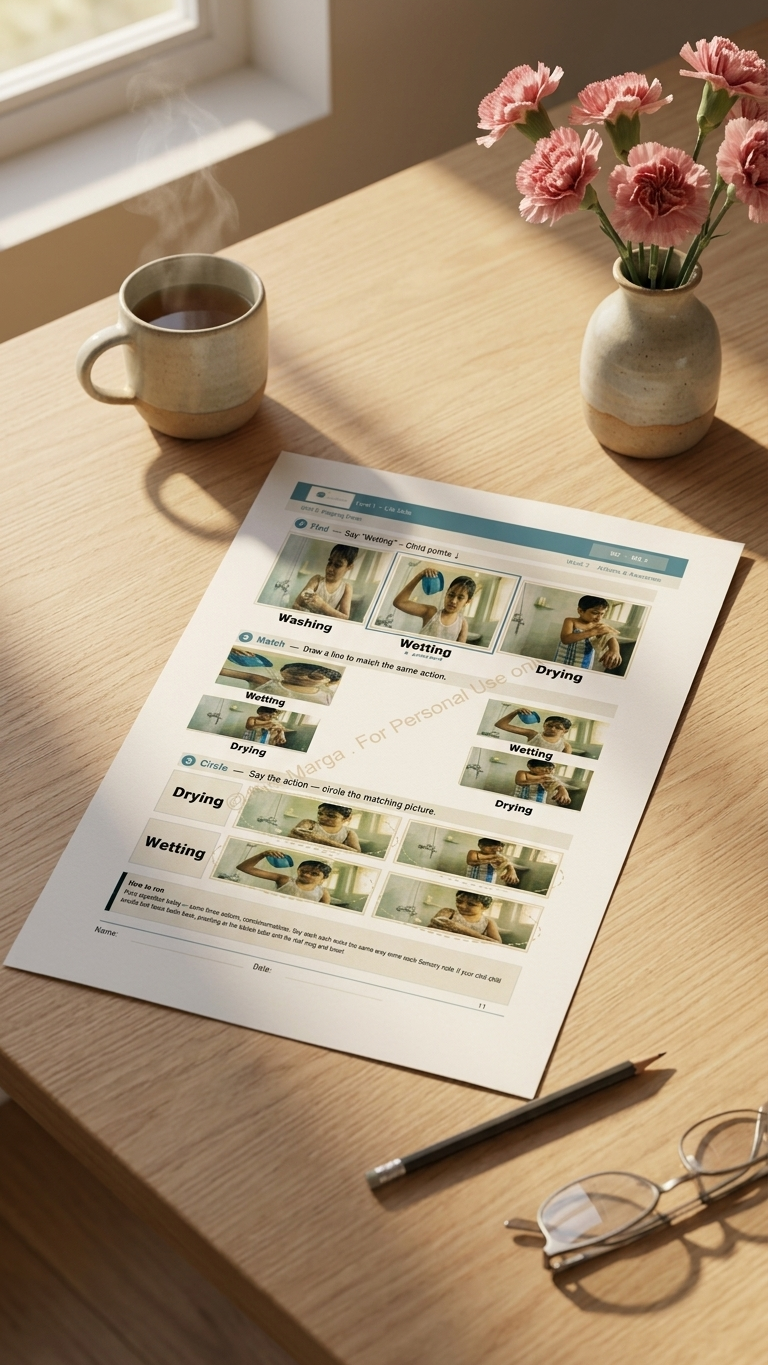
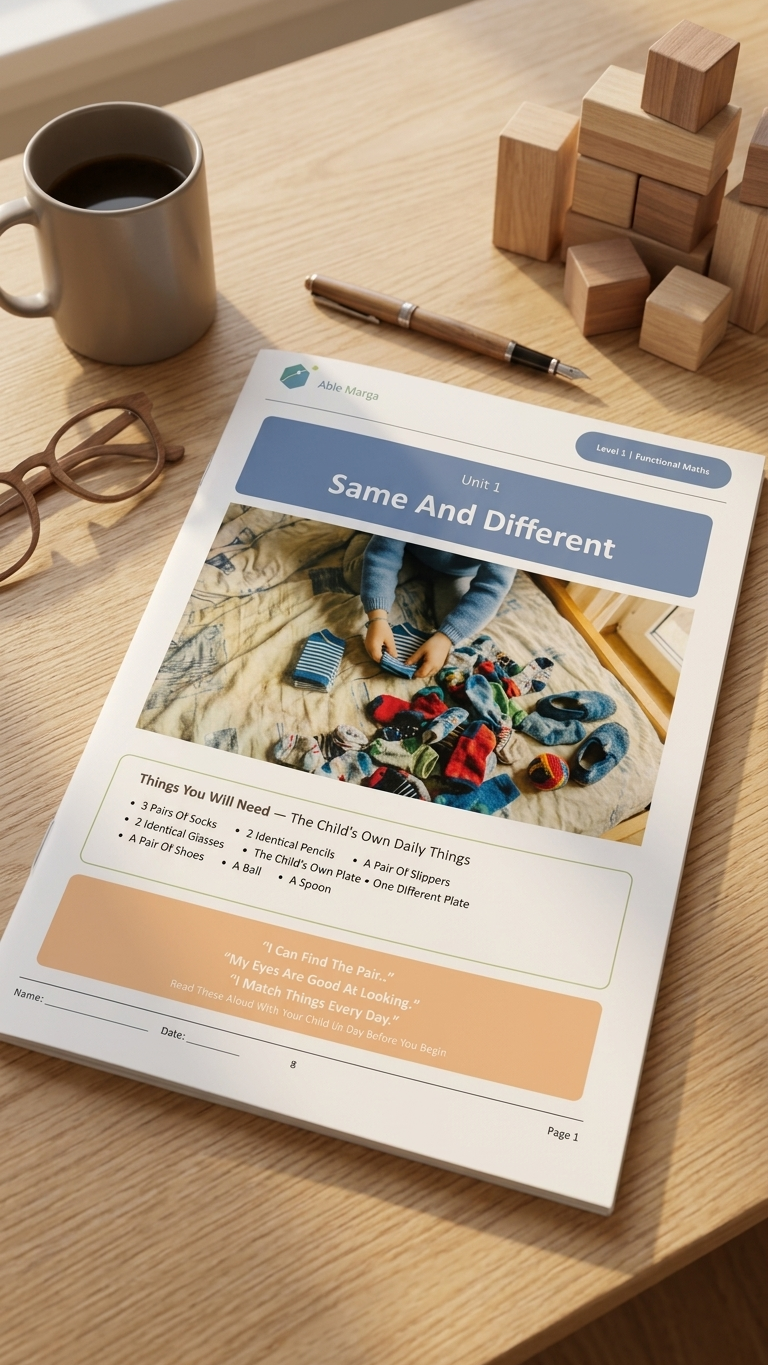

Able Marga creates structured printable curriculum for children with special needs, aged 2 and up. The worksheets cover Life Skills, Functional Maths, Functional English, and Social & Communication across six progression levels — a clear, step-by-step path that grows with the learner.
Each level builds on the last. Early worksheets can let a learner respond by pointing, matching, circling or placing a card. As confidence and ability grow, later levels can introduce tracing, writing and reading so the response demand develops gradually.
Everything is designed to be practical and ready to use: print at home or in the classroom, follow the built-in progression and practise useful skills one manageable step at a time.
Units follow a deliberate sequence instead of leaving the adult to decide what comes next every week.
Daily living, useful numeracy, functional literacy and everyday communication are taught as connected skills.
Choose a starting level for each subject from what the learner can currently do—not chronological age alone.
Digital resources can be prepared for short home, therapy, resource-room or classroom sessions.
Parents and professionals should be able to spend their time teaching—not endlessly hunting for a worksheet, adapting it, and wondering what should come next.

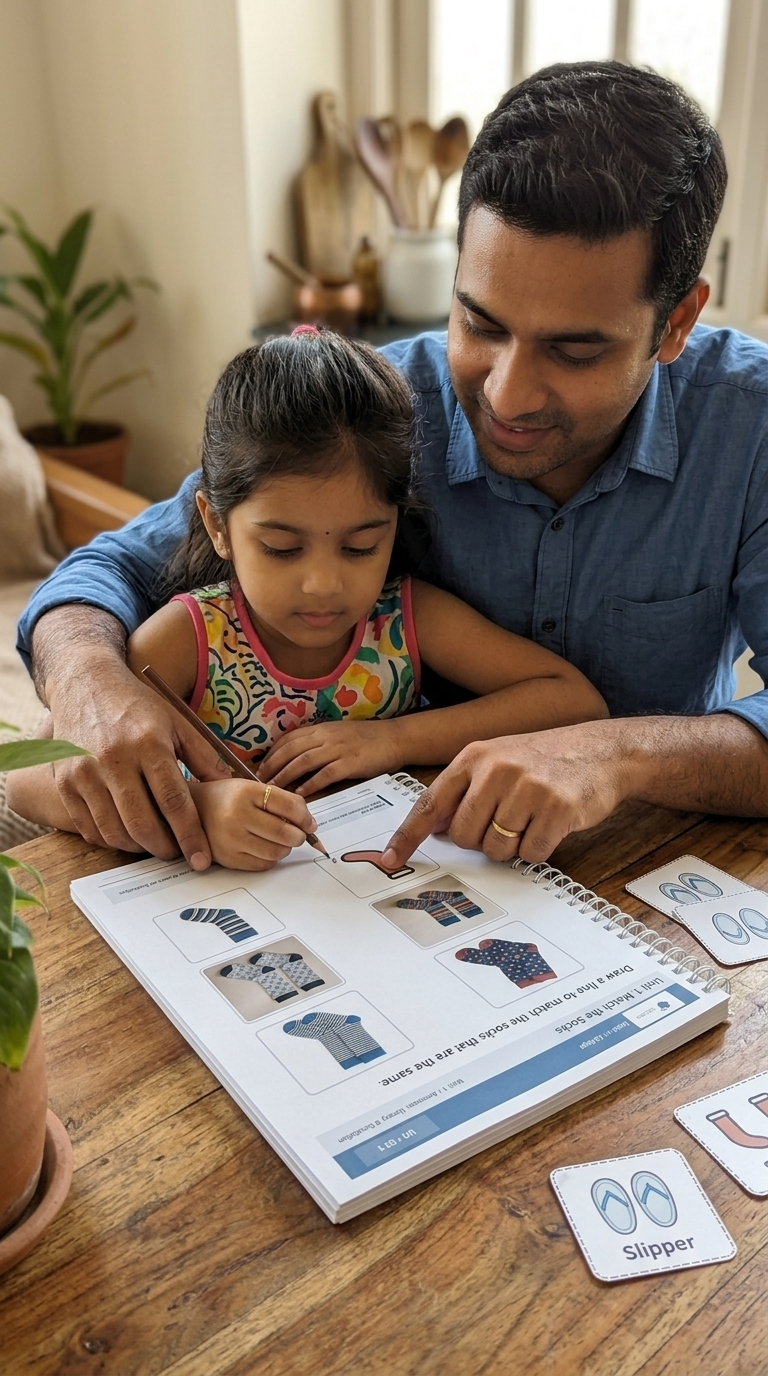

Finding something at the right ability level can take longer than teaching it.
Able Marga gives you a sequenced unit-by-unit path.Many printables show the task without explaining how to introduce it or reduce support.
Use structured prompts, repetition and gradual support reduction.Different formats and teaching language can make carryover harder to sustain.
A shared structure makes the learning target easier to recognise across settings.Without a consistent starting point and review routine, small gains can disappear inside everyday practice.
Repeat comparable activities and note response method, prompts and independence.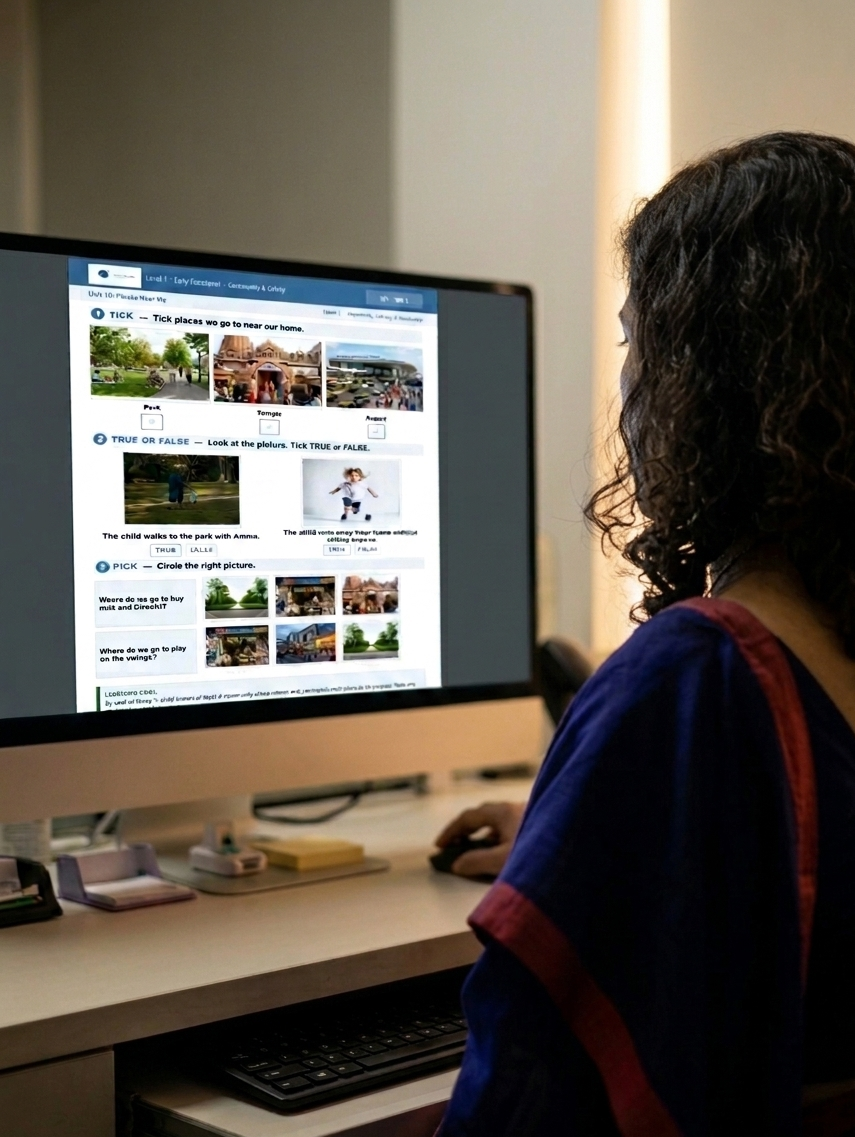
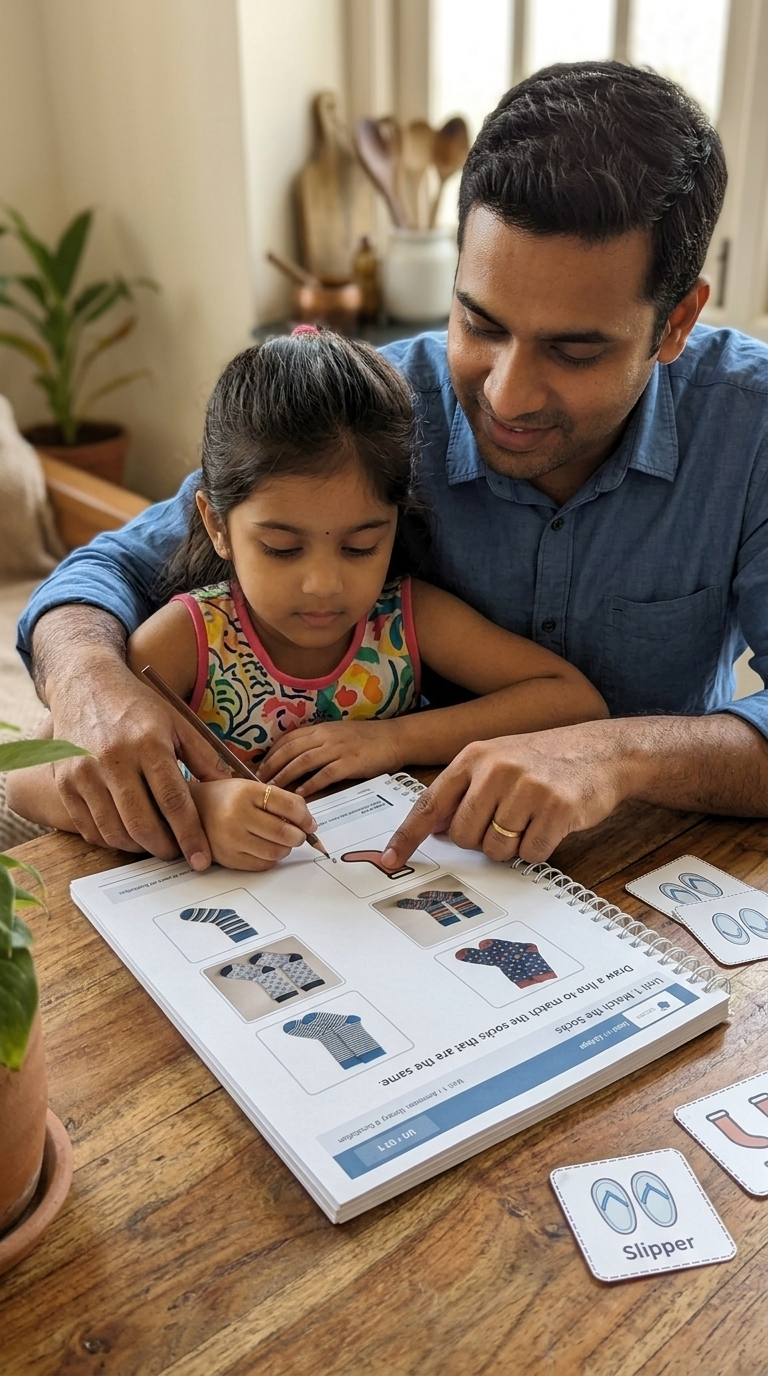
Able Marga was born from one mother’s search for a respectful, structured way to help her autistic son learn at his own pace.
My son, now 21 years old, is autistic. Like many parents of children with special needs, I spent years trying to help him fit into a traditional education system that was never designed for the way he learned. The pace was overwhelming, expectations were rigid, and much of the curriculum had little connection to the skills he needed for daily life.
As I searched for better ways to support him, I realised many families were facing the same challenge. Parents wanted practical, meaningful learning resources, but much of what was available felt too academic, too complicated or disconnected from everyday life.
Over the years, I have worked closely with children and adults with autism, cerebral palsy, intellectual disabilities and other developmental differences, while continuing my studies in Special Education. Able Marga grew from that combined experience—as a mother, a builder and a lifelong learner.
“My goal is simple: to create an ecosystem where families have choices for their special needs for them to lead a fully functional and fulfilling life beyond traditional academics.”SP · Founder, Able Marga
Each subject builds practical skills through a clear progression. Level 1 is live in all four subjects, and the same system can expand as future levels are released.
View the complete curriculum →
Level 1 live
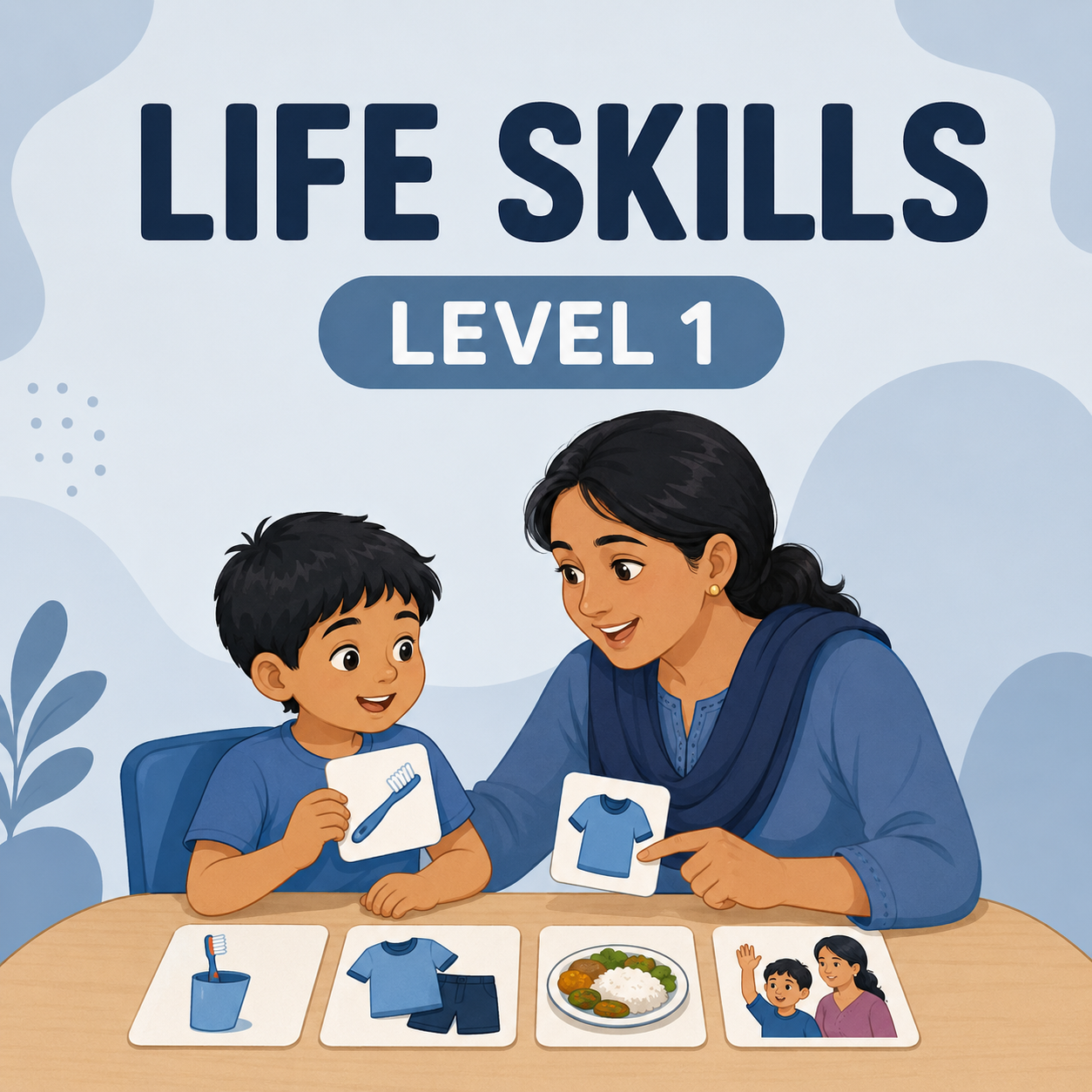
Routines, hygiene, meals, dressing, helping at home, safety, celebrations and familiar community situations.
Explore Life Skills →
Level 1 live
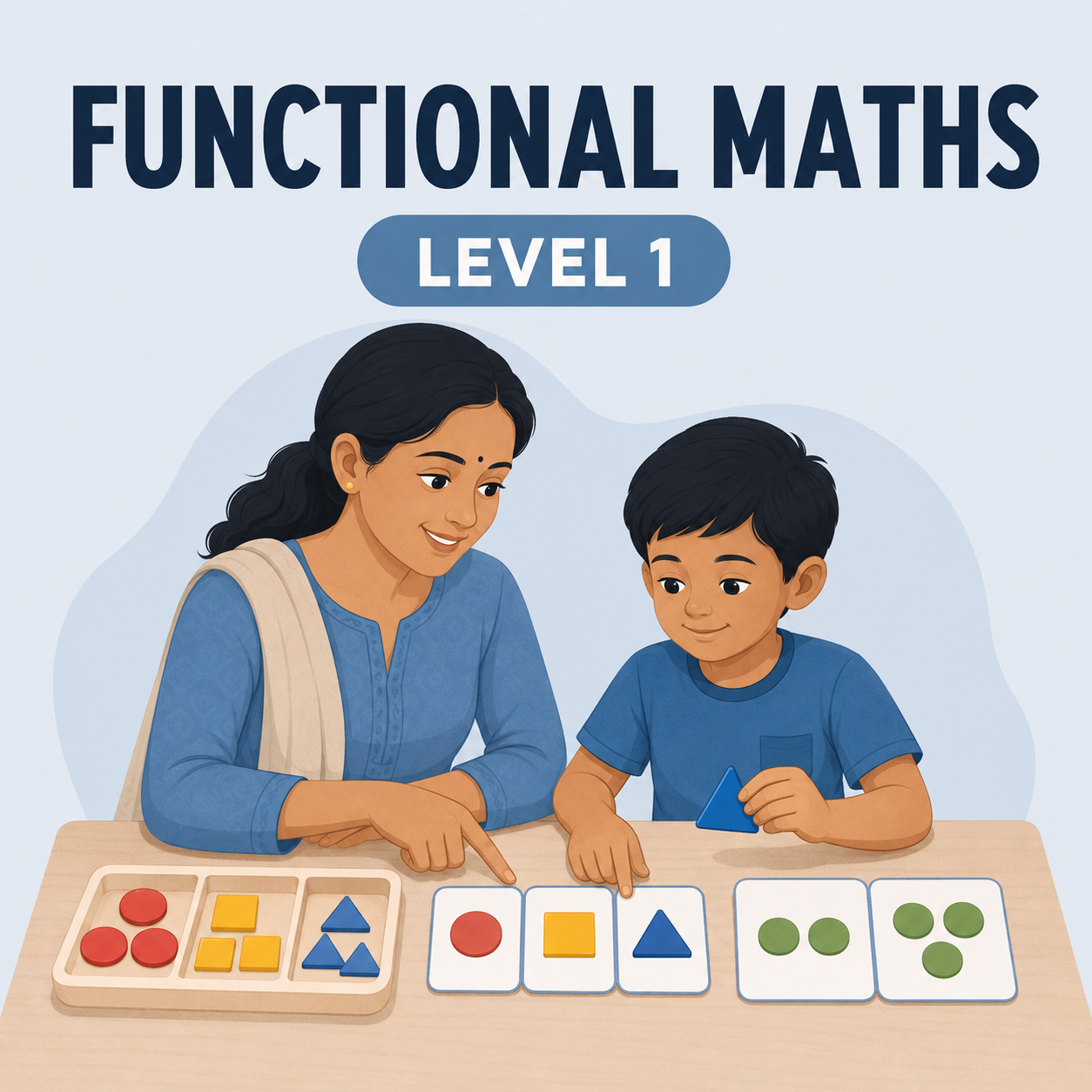
Matching, sorting, colour and size concepts, counting real objects, number recognition, and recognising coins and notes.
Explore Functional Maths →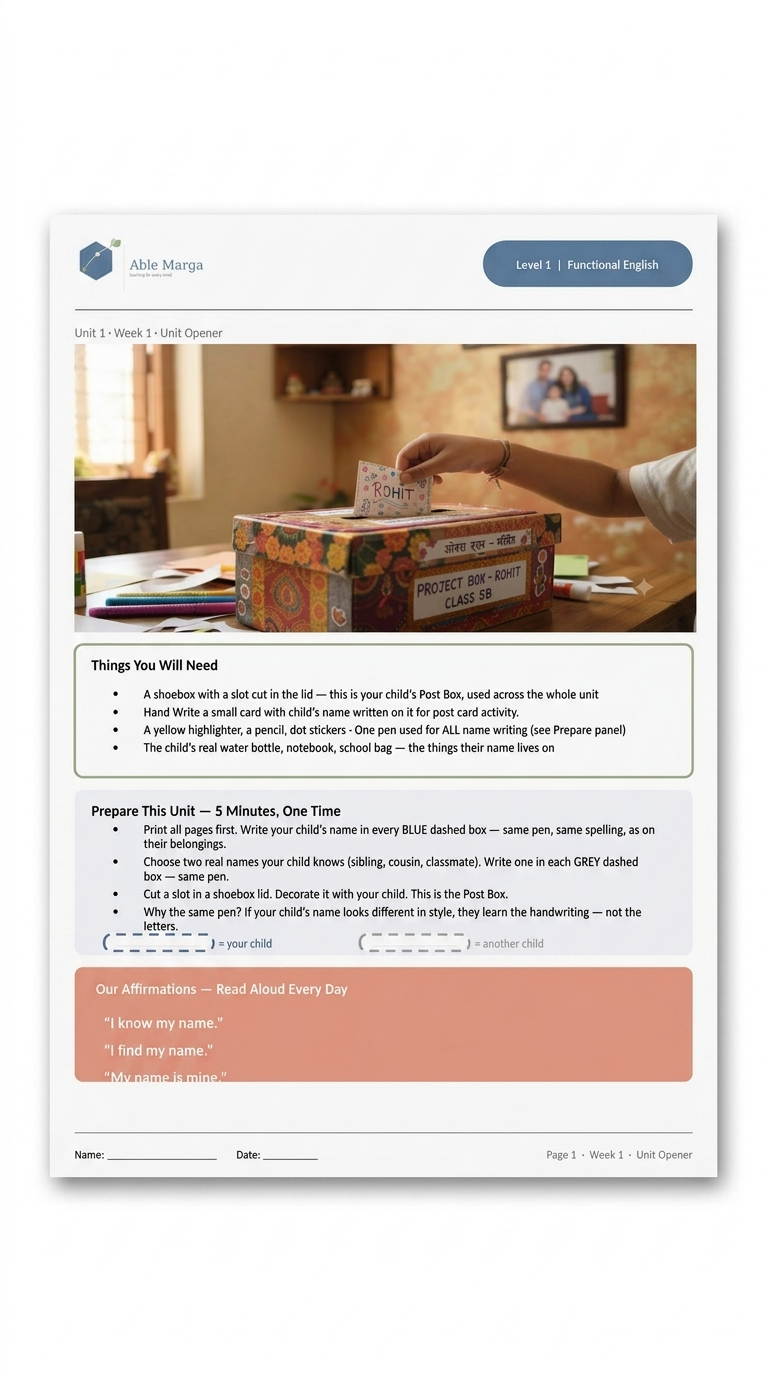 Level 1 live
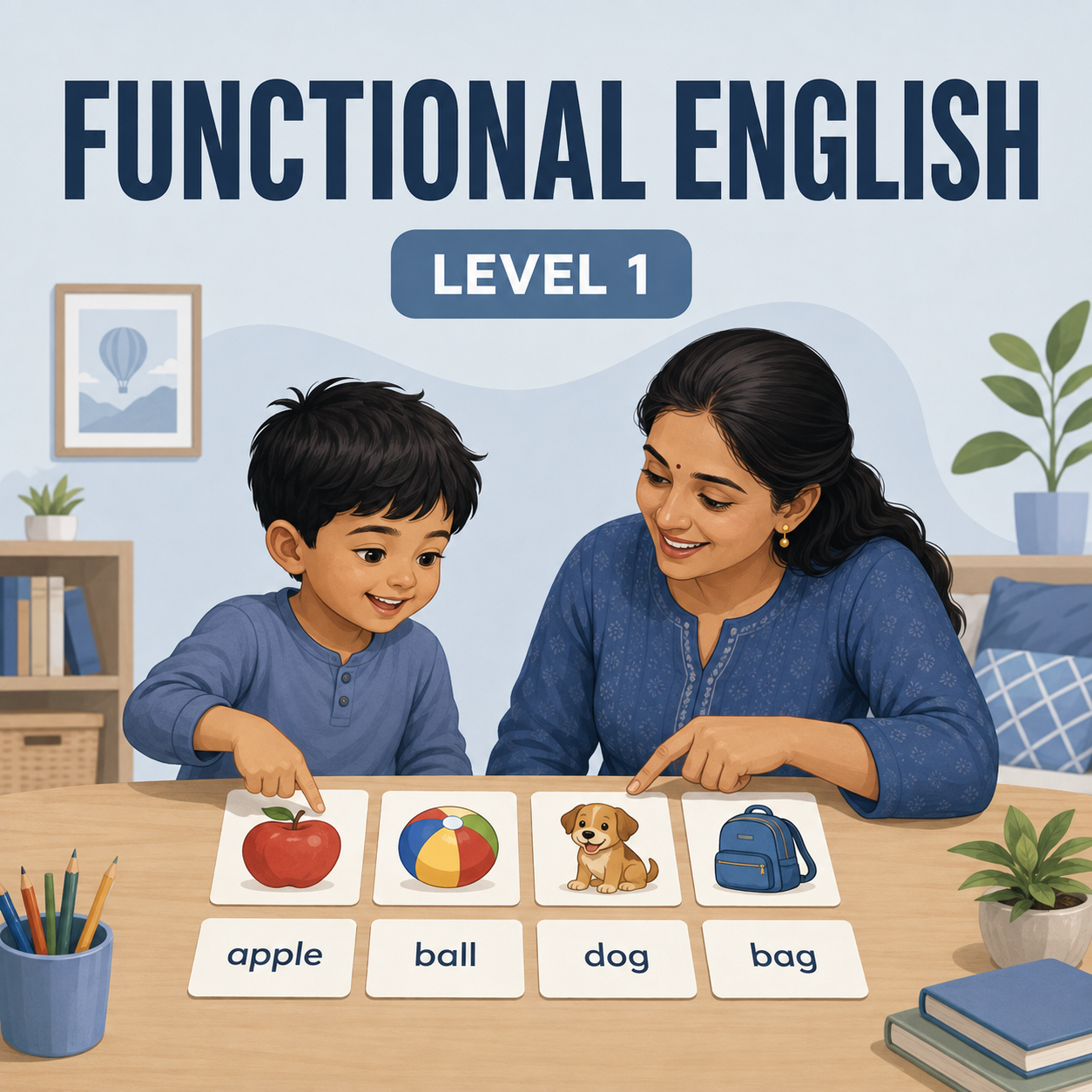
Picture-to-word matching, familiar names, sight words, action words, public signs, symbols and practical vocabulary.
Explore Functional English →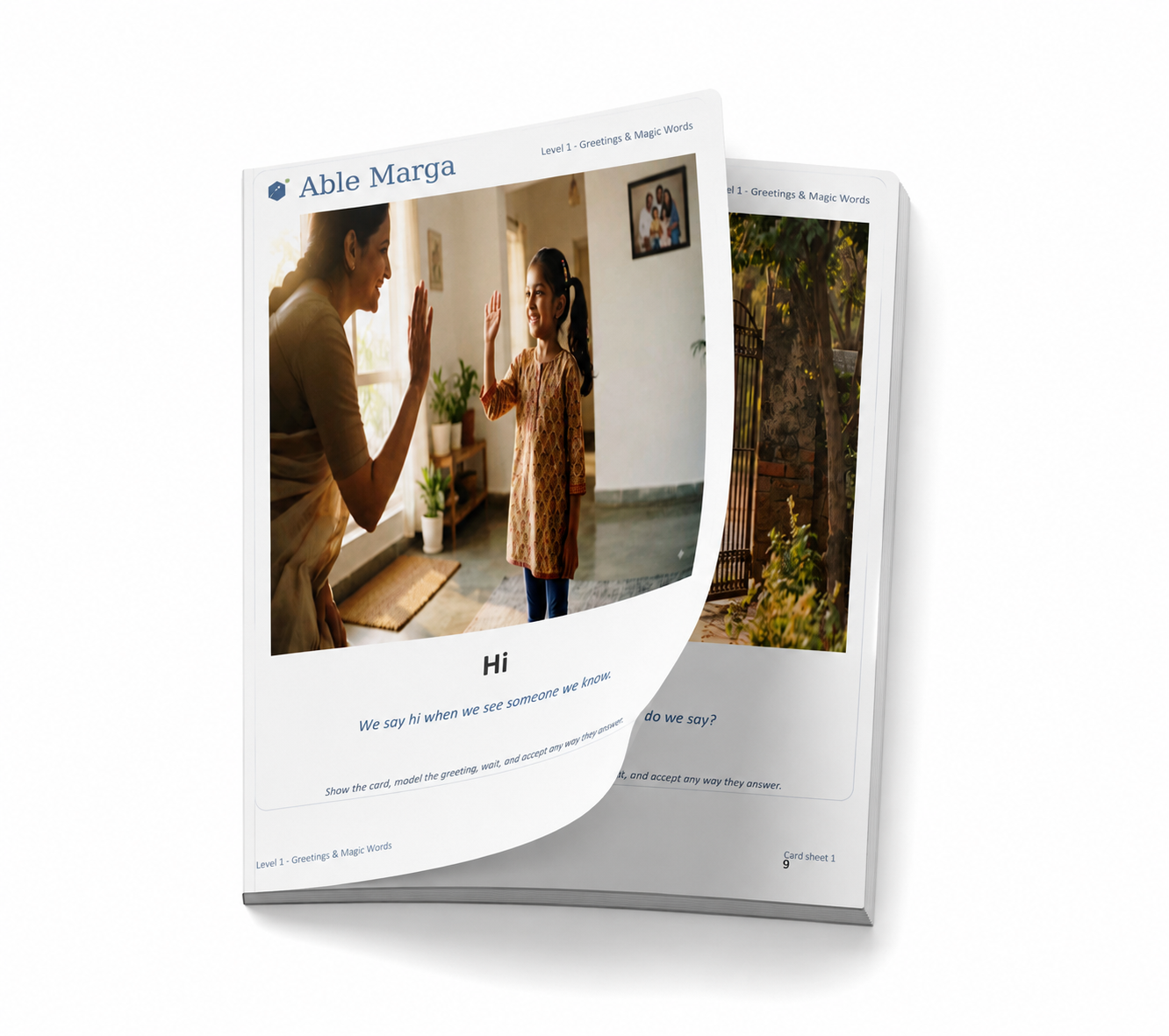 Level 1 live
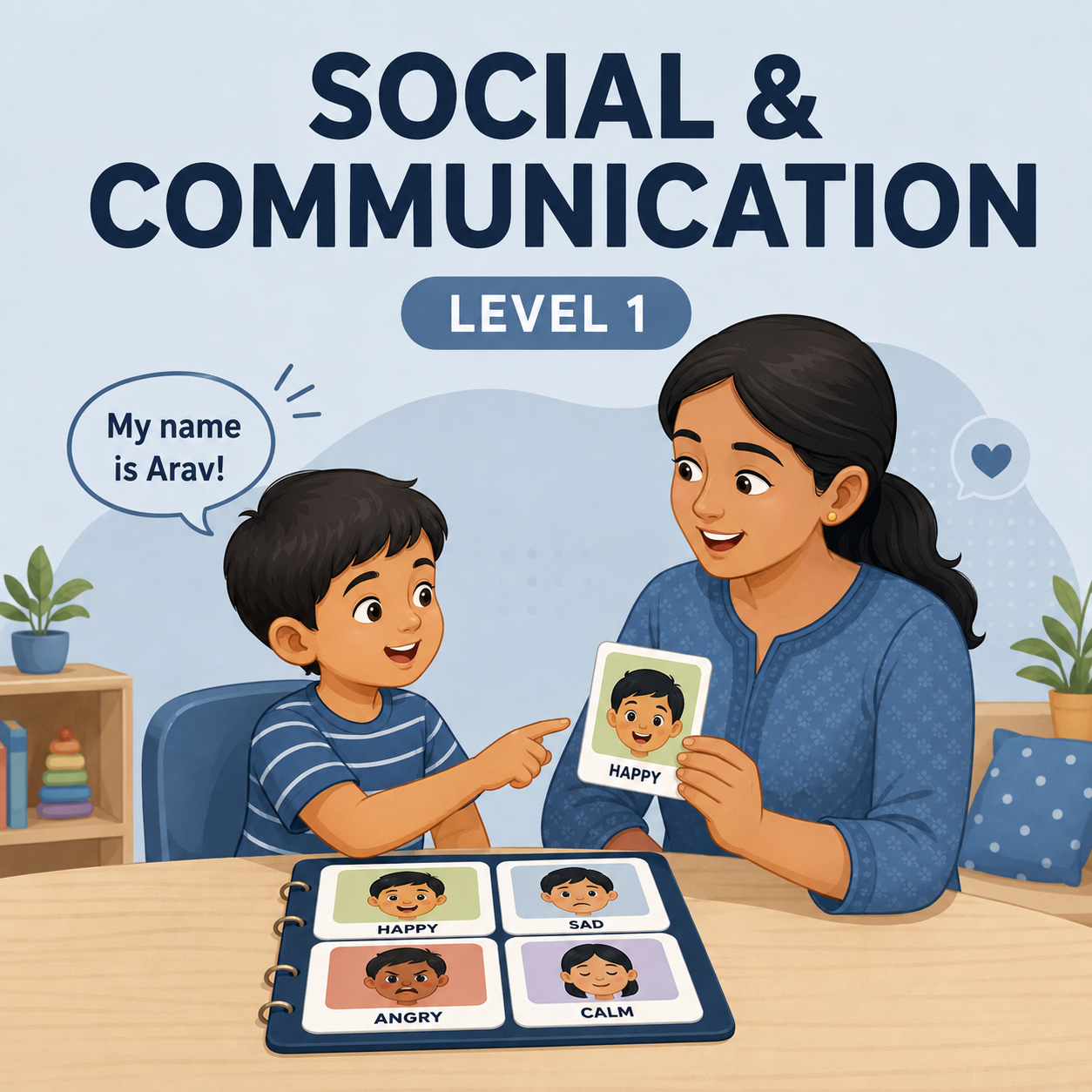
Greetings, requests, yes/no choices, feelings, WH questions, sequencing, turn-taking and AAC-friendly communication.
Explore Social & Communication →All four Level 1 subjects are live. Choose one current priority or build a connected foundation across daily living, numeracy, literacy and communication.
See the full shop →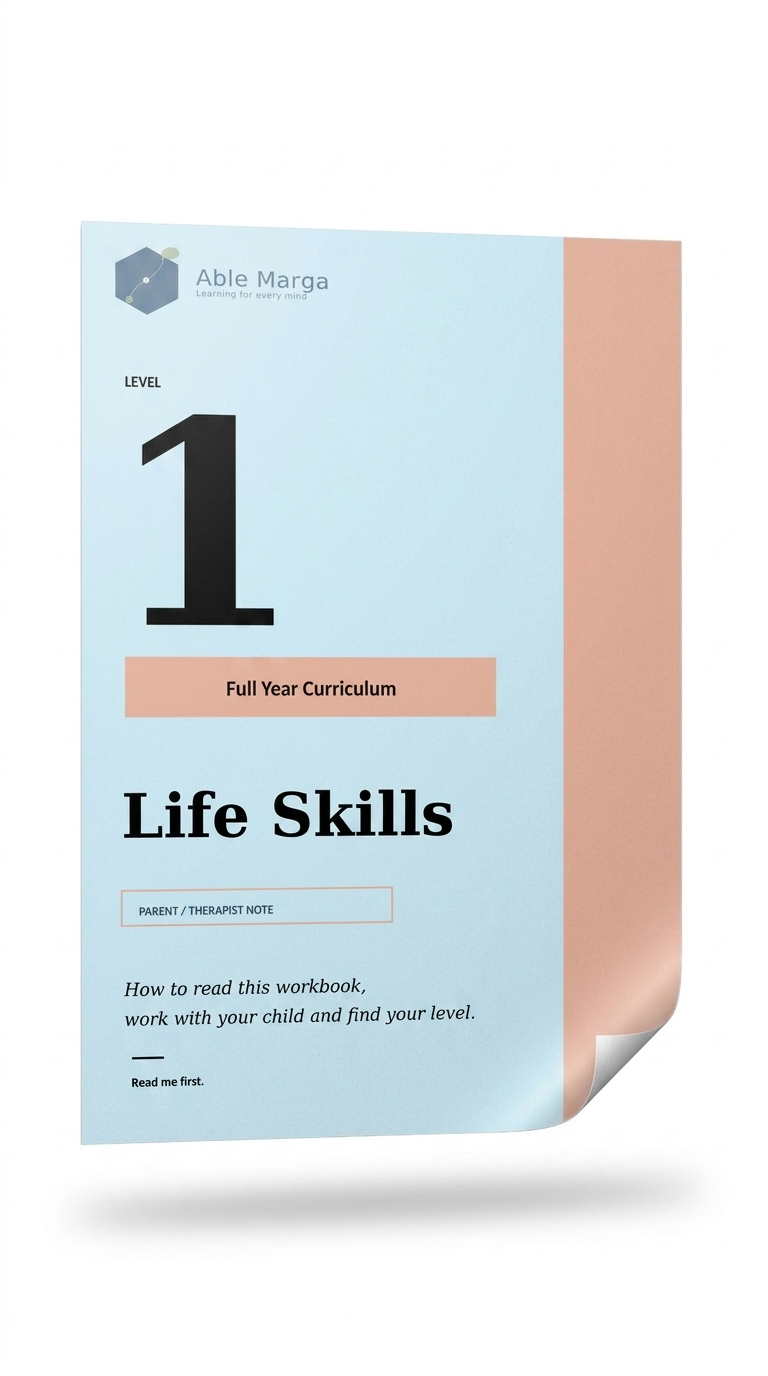 Available now
Daily routines · independence
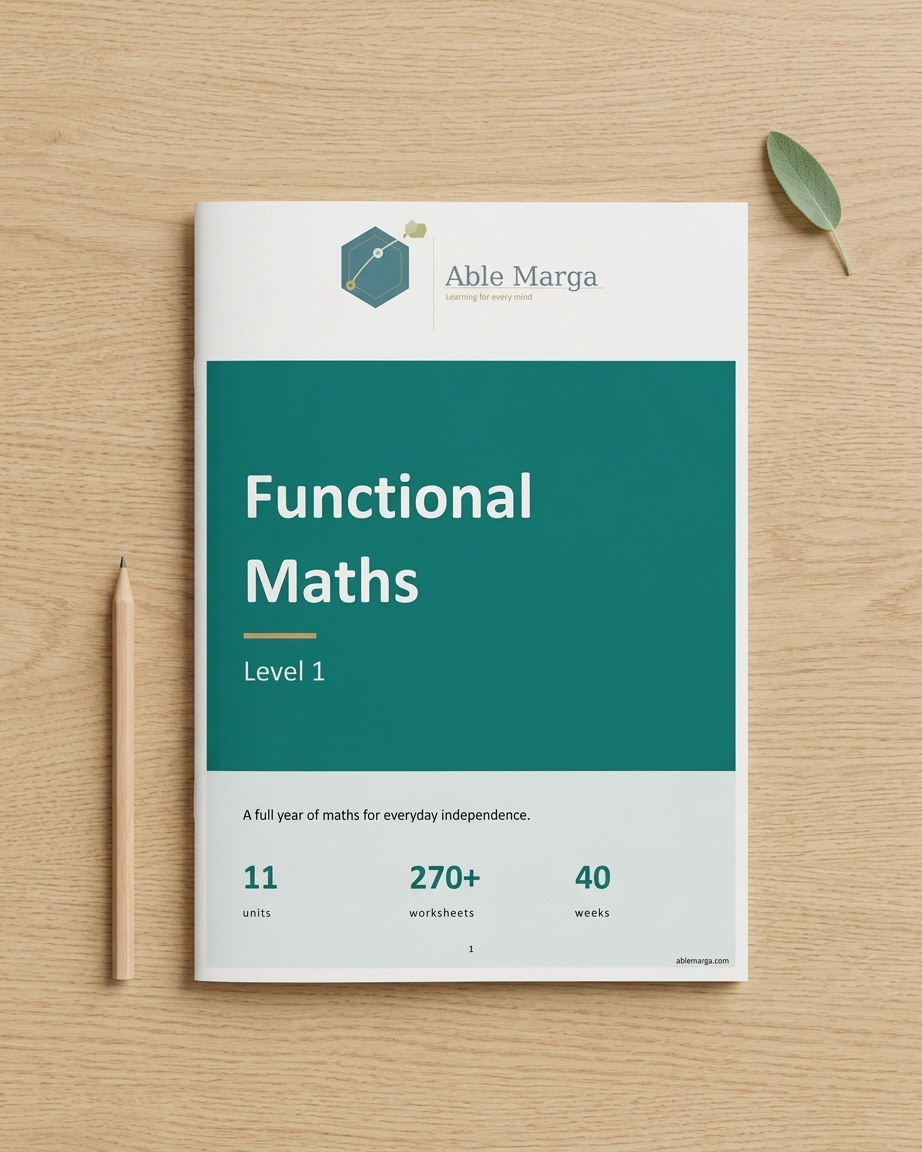 Available now
Counting · money · practical numeracy
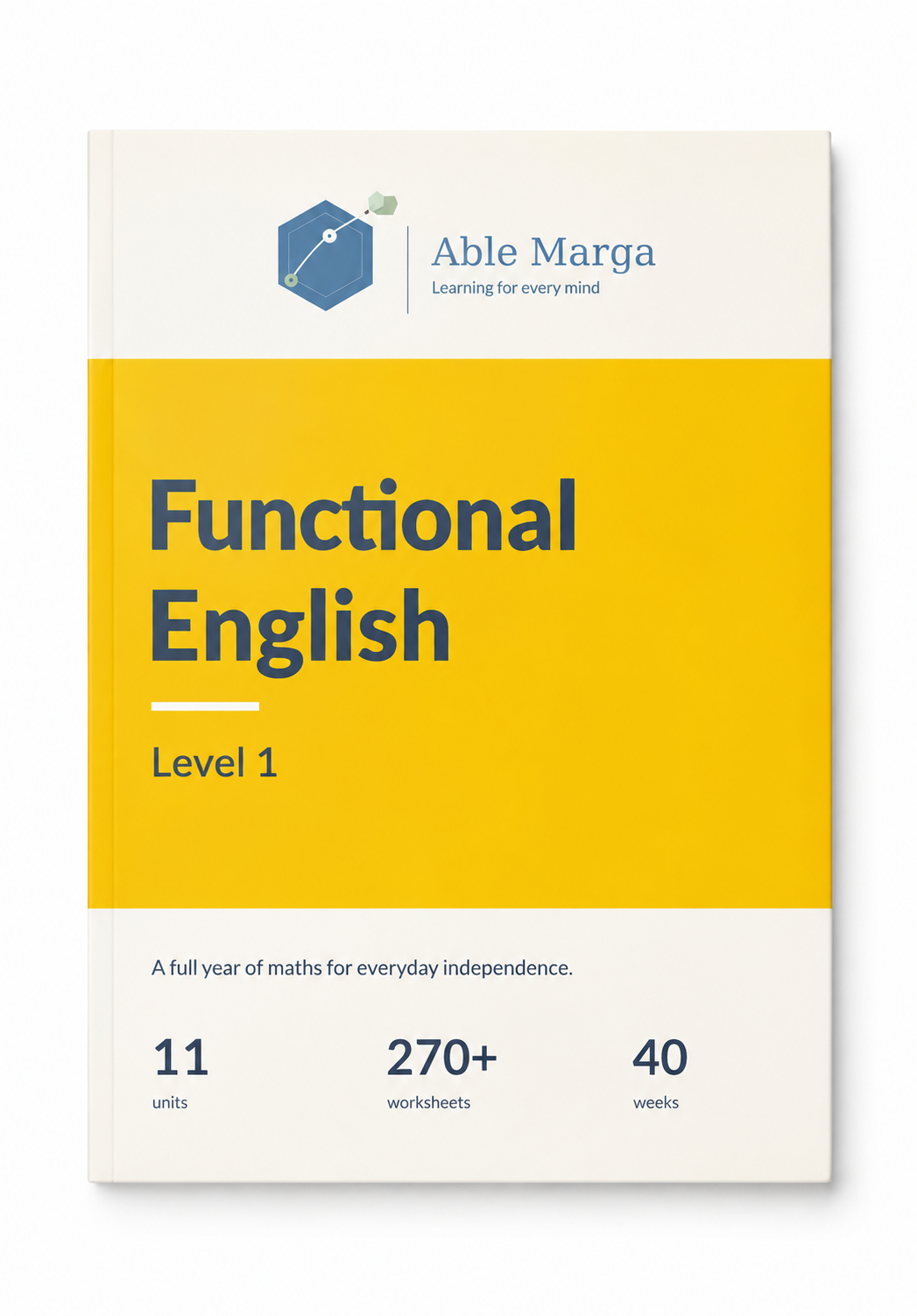 Available now
Useful words · signs · picture reading
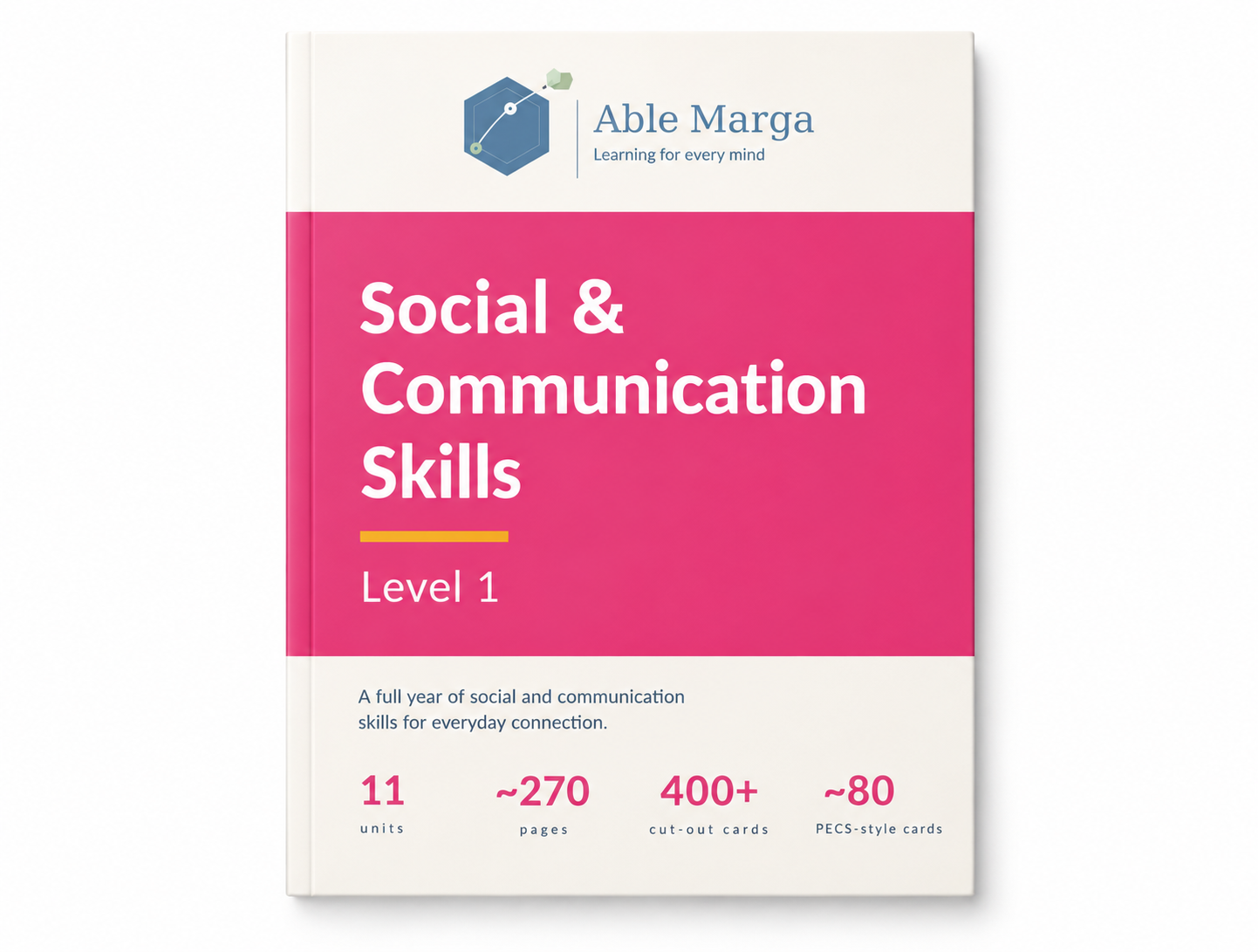 Available now
Requests · feelings · AAC-friendly interaction
Placement is based on current functional skills, not chronological age or school class alone. Start each subject separately and move forward when the underlying skill becomes more secure.
Use the Placement Guide
Communicates with a few words, signs, or pictures. Needs Adult help.
Uses 2–3 word phrases. Follows simple instructions. Recognizes Daily Routine.
Coming laterSpeaks in short sentences. Knows letters and numbers. Manages simple routines with some prompting.
Coming laterHolds short conversations. Reads and can do simple arithmetic sums. Follows classroom routines.
Coming laterUsing learned skills across more real situations. Can read and write sentences without support.
Coming laterDaily-life tasks with lighter adult support where appropriate.
Coming laterA single worksheet can practise one skill. A curriculum gives that activity a place in a wider sequence so the adult can see what came before, what to practise now and what to build toward next.
Units build in a deliberate order across the curriculum.
Individual printables may be useful, but the adult must decide the sequence.
Activities include a clearer structure for how to introduce and practise a target.
Instructions vary widely from resource to resource.
Repeatable tasks can help compare response method, prompts and independence over time.
There may be no common format for reviewing change.
Point, write, trace, choose or use AAC depending on the learner and the activity.
Some resources assume one standard response such as speech or handwriting.
Functional skills are linked to routines, signs, money, communication and daily participation.
A standalone activity may not show how the skill connects with everyday life.
Children learn through people, routines and situations they recognise. Able Marga uses practical everyday contexts while digital delivery makes the same materials accessible to families and professionals outside India.

Use a structured home-learning routine without having to create every activity yourself.
Explore →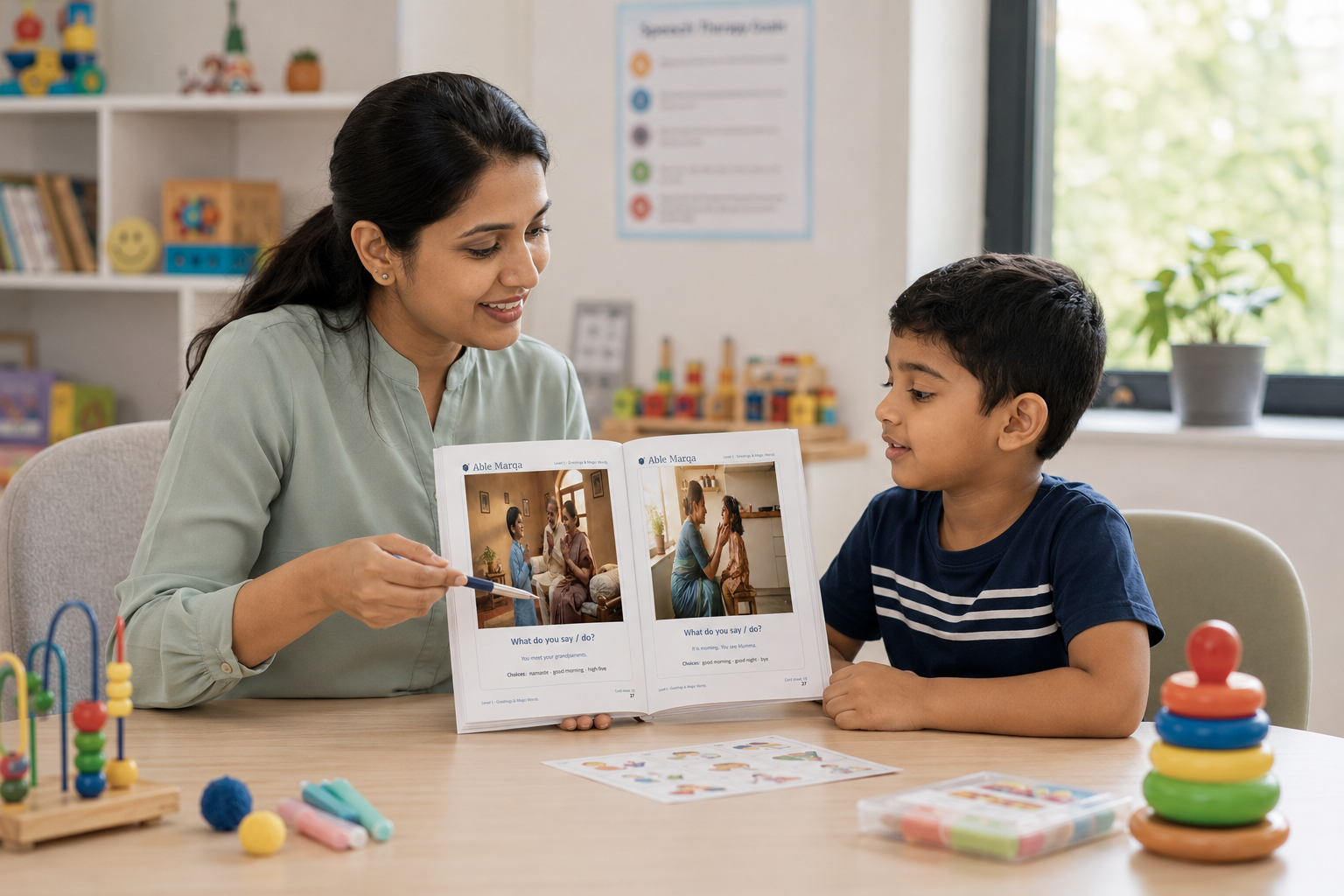
Select activities around functional speech, OT and developmental targets.
Explore →
Differentiate response method and support inside mixed-ability groups.
Explore →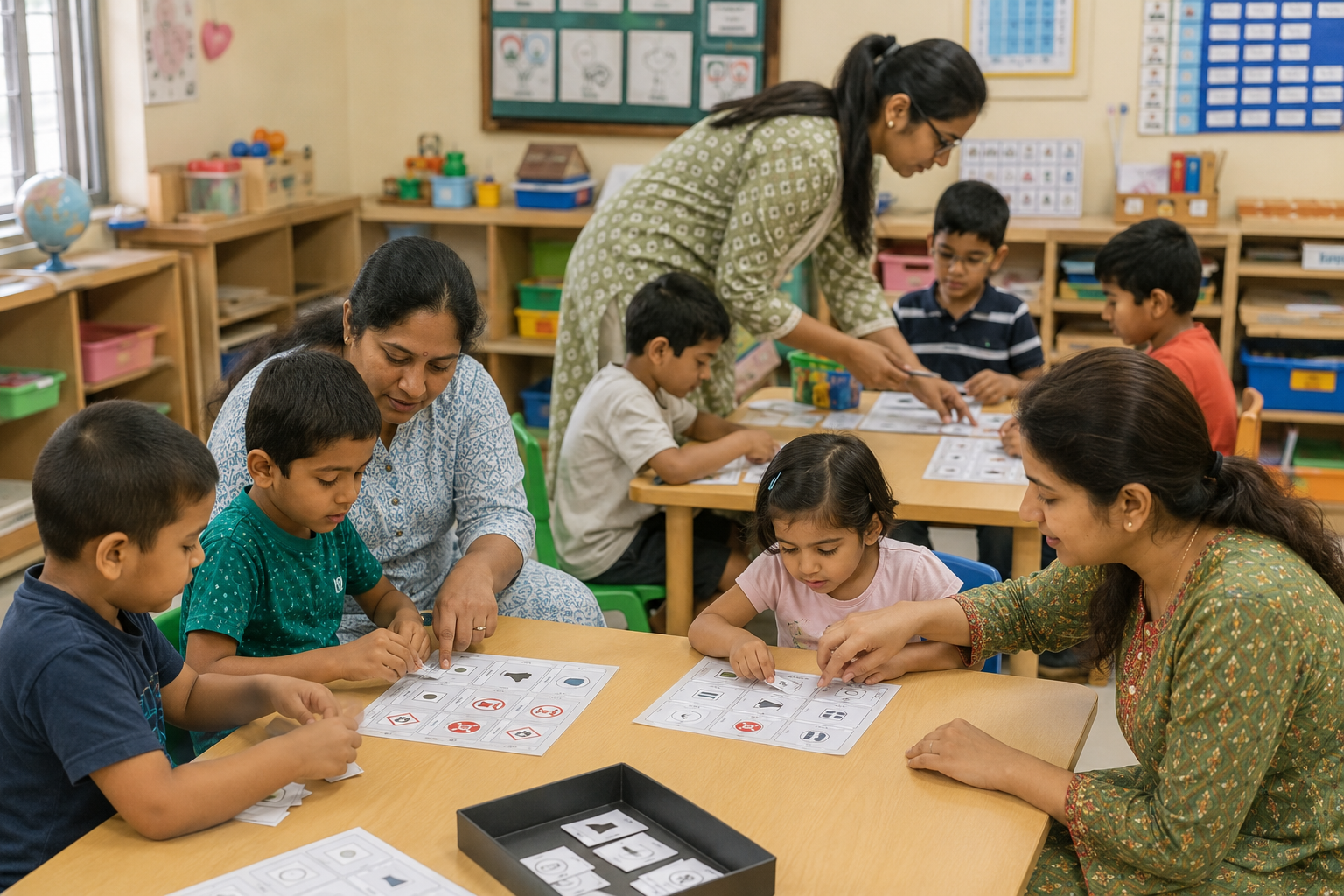
Create a more consistent functional-learning structure across classrooms.
Explore →Client-provided feedback from people using Able Marga resources with children at home and in learning settings.
“Using Able Marga's Life Skills Level 1 book along with the dummy clothes—good one, and children are learning. Visually, it is very good.”
“This resource is good for parents. It can be considered as a home plan for CWSN.”
“The workbooks are great. Thank you very much, Able Marga.”
Start with one complete Level 1 subject or try a genuinely free worksheet first. Use practical material designed for home, therapy, resource rooms and classrooms.
Not sure which level to choose? Use the Placement Guide →