
Most children with autism in India receive speech therapy once or twice a week. But language learning happens every hour of every day — in the kitchen, at mealtimes, during the morning routine, at the market.
If your child is only practising communication during therapy sessions, you are leaving most of the learning on the table. Here is how Indian parents can bring speech therapy home — without becoming a speech therapist.
What “Speech Therapy at Home” Actually Means
You do not need a speech therapy qualification to support your child’s communication at home. What you need is consistency, structure, and guidance — practising the same words, phrases, and situations every day, in a logical sequence, with clear instructions for each activity.
Receptive and Expressive Language
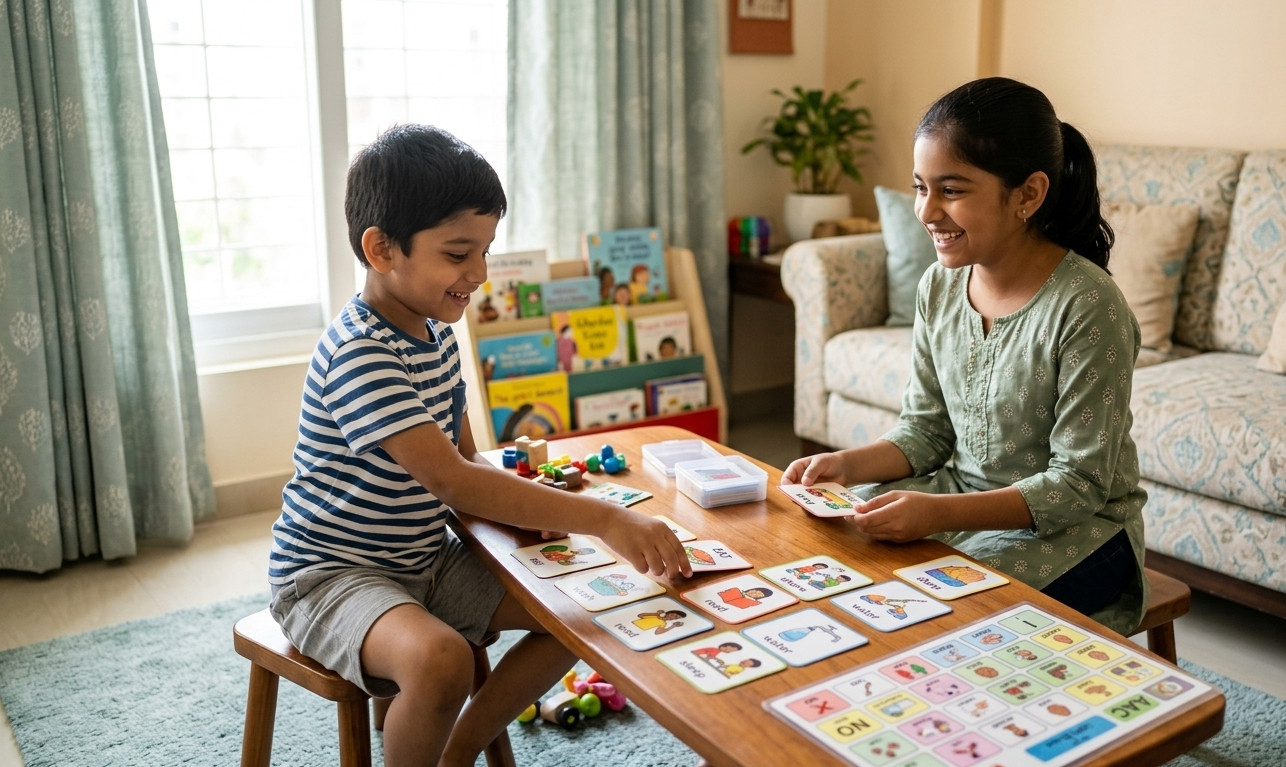
Receptive language is understanding — following instructions, responding to questions, identifying objects and actions. Expressive language is communicating — making requests, using words, phrases, or picture symbols to convey meaning. Both need to be practised at home, every day, in real situations.
Simple Language Therapy Activities for Indian Parents
Word Card Exposure
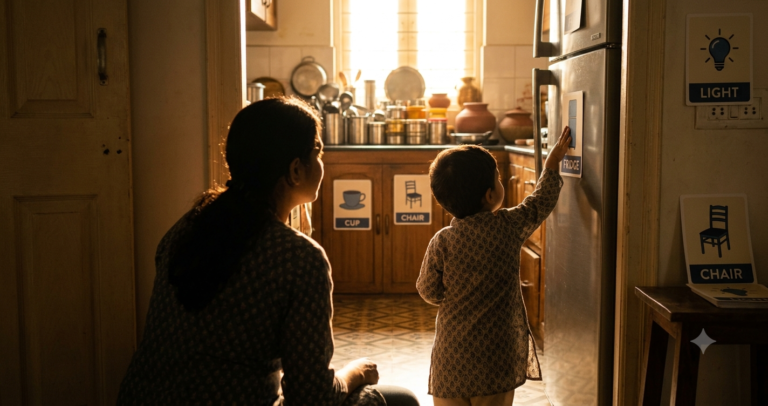
Cut out bilingual word cards and place them where the word is relevant — “soap” on the bathroom mirror, “cup” near the kitchen shelf. Repeated exposure in context accelerates vocabulary learning.
Requesting Practice
During mealtimes, pause before giving your child something they want. Create a moment for them to request — with a word, a sign, or a picture card. This is one of the most powerful communication activities you can practise daily.
Following Instructions in Real Contexts
Give clear, simple one- or two-step instructions during daily routines. “Pick up your cup.” “Put the shoes near the door.” Following instructions in real contexts builds receptive language faster than drills at a table.
Narrating Daily Life
As you go through the day, narrate what is happening in simple language. “Now we are washing hands. Soap first. Rub rub rub. Now water.” This builds vocabulary in context, without pressure or expectation.
How a Structured Curriculum Helps
The challenge with home practice is knowing what to focus on. Able Marga’s Social and Communication Skills curriculum sequences the skills logically — starting with basic vocabulary and requesting, building toward sentences and social communication — so you are never guessing what to teach next.
Start supporting your child’s communication at home. Explore the Able Marga curriculum at ablemarga.com.