Match
Match identical objects and pictures.
All four Level 1 subjects are live — structured printable PDFs for functional learning. Explore Level 1 →
Functional Maths curriculum · Level 1 live
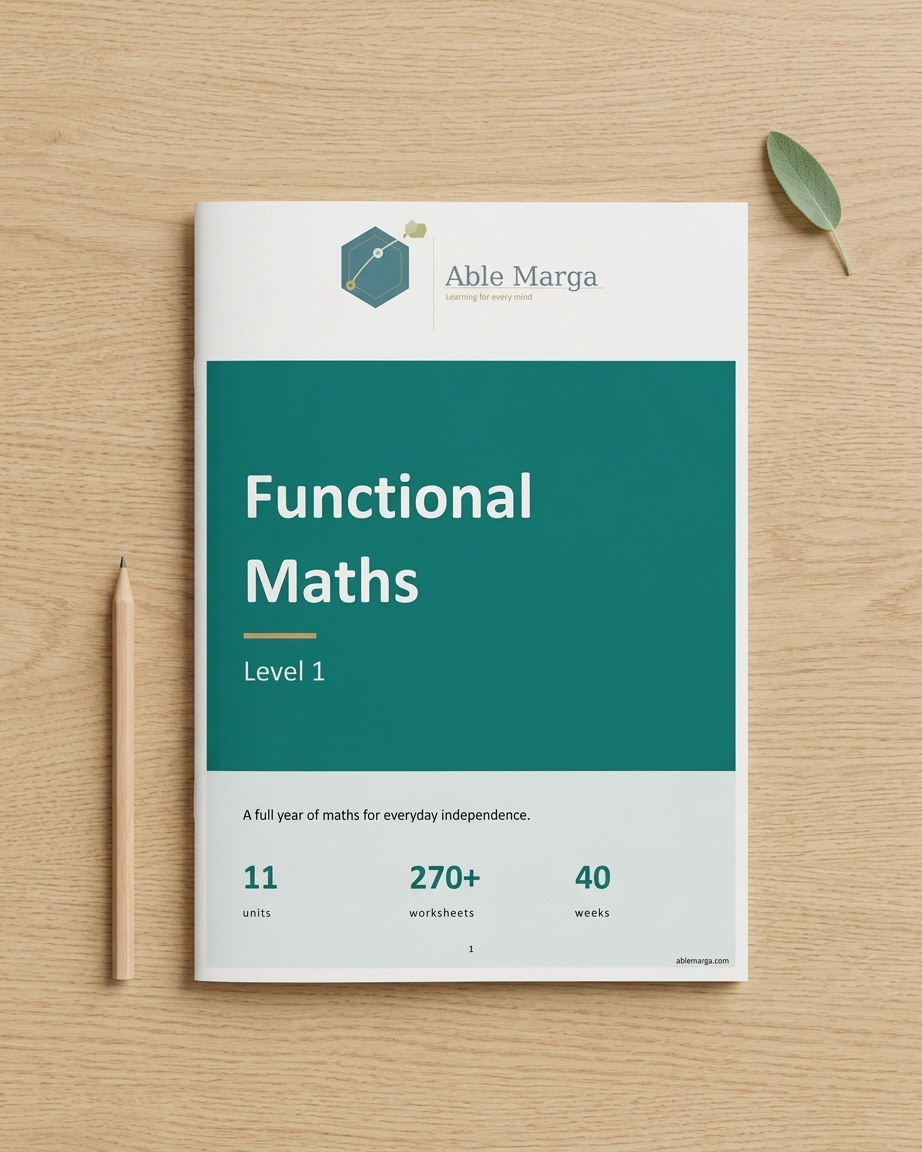
Able Marga's printable Functional Maths curriculum develops useful number understanding through familiar objects and everyday situations. Level 1 moves from visual foundations to counting real objects, recognising numerals, showing quantity on fingers, identifying Indian coins and notes, and understanding full and empty.
Not sure where to start? Use the free Placement Guide →
Real-life learning
A number becomes meaningful when it connects to something familiar. Level 1 uses the printable page to introduce the idea, then brings it into daily routines with real objects and useful choices.
See the same idea clearly in a simple picture or object.
Touch, place and organise familiar items into meaningful groups.
Count a small set, show it on fingers, or decide which has more.
Find the same skill in a room, routine, shop or journey.
A clear four-week rhythm
The structure stays familiar while the maths changes. Adults know what to do next, and learners get time to understand, practise with support and use the idea with real objects.
Begin with a clear model and enough visual support for an early successful response.
Repeat the concept through short picture-supported tasks with adult guidance.
Move beyond paper to count, sort, compare or identify familiar objects and money.
Try the skill with less help, complete the post-check and choose the next step.
Preview the activity style and adult instructions before choosing the full set.
Open a free sample →Available now
Build useful early numeracy through one full year of sequenced, picture-supported teaching and practice with real objects.
From matching, sorting and size to numerals 1–5, counting real objects, fingers, Indian coins and notes, and full or empty containers.
Digital printable product. Access is provided after successful purchase; no physical item is shipped.
Functional Maths FAQ
Level 1 is designed for guided use at home, in therapy or in the classroom. Begin with the learner's current understanding and connect each idea to daily life.
Functional numeracy means using early maths in everyday situations—recognising a number, counting objects, comparing quantity, identifying money, understanding full or empty, and making practical choices. The aim is useful understanding, not memorising sums without context.
Yes. Level 1 begins with pre-number foundations such as matching, sorting, colours, shapes, size, and more or less. Counting is introduced only after these visual ideas have been practised.
Use small groups of familiar items such as spoons, socks, snack pieces or toys. Touch or move one object for each count, then look for the same numerals on a remote control, mobile keypad or lift button.
The Coins and Notes unit first teaches the learner to tell a coin from a note and recognise familiar Indian money up to ₹50. Real or play money can then be used for supported practice; calculation and change come in later levels.
Yes. A learner can point, touch, look, place an object, show a quantity on fingers, sign, speak or use AAC. Independent speech, reading and writing are not required.
Able Marga is designed for children with special needs aged 2 and up, but placement depends on current functional ability rather than age or school class. Use the Placement Guide when choosing a starting level.
Yes. The curriculum includes a clear sequence and guidance for supporting adults, making it suitable for short, repeatable home-learning sessions. Educators and therapists can use the same material in classrooms or sessions.
Yes. Visit the free samples page to see the visual style, adult guidance and activity format before choosing the complete Level 1 curriculum.
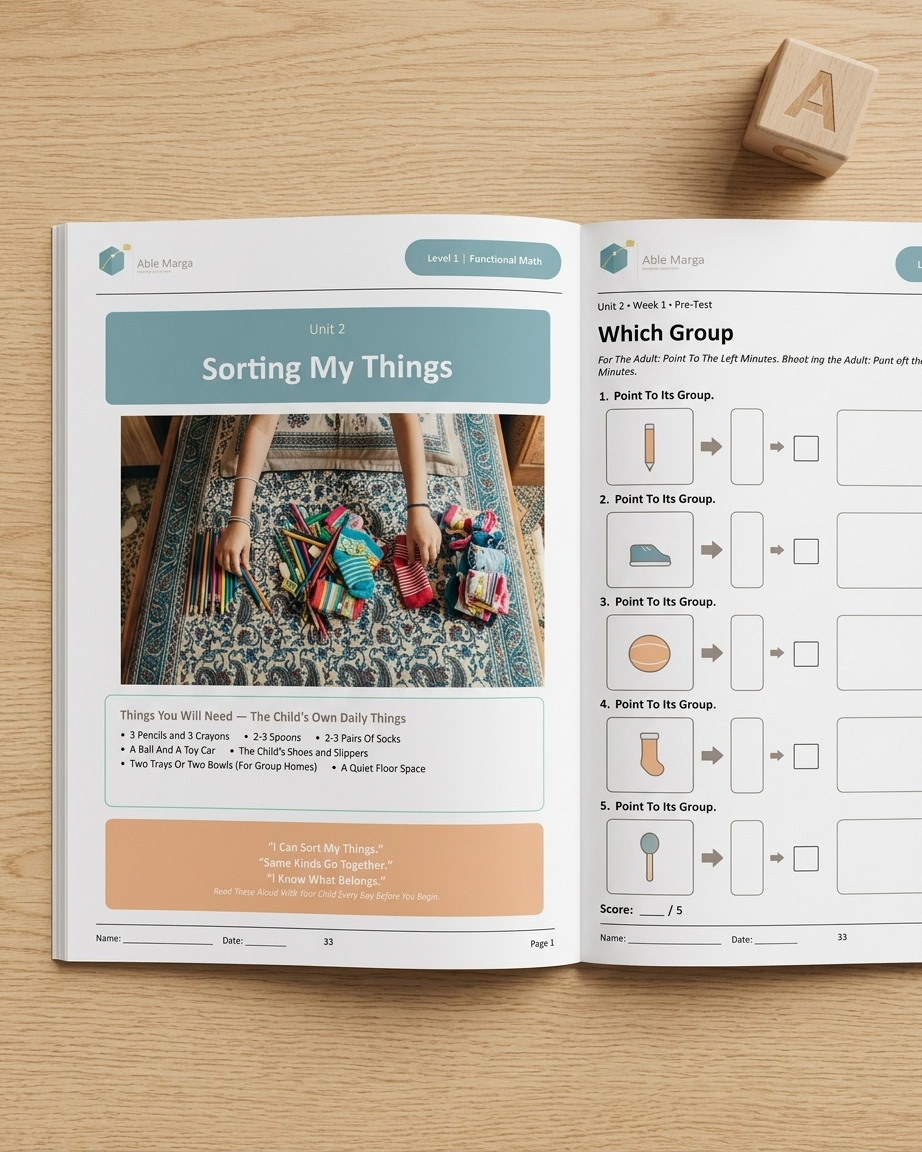
Choose the complete Functional Maths Level 1 curriculum, or explore a real sample first. Start small, practise with familiar objects and build from successful responses.