
Morning Routine
Follow a consistent sequence of wake-up and getting-ready steps.
All four Level 1 subjects are live — structured printable PDFs for functional learning. Explore Level 1 →
Life Skills curriculum · Level 1 live
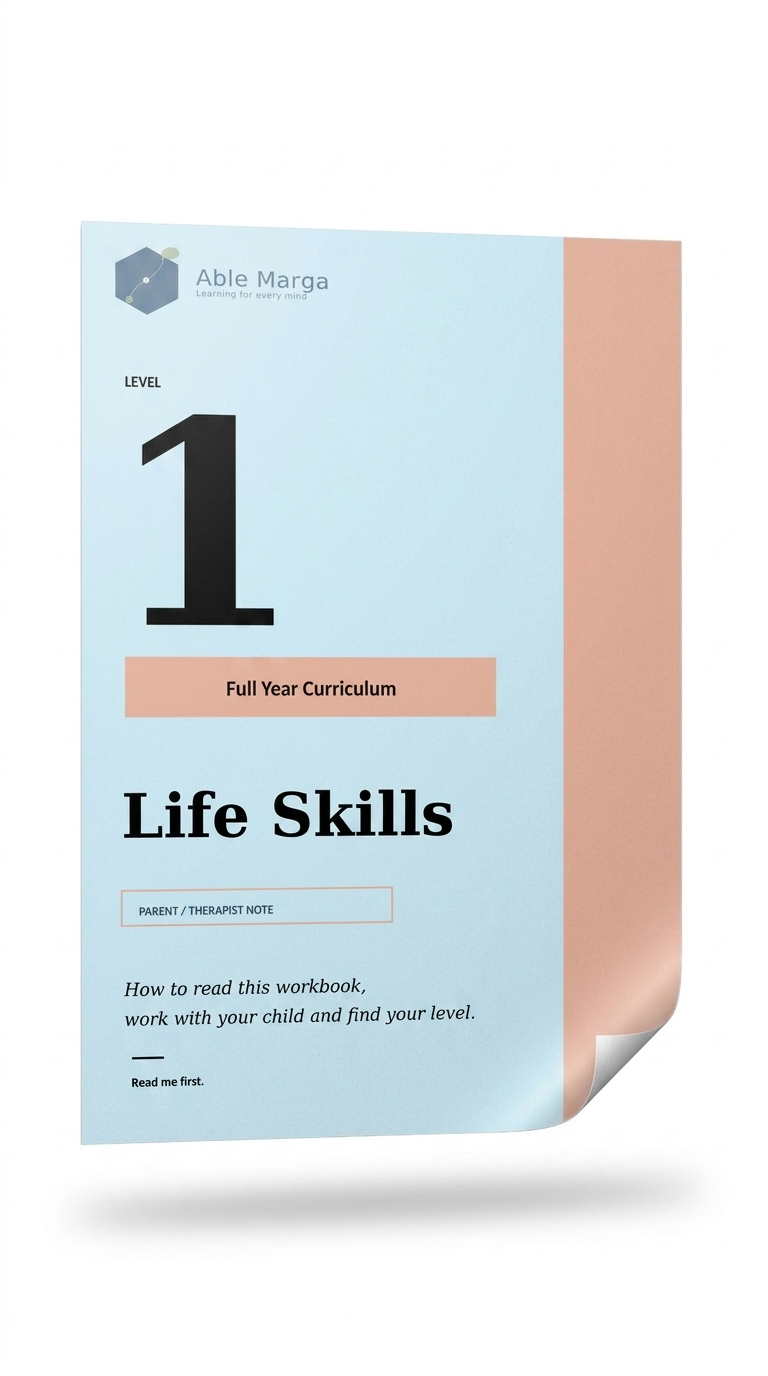
Able Marga's printable Life Skills curriculum helps children with autism and other special needs practise routines, personal hygiene, dressing, meals, helping at home, asking for help and understanding familiar community places. Level 1 includes 11 structured units with no independent reading or writing required.
Not sure where to begin? Use the free Placement Guide →
Designed for guided success
Each activity breaks an everyday skill into a small, clear response. The adult begins with enough support for success, pauses for processing, and gradually steps back as the learner becomes more confident.
Model the correct action or response clearly.
Guide attention gently without giving a confusing verbal prompt.
Allow enough processing time before offering more help.
Invite the learner to respond with less support.
A consistent learning rhythm
The layout and teaching sequence remain familiar from unit to unit. Learners can focus on the practical skill, while adults can see what to teach and how to record progress.
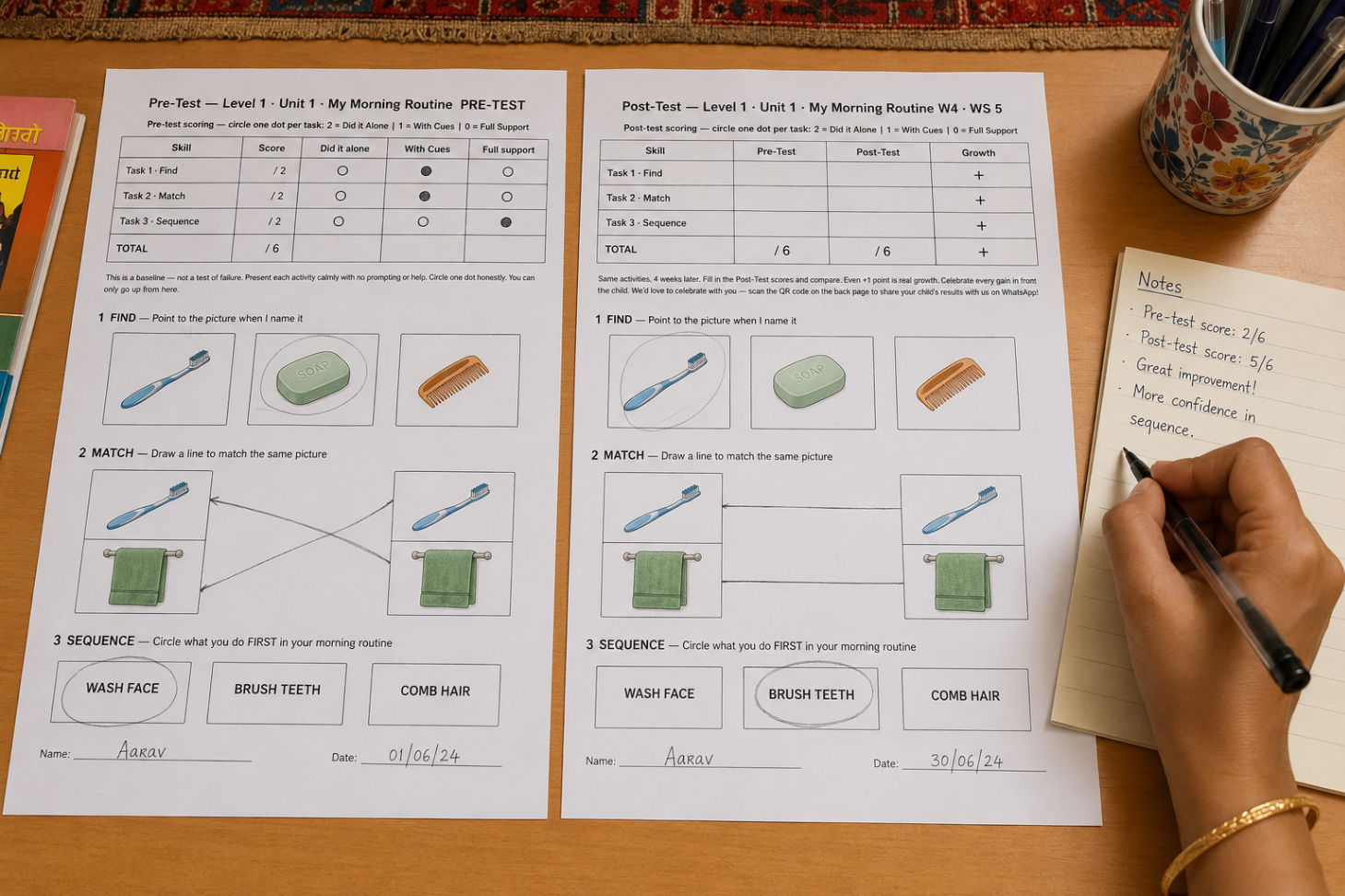
A clear introduction to the everyday skill and what the learner will practise.
See what the learner can already do before teaching or prompting.
Teach one idea at a time through ordered activities and adult guidance.
Repeat the skill using familiar objects, people, rooms and routines.
Repeat the starting task to see what improved and what needs more practice.
See the page style and adult guidance before choosing the complete curriculum.
Explore a free sample →Available now
Begin with all 11 sequenced units in one print-ready digital set, designed for consistent practice at home, in therapy or in the classroom.
A full-year, picture-supported curriculum covering routines, personal care, dressing, meals, helping at home, asking for help and everyday community awareness.
Digital printable product. Access is provided after successful purchase; no physical item is shipped.
From a therapist using Level 1
Therapist · Unit 5, Getting Dressed
“Using Able Marga’s Life Skills Level 1 book along with the dummy clothes: good one, and children are learning. Visually, it is very good.”
Life Skills FAQ
Level 1 is designed for guided use by parents, therapists and educators. Start with one familiar routine and adapt the response to the learner.
Break the skill into small, ordered steps, model the response and give the learner enough processing time. Able Marga provides one clear concept per page and a simple prompt sequence—show, tap near, wait and ask—so help can be reduced gradually as confidence grows.
Begin with a routine the learner experiences every day, such as Unit 1: Morning Routine. Asking for Help and Keeping Clean are also useful early priorities because they support safety, communication and everyday independence.
Yes. A learner can point, circle, match, place a picture card, sign, speak or use an AAC device. Spoken language is not required, and the supporting adult can use the response method that is most accessible.
Able Marga is designed for children with special needs aged 2 and up, but placement is based on current functional ability rather than chronological age. Older learners can use Level 1 when its foundation skills match their present needs.
Yes. Each page contains practical guidance for the supporting adult, and the sequence is designed for short, repeatable home-learning sessions. Therapists and educators can use the same materials in sessions or classrooms.
The complete set includes 11 units covering Morning Routine, My Body, Keeping Clean, Meal Times, Getting Dressed, Celebrations Around Me, Rooms in My Home, Helping at Home, Asking for Help, Places Near Me and Year End Review.
Use the Placement Guide and compare the learner's current independence with each level description. When between two levels, begin with the lower level to create a successful starting point.
Yes. Open the free curriculum samples to review the visual format, teaching guidance and activity style before choosing the complete Level 1 set.
Choose the complete Life Skills curriculum or explore a real printable sample first. Everything is ready for guided use at home, in therapy or in the classroom.