Skip to content

Level 1 worksheet sets are live — instant PDF download. New subjects & levels dropping soon. Shop Level 1 →

Need help choosing?
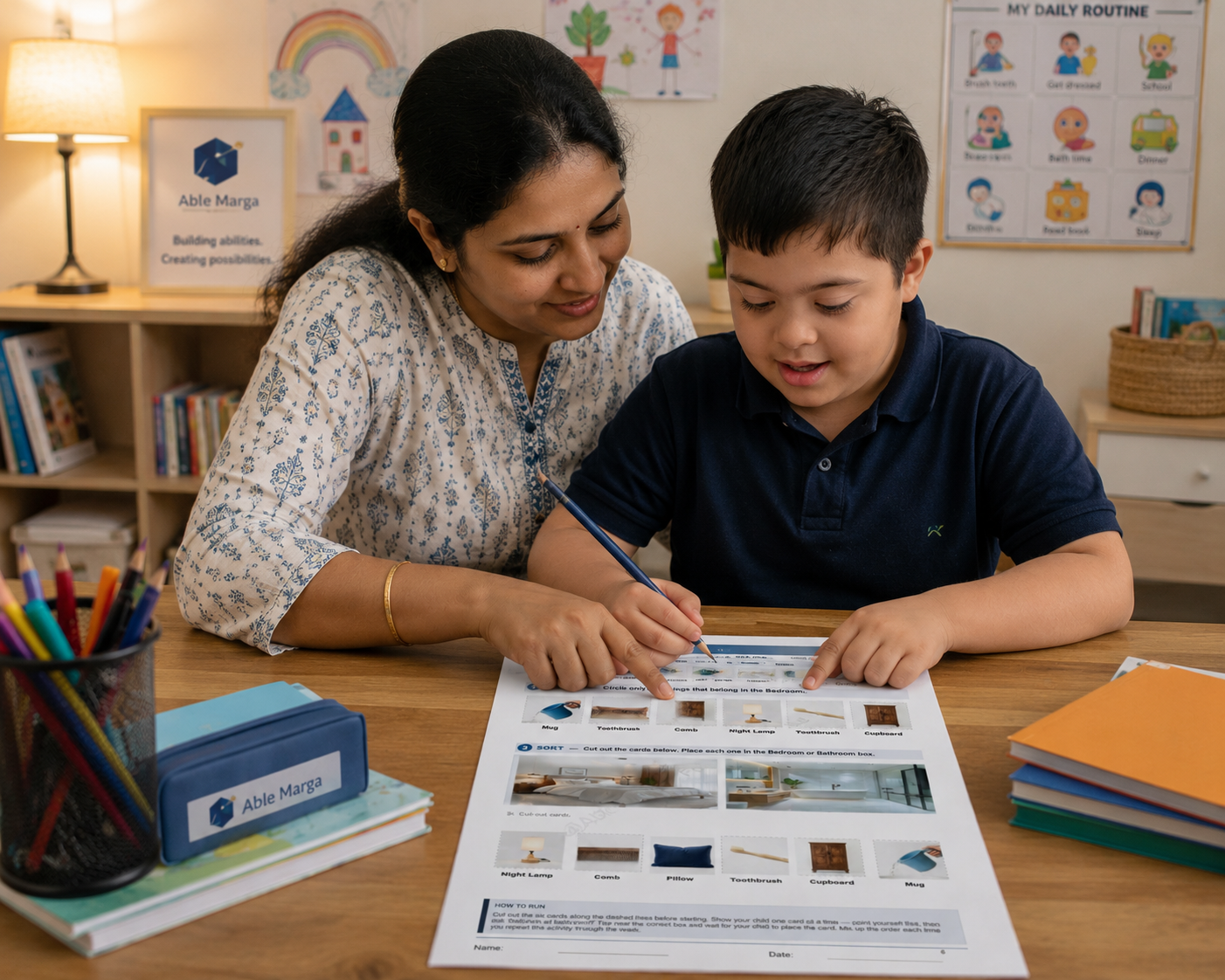
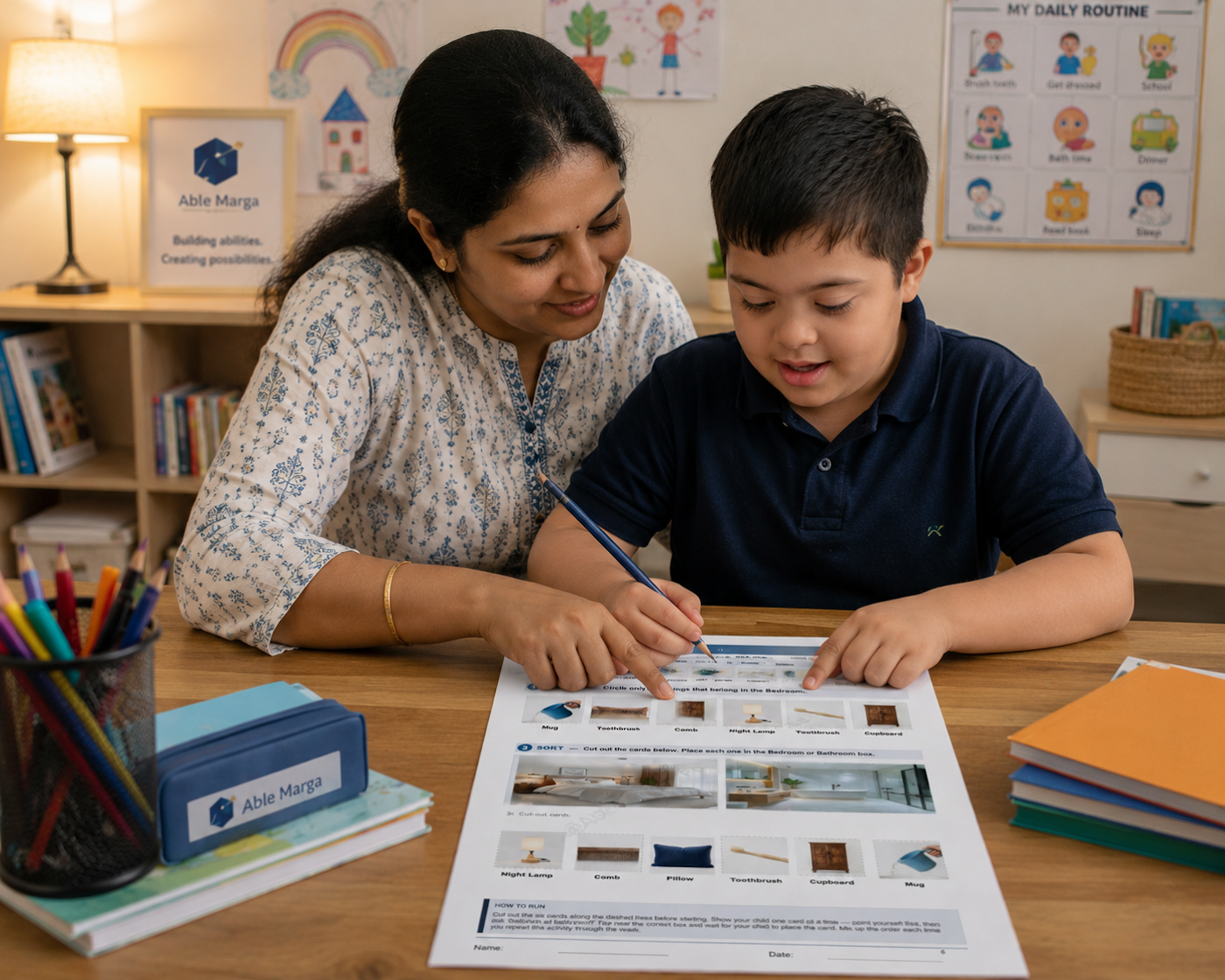
Parent and child learning together with an Able Marga visual life skills worksheet
Learn through seeing and doing Clear visual tasks with hands-on responses
Repeat comfortably
See Match Practise
Learning resources for Down syndrome

Printable worksheets and activities for children with Down syndrome

Able Marga provides structured, visual worksheets for children with Down syndrome who benefit from repetition, clear routines and learning in small steps.

Activities use large visual targets and simple point, match or place-a-card responses. Children can practise Life Skills, Functional Maths and Functional English without needing to read or write.

Motor-friendly activities

Large targets and card-placing options support participation.

Generous repetition

Revisit the same concept without making the task confusing.

Visual and routine-based

Consistent layouts help children know what to do next.

Ability-based levels Instant printable PDF Home and classroom use
Built around learner strengths

Why Able Marga works for children with Down syndrome

Activities combine strong visual cues, hands-on responses and meaningful repetition. The learner can work at a comfortable pace while building practical skills that transfer into everyday routines.

Visual learning

Clear pictures make the task easier to understand

Visual examples show the learner what to look at and what response is expected. Each page keeps attention on one concept instead of presenting several instructions at once.

See
Match
Succeed
Repetition

Practise without rushing

Repeat the same type of activity across several short sessions. Familiar formats reduce uncertainty while giving the learner enough time to remember and use the skill.

Motor friendly

Respond by pointing or placing a card

Large visual targets and hands-on card placement reduce the need for precise pencil control. The learner can show understanding even when handwriting is still developing.

Predictability

Consistent pages create a familiar routine

Repeated layouts help the learner recognise how an activity works. Less effort is spent understanding a new format, leaving more attention available for learning the skill.

Individual pace

Progress is based on ability, not age

Begin with the skills the learner can currently manage. Repeat a level for as long as needed and move forward when responses become more confident and independent.

Introduce Practise Repeat Independent
How support is reduced

Help first, then gradually step back

1 Show

Demonstrate the response.

2 Guide

Help the learner succeed.

3 Reduce help

Fade prompts slowly.

4 Use independently

Practise the skill naturally.

Explore the teaching method
Recommended starting points

Begin with a familiar skill, then build from there

Choose the starting point that matches the learner’s present abilities and daily priorities—not only their age or school class.

Check the placement guide
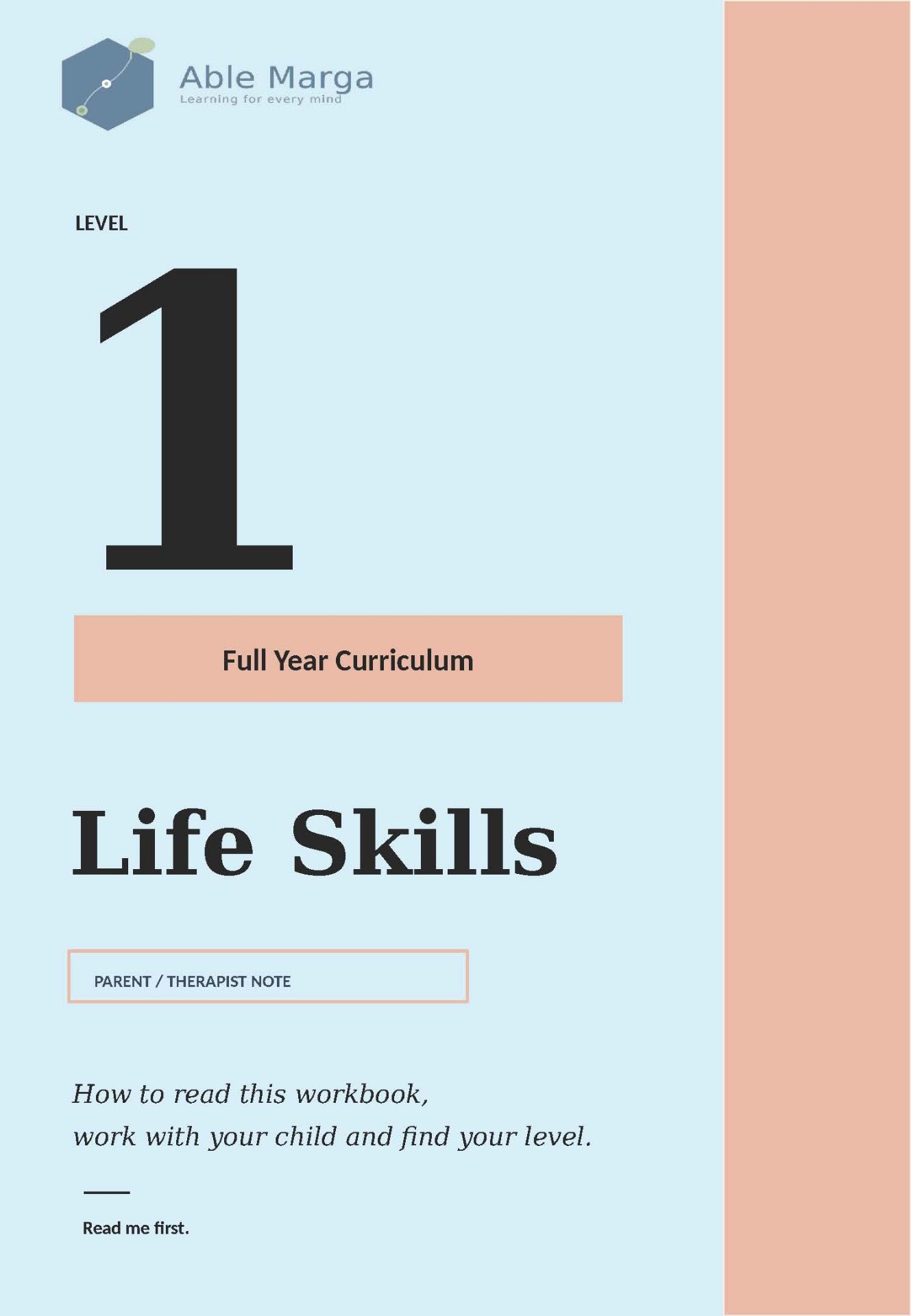
01 Able Marga Life Skills Level 1 printable curriculum
Best everyday starting point Life Skills

Start with familiar daily routines

Everyday routines provide meaningful and repeatable learning opportunities. Begin with activities related to personal care, asking for help, familiar people and what happens during the day.

Daily routines Personal care Safety Asking for help
Why start here?

The learner already experiences these situations regularly, making it easier to practise the worksheet skill in real life.

Printable Level 1 PDF View Life Skills
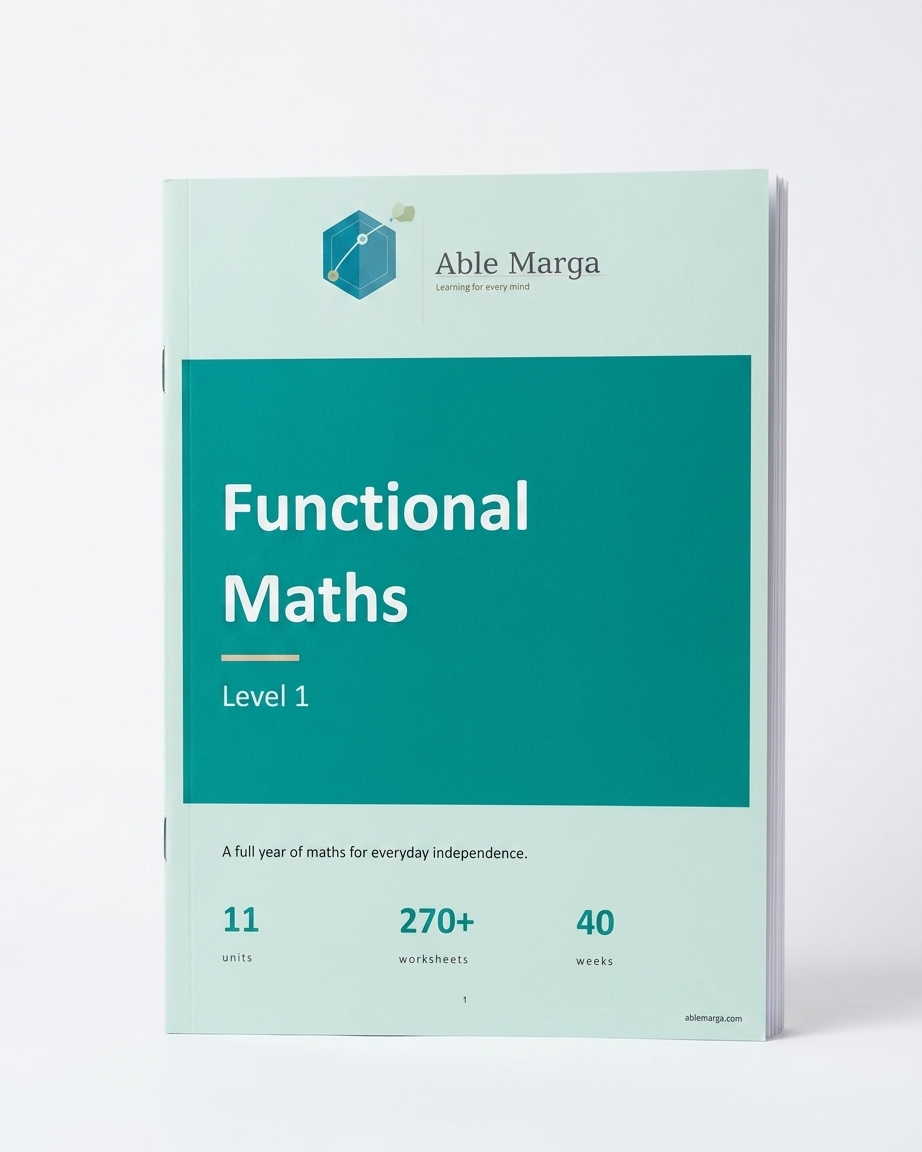
02 Able Marga Functional Maths Level 1 printable curriculum
Visual foundation Functional Maths

Build matching and sorting before counting

Matching and sorting use visual strengths while developing attention, comparison and categorisation. These foundations make later work with quantities, numbers and money easier to understand.

Matching Sorting Same and different Early quantity
Why start here?

The learner can respond by pointing or placing a card without needing to form numbers or control a pencil precisely.

Printable Level 1 PDF View Functional Maths
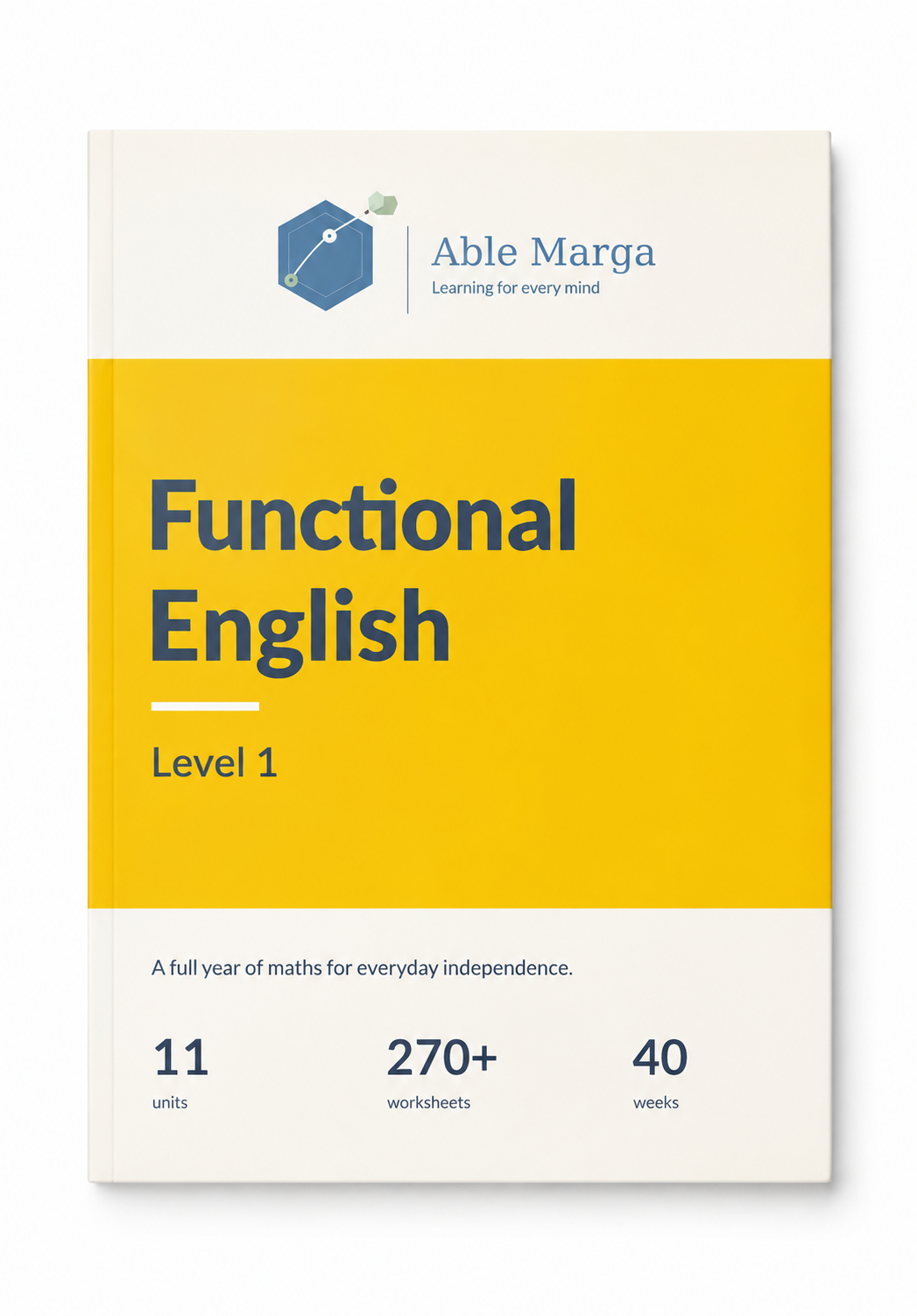
03 Able Marga Functional English Level 1 printable curriculum
Picture-based language Functional English

Use pictures to recognise useful words

Begin with familiar family words and picture-to-picture matching. The learner develops recognition and communication readiness without being expected to read a sentence or write an answer.

Family words Picture matching Useful vocabulary Recognition
Why start here?

Familiar people and objects make early language activities more meaningful and easier to connect with everyday communication.

Printable Level 1 PDF View Functional English
Prefer to try the format first?

Download a free Level 1 worksheet

Use one activity at home or in a session and observe how the learner responds to the visual instructions and structured layout.

Get a free worksheet
One resource, different settings

Use the same structured activities wherever learning happens

Consistent practice can help a learner recognise and use the same skill with different people and in different places. Print the pages needed for home, classroom work or therapy sessions.

Parent using printable learning materials with a child at home At home
01

Connect worksheets with daily routines

Practise before or after the real activity—for example, complete a hygiene worksheet near bath time or review asking for help before going outside.

  • Keep sessions short and predictable
  • Use familiar household objects where possible
  • Repeat successful pages before adding difficulty
Resources for parents
Special-needs classroom using structured learning activities At school
02

Support individual and small-group learning

Select pages that match each student’s functional level. The same topic can be practised with different amounts of prompting, repetition and adult support.

  • Use during resource-room or table work
  • Connect activities with individual learning goals
  • Reprint pages for planned revision
Resources for educators
Therapist using a structured printable activity during a session In therapy
03

Reinforce communication and functional goals

Use visual worksheets alongside speech, occupational or developmental goals. Activities can provide a clear way to introduce, practise and review a functional concept.

  • Use point, match or place-a-card responses
  • Adapt prompting to the learner’s needs
  • Share selected practice pages with families
Resources for therapists
Consistency across adults

Everyone can practise the same skill in the same way

Parent One shared activity Educator Therapist
See how to teach it
What you get

Ready to download, print and begin

A print-ready PDF delivered instantly to your account and email. Print at home, in sessions or in class, as many times as you need for your own child or students. INR pricing; download once, use anywhere in the world.

No physical delivery or shipping wait

Your digital resource becomes available after successful checkout, so you can start when it suits the learner.

Inside your purchase

Practical materials for guided learning

PDF

Structured printable pages

Clear, one-concept activities organised into a practical learning sequence.

Visual and matching materials

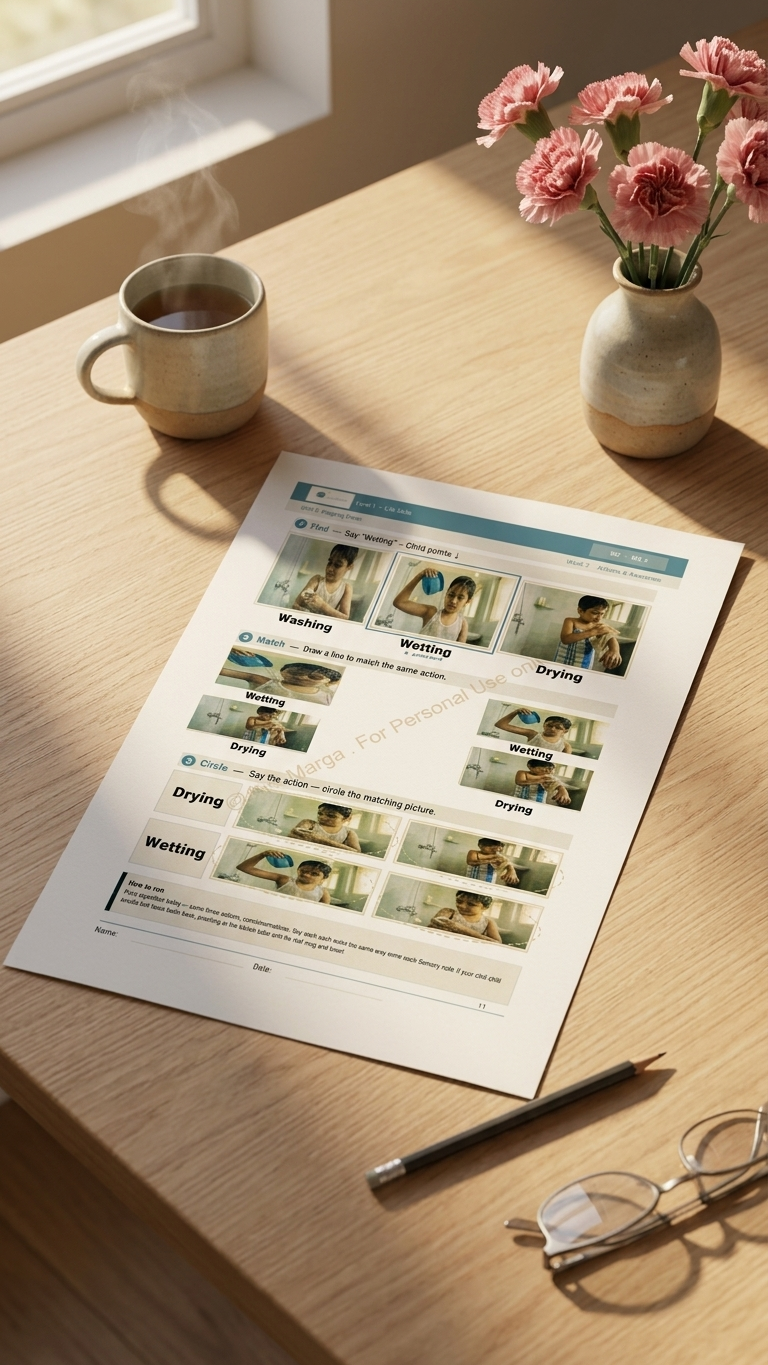
Picture-based tasks and cards for pointing, matching, sorting and hands-on responses.

Adult prompts and guidance

Straightforward support notes help adults introduce activities and gradually reduce assistance.

Flexible repeat printing

Print selected pages again for revision, repeated practice or use with your own students.

Digital delivery

From purchase to practice

1
Choose a subject

Select the curriculum and functional level.

2
Complete checkout

Pay through the secure checkout process.

3
Receive your PDF

Access it through your account and email.

4
Print and begin

Use the pages needed for the current skill.

Standard A4 pages

Use a regular home, office or school printer.

Colour works best

Many pages can also be printed in greyscale.

Simple activity supplies

Some activities may use scissors, cards or glue.

Use anywhere

Suitable for Indian families and NRIs worldwide.

Personal and classroom use: Reprint for your own child or your own students. Please do not share or redistribute the original digital files outside your home or class.

Down syndrome worksheets FAQ

Questions about learning, pace and school use

Practical guidance for using Able Marga activities with children who benefit from visual instruction, repetition and learning in small steps.

01 What activities help a child with Down syndrome learn at home?

Short, visual activities linked to everyday routines work well. Start with matching familiar objects, sorting household items, identifying family members, personal-care steps and asking for help. Practise one concept at a time, repeat it regularly and connect the worksheet with the same skill in daily life.

02 Are these suitable for mixed abilities or a slower learning pace?

Yes. Able Marga levels are based on functional ability rather than age or school class. You can repeat individual pages, offer more prompting, use card placement instead of writing and remain on a skill for as long as needed before moving to the next step.

Progress when the learner responds confidently—not simply because a certain number of days have passed.

03 Can I use these with my child’s Anganwadi or school programme?

Yes. The worksheets are skill-based rather than tied to a single school board, so they can complement Anganwadi, mainstream-school and special-school programmes. Share the selected skill with the teacher or special educator so home practice supports the child’s current classroom or individual learning goals.

Helpful approach Ask the teacher which functional skill is currently being practised, then select related Able Marga pages for home use.
Start at the learner’s pace

Choose one useful skill and practise it with confidence

Begin with Life Skills, Functional Maths or Functional English Level 1. Each curriculum uses visual, motor-friendly activities that can be repeated at home, in school or during therapy.

No reading required Ability-based levels Instant PDF access

Not sure which subject or level matches the learner’s current skills?