
Map pages to current goals
Select a page because it addresses receptive language, communication, daily living, visual discrimination, matching, sorting or another current functional target.
All four Level 1 subjects are live — structured printable PDFs for functional learning. Explore Level 1 →
Able Marga gives speech, occupational and developmental therapists structured printable activities that can be selected around a learner’s current functional target. Use them for receptive language, communication, routines, visual discrimination, matching, sorting and early functional academics without creating every worksheet from scratch.
The activity provides a consistent visual structure; the therapist still decides the goal, response method, prompting plan, level of support and how progress will be reviewed for the individual learner.
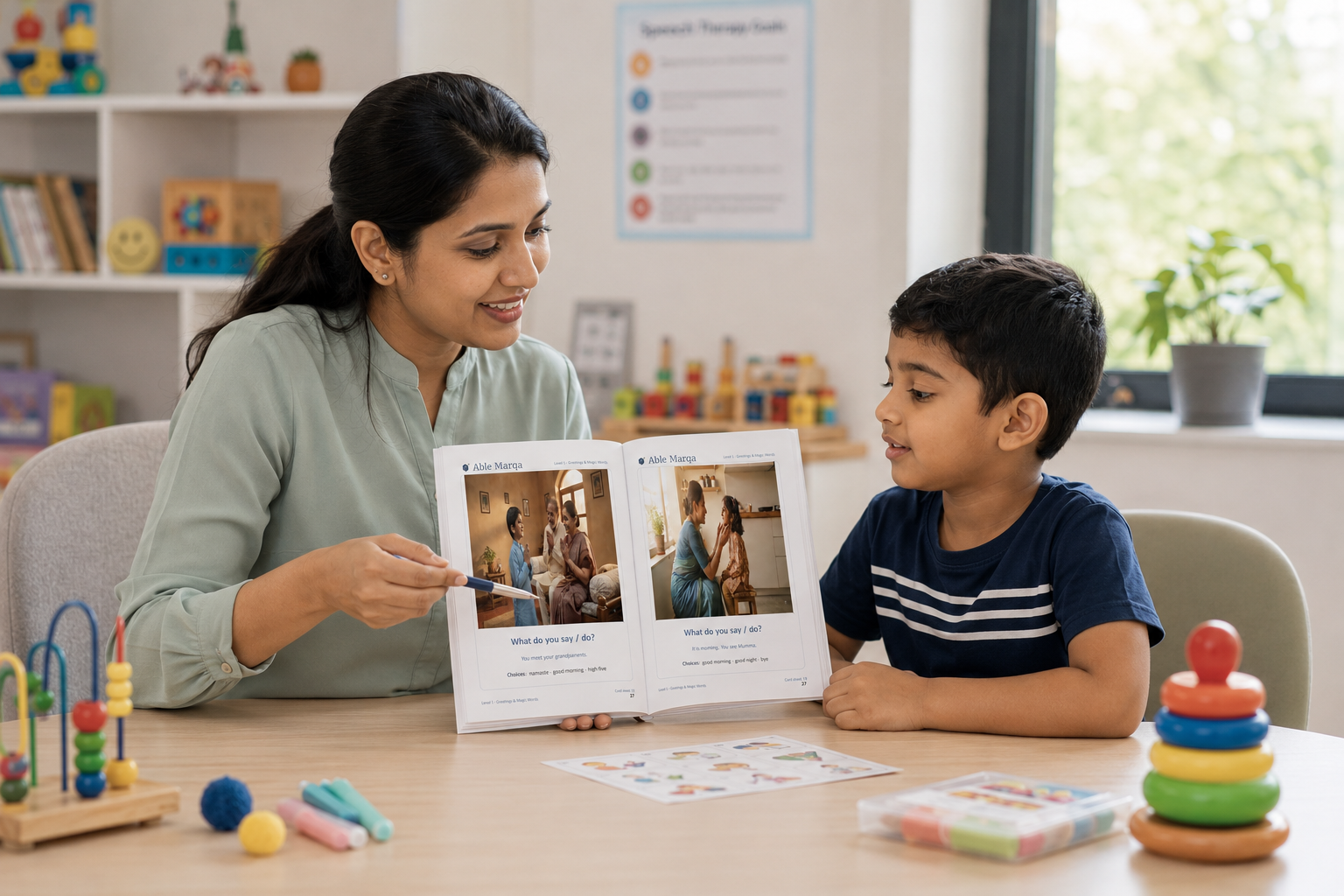
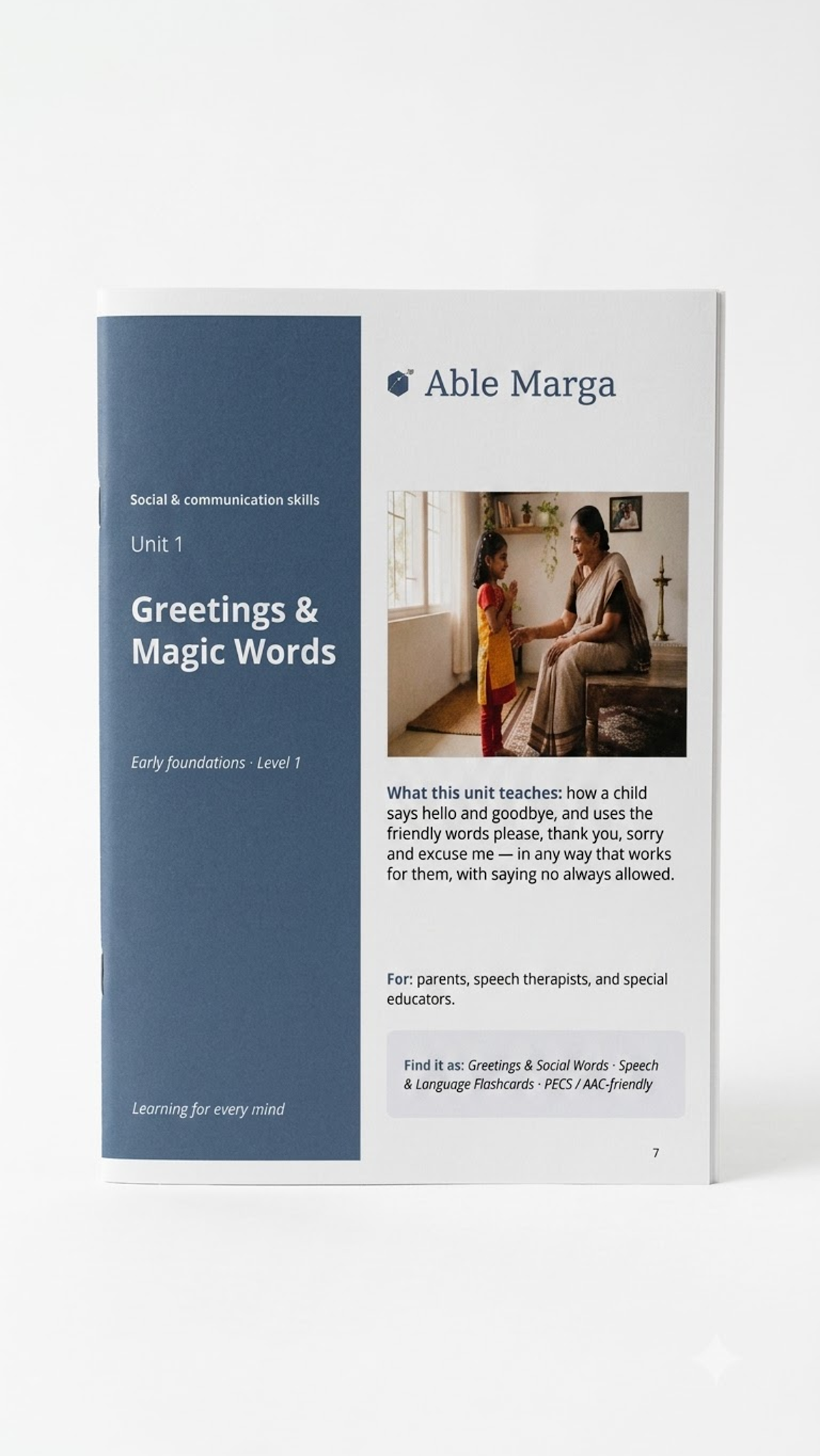
The prepared visual structure can reduce routine material-building time while still leaving the therapist free to individualise the task, prompts, response mode, pace and difficulty for the learner in front of them.
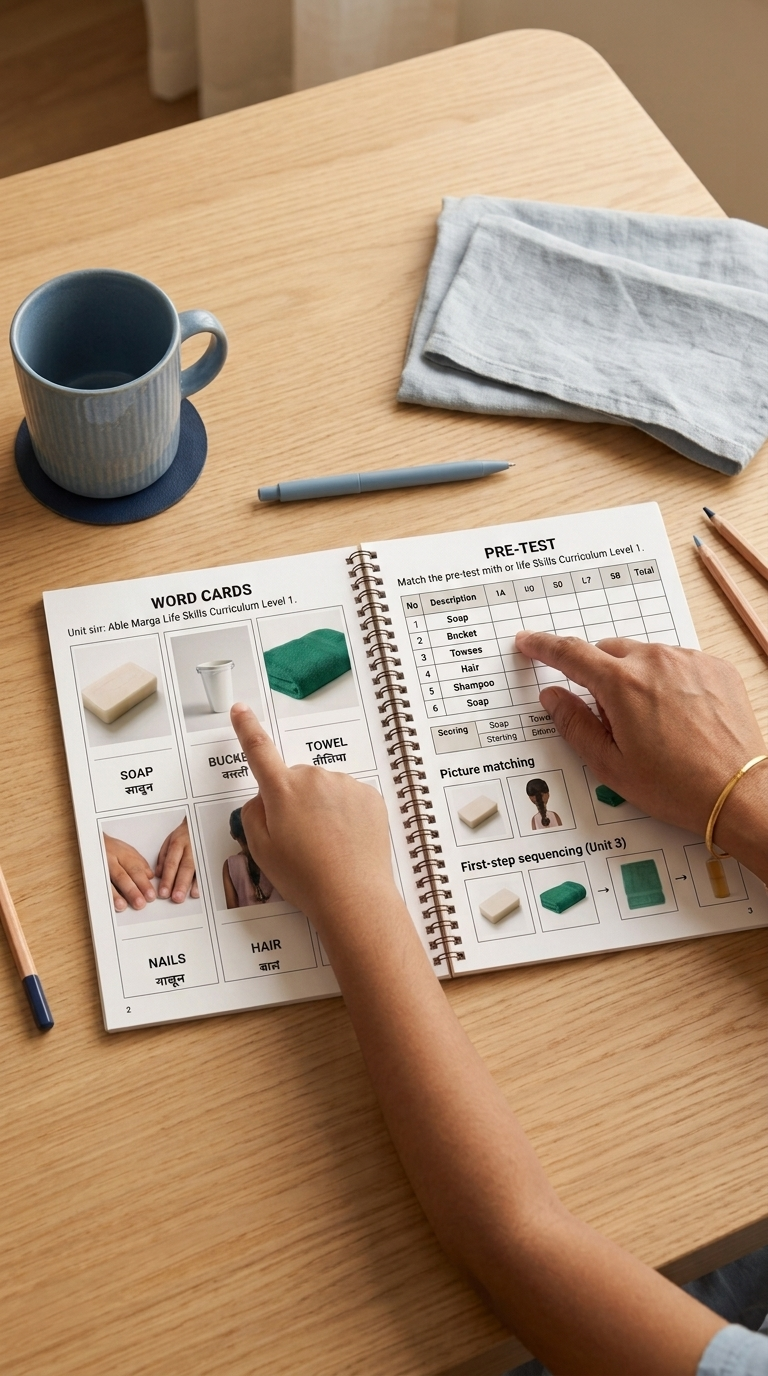


Select a page because it addresses receptive language, communication, daily living, visual discrimination, matching, sorting or another current functional target.
Print the relevant activity and prepare any cards or simple materials before the session instead of designing the task from the beginning.
Where a set includes structured checks or repeatable tasks, record accuracy, response method and prompt level to compare performance over time.
Use speech, pointing, matching, choosing, card placement or an established AAC response when that method fits the target and the learner’s access needs.
Share an appropriate practice idea with parents or educators so the same functional skill can be reinforced outside the therapy session.
Able Marga does not prescribe one identical session for every learner. Use the structured activity as a tool inside the learner’s current goals, your prompting approach and your professional judgement.
Begin with a current receptive-language, communication, functional, cognitive or participation target.
Define what success will look like before presenting the task.Where appropriate, record initial accuracy, the response method and the level of support required.
Use the same conditions when you later compare performance.Model, prompt or simplify the task enough for the learner to participate successfully instead of repeatedly testing an unlearned skill.
Choose the response method that matches the goal.Reduce support as performance becomes more reliable, then check the skill with different materials or in a natural context.
Worksheet success alone does not prove carryover.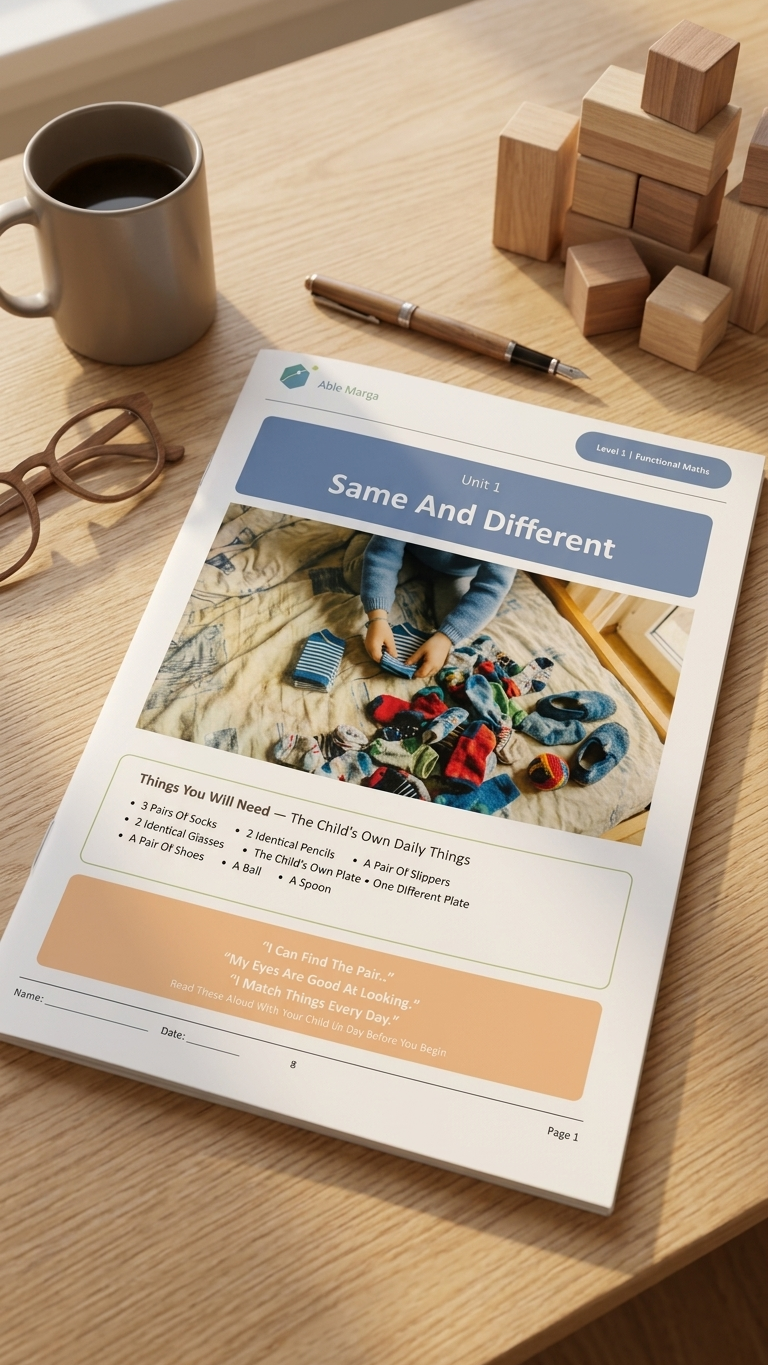
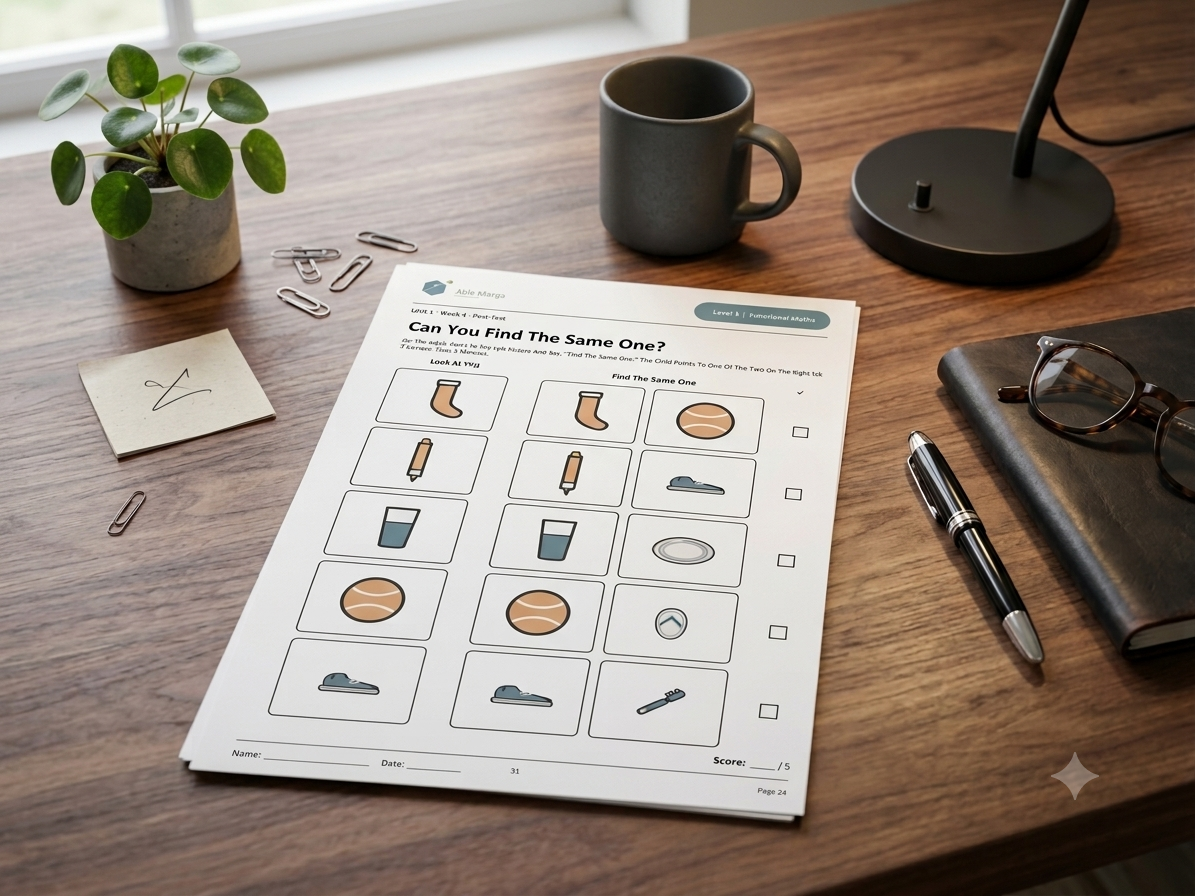
Speech, OT and developmental targets often overlap. Select the resource because its functional content matches the learner’s goal and access needs—not simply because a subject is labelled for one profession.
Speech & communication
Greetings, requesting, yes/no, choices, feelings, WH questions, sequencing, turn-taking and AAC-friendly picture communication.
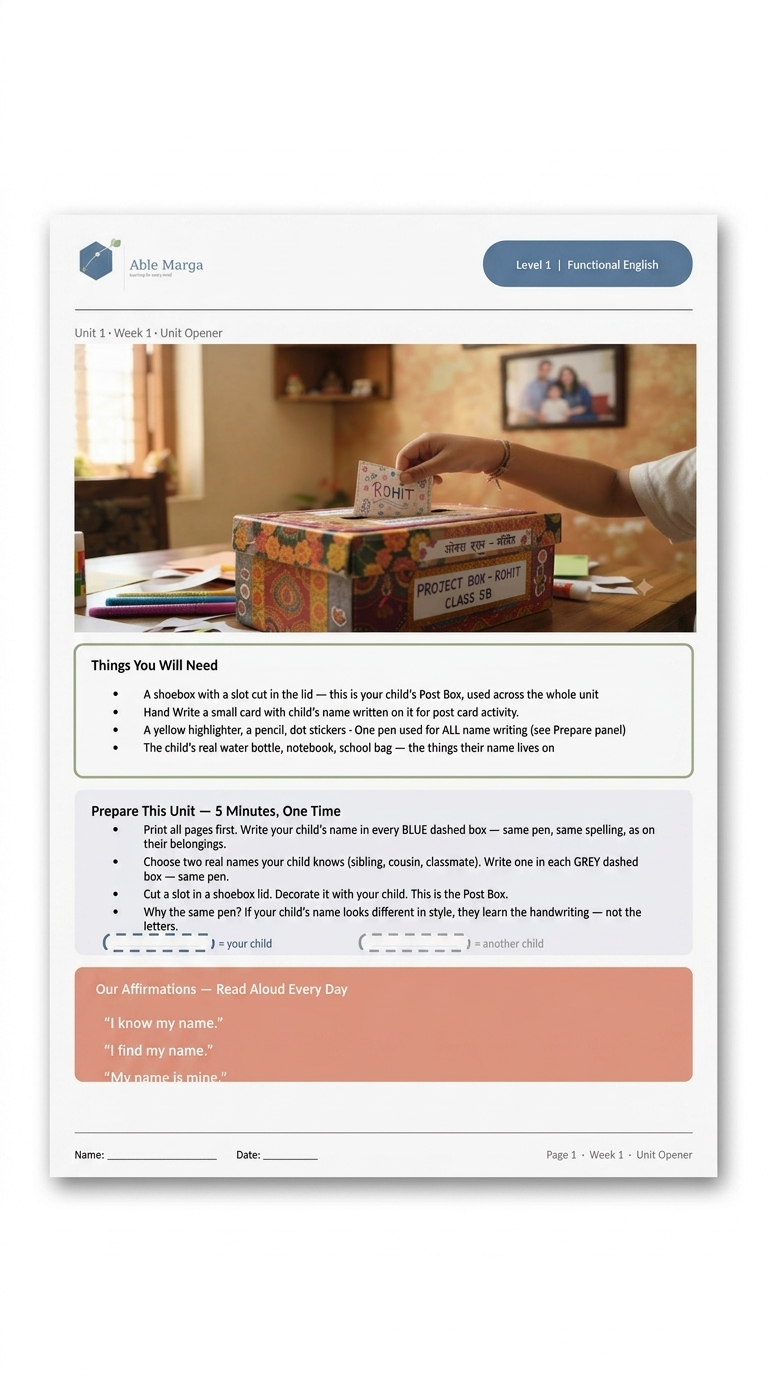 Receptive language
Picture-based word recognition, familiar names, action words, signs, symbols and other functional literacy foundations.
 OT & daily living
Hygiene, routines, meals, dressing, helping at home, safety, familiar places and asking for help.
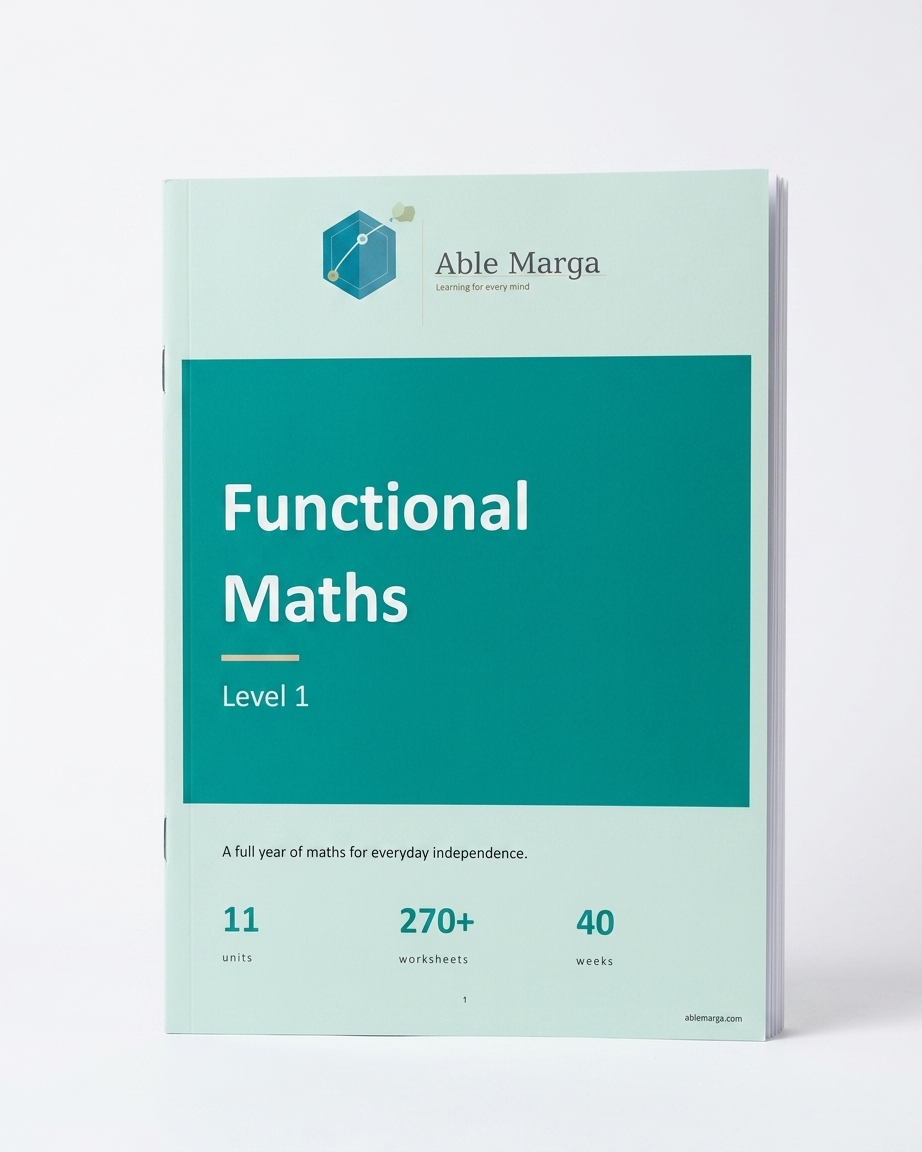 Cognitive foundations
Matching, sorting, same and different, colours, size, more and less, numbers, counting and early money recognition.
Use the prepared activity structure while adapting prompting, reinforcement, response method, difficulty and pace to the learner’s current goals and support needs.
Pages organised around clear functional learning targets can reduce routine preparation time.
Picture-based materials support identifying, requesting, choosing, matching and sequencing tasks.
Selected sets include structured checks that can support baseline and progress comparison.
Adapt activities for speech, pointing, AAC, matching, choosing or card placement when appropriate.
Revisit an appropriate target across sessions within the licence supplied with the purchased resource.
Use familiar materials to show parents or educators how a selected target can be practised consistently.
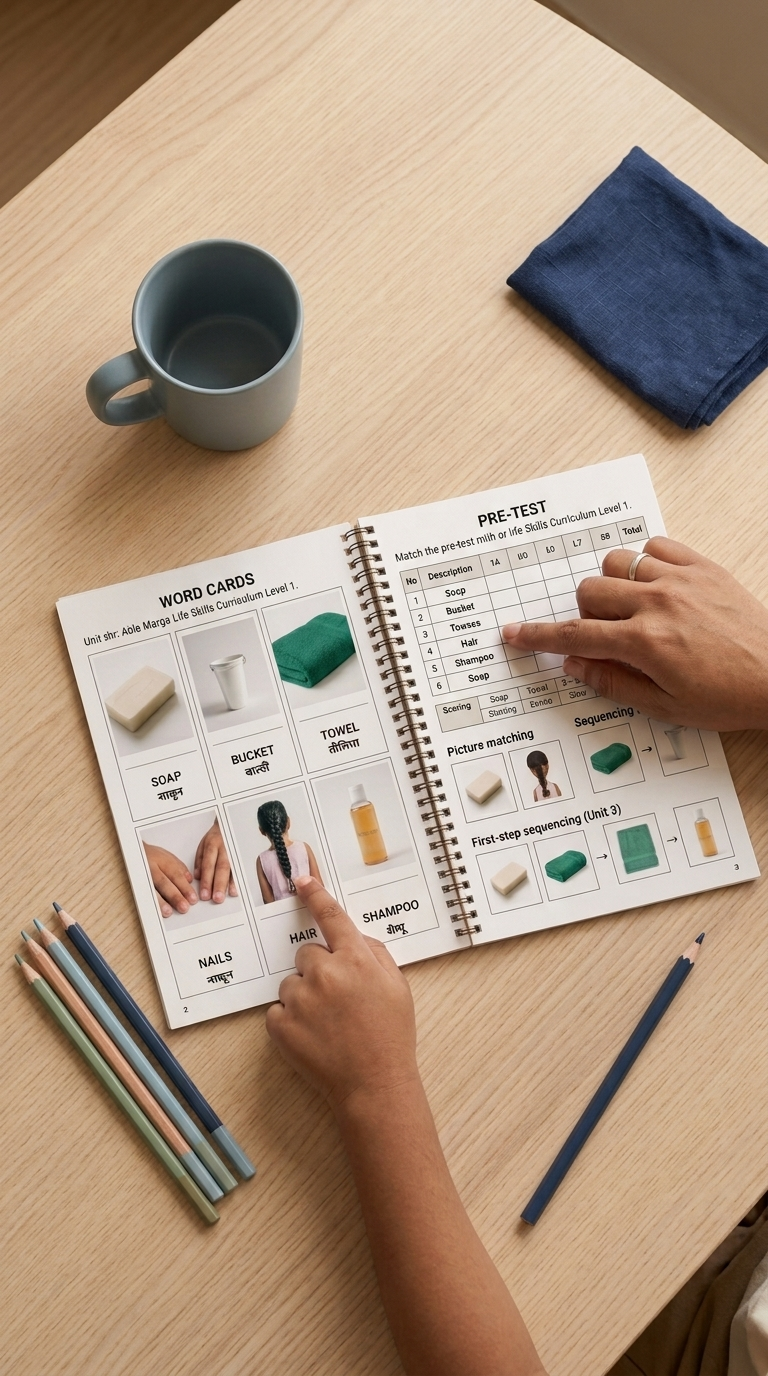

“Using Able Marga's life skill level 1 book along with the dummy clothes , good one and children are learning . Visually it is very good.”
The feedback specifically refers to using the Life Skills Level 1 book alongside a hands-on dressing activity. It is included here as client-provided therapist feedback, not as a universal outcome claim.
Explore Life Skills Level 1Explore all four live Level 1 subjects, or start with a free resource before selecting a complete curriculum for your sessions.