One clear step at a time
Teach one part successfully before adding another demand.
Example: identify a toothbrush → match it → later connect it with the hygiene routine.All four Level 1 subjects are live — structured printable PDFs for functional learning. Explore Level 1 →
Able Marga provides clear, printable activities for children with developmental delay or global developmental delay (GDD), beginning with early skills such as looking, choosing, matching, sorting and following familiar one-step routines.
The goal is not to rush into age-based academic work. Start from the child’s current ability, practise one manageable response at a time and build toward Level 1 functional learning when the foundation becomes more secure.
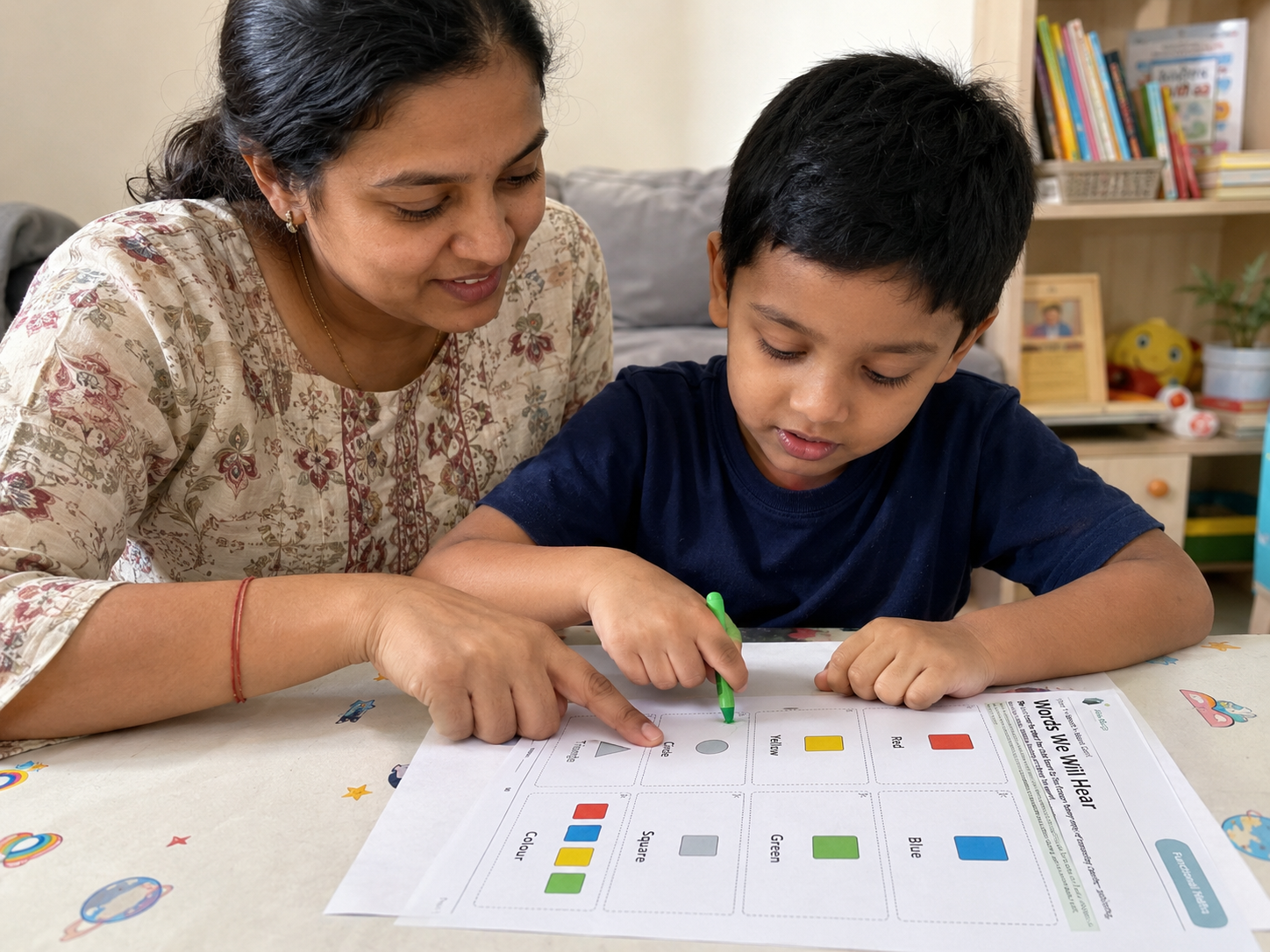
Children with developmental delay may need more time, repetition or simpler response demands. The starting point should be what the child can access now, with support reduced gradually as confidence and independence grow.
A child may begin with looking at one familiar item, choosing between two options, placing a card, matching identical objects or following one familiar instruction.
Teach one part successfully before adding another demand.
Example: identify a toothbrush → match it → later connect it with the hygiene routine.Pictures and clear choices can make the meaning of an activity easier to understand.
Pointing, touching, choosing or placing a card can be valid early responses.Short, familiar activities can be repeated across several sessions.
Revisit the same skill until the response becomes more confident.Add difficulty when the learner is ready, not simply because a worksheet was completed once.
Support first, practise consistently, then reduce help gradually.When the child is ready, Level 1 gives a structured next step across daily living, early numeracy, functional literacy and communication. A learner may be ready for different levels in different subjects.
Morning routines, body awareness, hygiene, meals, dressing, helping at home, asking for help and familiar community places.
Explore Life Skills →Matching, sorting, colours, size, more and less, numbers, counting real objects, early money recognition and full or empty.
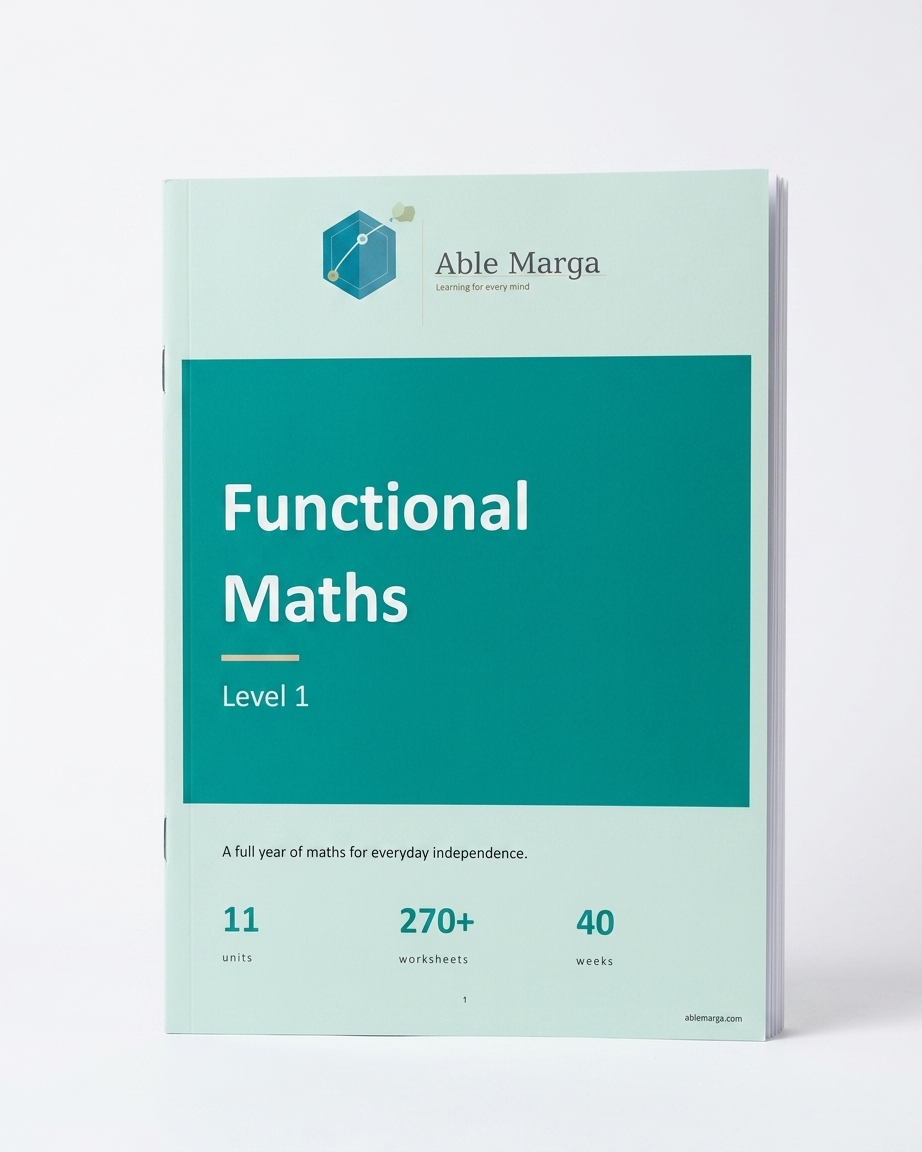
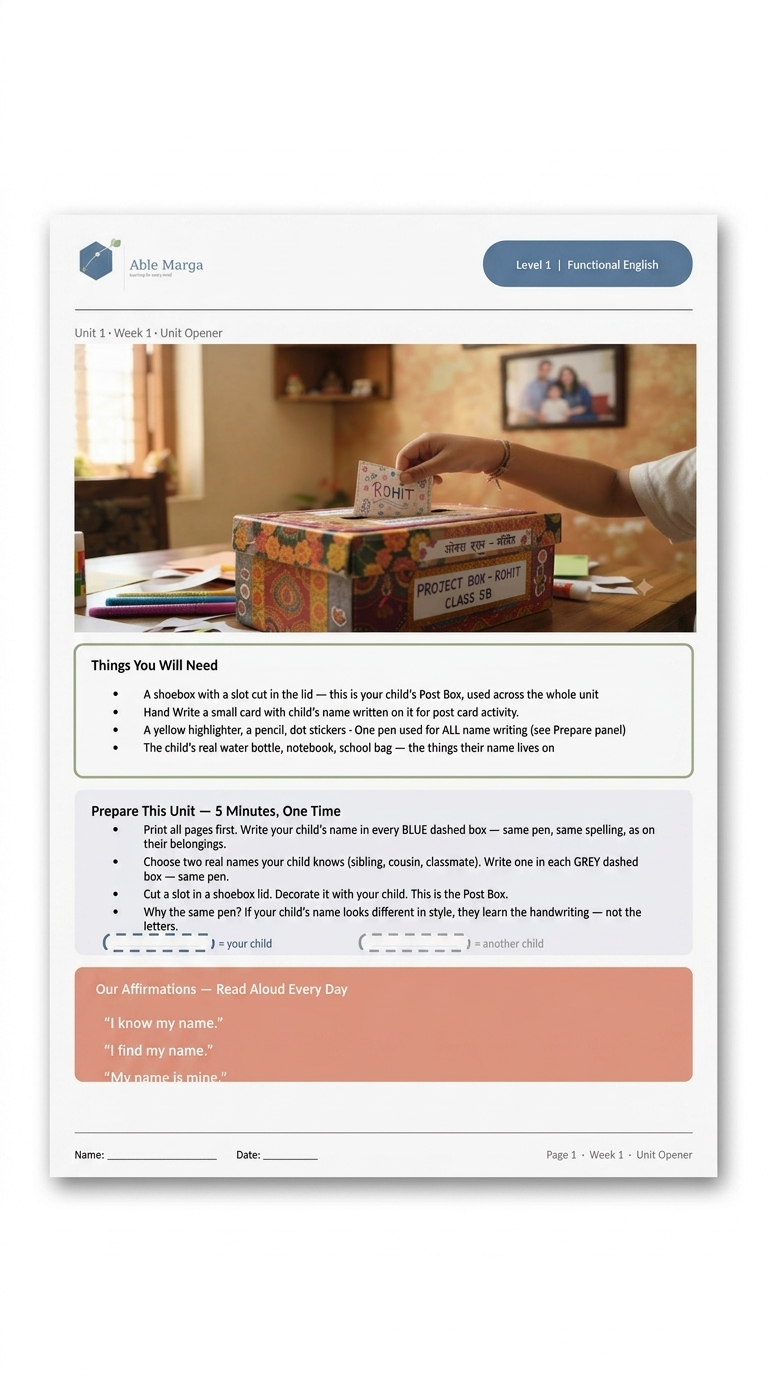
Explore Functional Maths →Name recognition, first words, sight words, action words, signs, symbols, colour words, family names and picture reading.
Explore Functional English →Greetings, requesting, choices, feelings, action words, WH questions, sequencing, turn-taking and AAC-friendly picture communication.
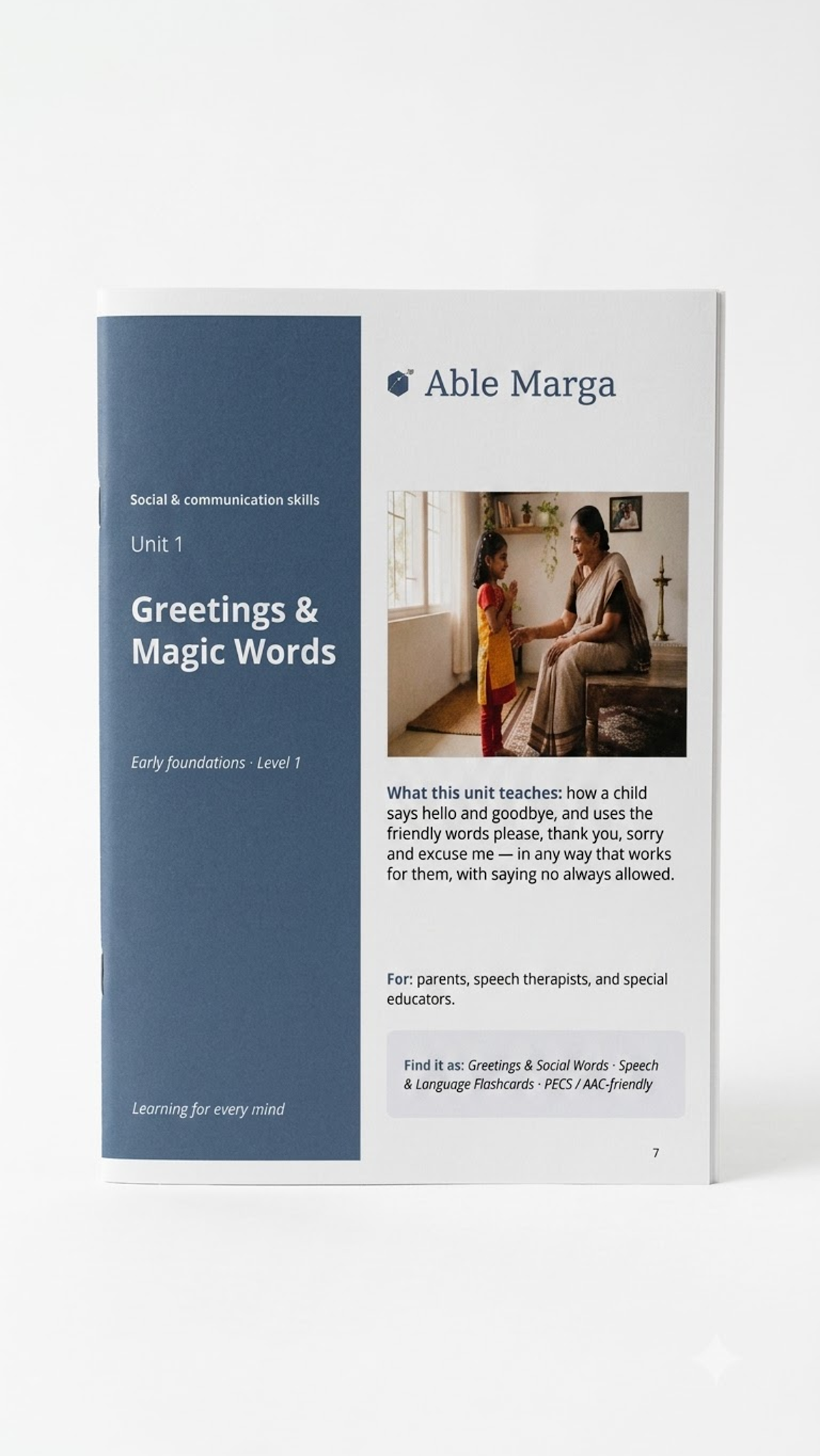
Explore Social & Communication →Start with the response the child can manage today. If matching is not yet comfortable, begin before worksheet-level matching with familiar objects, simple choices and adult modelling.
Use one familiar object or two very clear choices. Model the response, allow enough processing time and keep the session short.
Try: “Show me the cup” or “Choose the spoon.”Start with identical familiar objects, then object-to-picture and later picture-to-picture matching when the child is ready.
Explore Functional Maths Level 1 →Simple routines such as putting shoes away, washing hands or placing an item in the correct location can connect learning with daily participation.
Explore Life Skills Level 1 →Observe whether the learner can attend to the visual layout and complete a short response before selecting a full Level 1 subject.
Explore free resources →Printable resources can support extra practice at home, in preschool or alongside professional early-intervention work. Consistency is usually more useful than pushing through many pages in one sitting.
Focus on looking, choosing, matching, sorting, a simple concept or one familiar routine.
Use only the amount of work the child can access successfully before attention or regulation drops.
Revisit the same response over several sessions instead of changing the target too quickly.
When possible, connect the worksheet concept with an actual home, preschool or therapy routine.
Able Marga resources are digital PDFs. Select the pages required for the current skill and reprint within the licence for your purchase when repetition is useful.
You do not need to begin with a full academic task. Choose one response the child can access today, repeat it in a short predictable way and move forward when the foundation is more secure.