Skip to content

Level 1 worksheet sets are live — instant PDF download. New subjects & levels dropping soon. Shop Level 1 →

Need help choosing?
Gentle early learning support

Early foundational worksheets for developmental delay and GDD

Clear, printable activities that help children begin with looking, choosing, matching, sorting and simple everyday routines—without rushing into skills they are not ready for yet.

Able Marga provides gentle, early-foundation printable activities for children with developmental delay or global developmental delay (GDD). Learners begin with looking, choosing, matching, sorting and one-step routines before moving to harder academic tasks. Activities use clear visuals and simple, repeatable responses.
Gentle progression Early matching and sorting One-step routines Instant printable PDFs
Not sure about the right level? View the placement guide
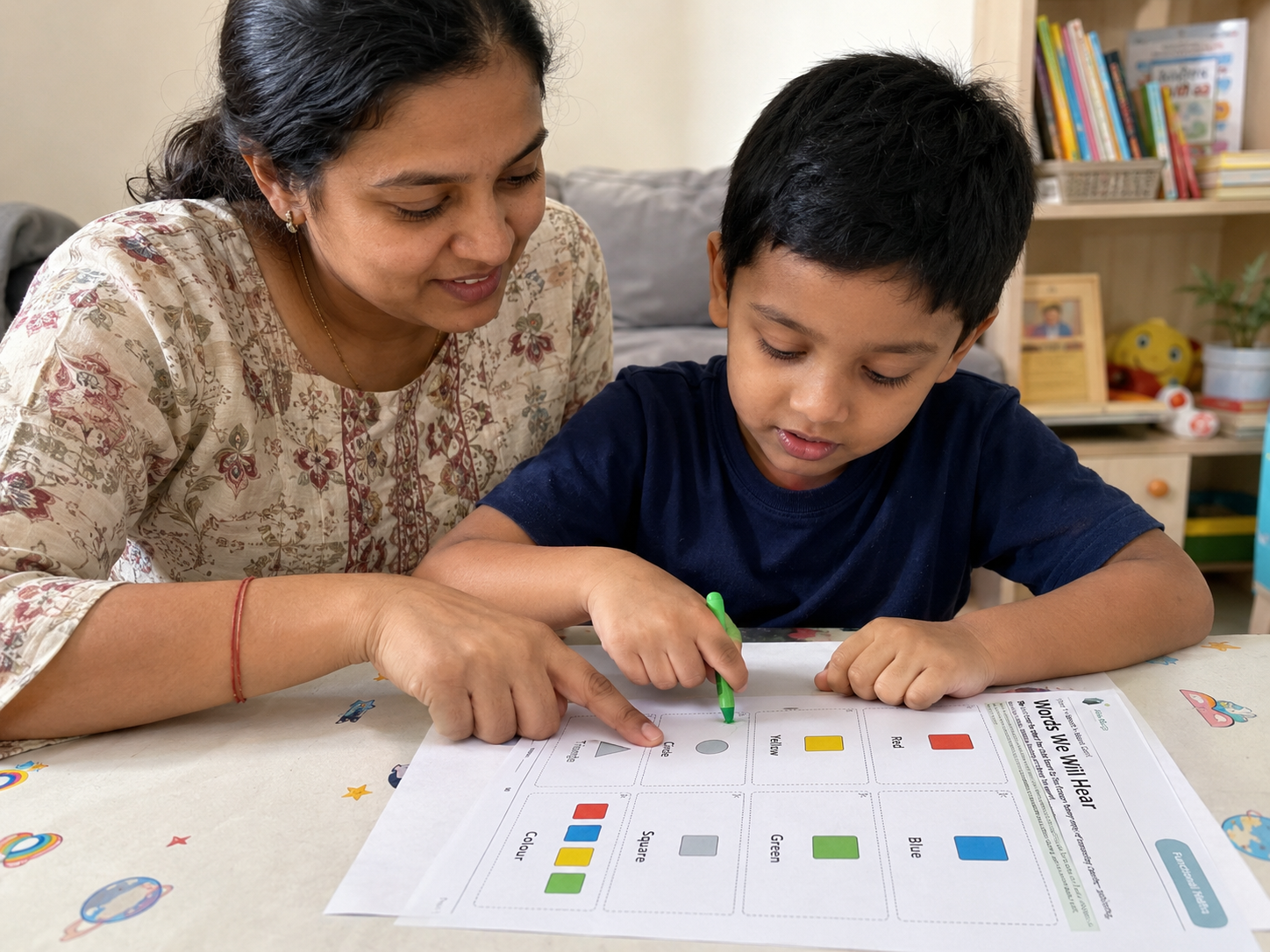
Parent helping a child with a simple Able Marga visual matching activity
Start with success One clear instruction and one manageable step at a time.
Parent-friendly approach

Easy to repeat at home, in early intervention or in preschool.

Why the approach works

Build the foundations first, then move forward

Children with developmental delay may need more time, repetition and smaller learning steps. Able Marga keeps each activity clear and manageable so progress can happen without unnecessary pressure.

Start from the child’s current ability

A child does not need to begin with writing, counting or long verbal answers. Early activities can start with looking at a picture, making a choice, placing a card, matching two items or following one familiar instruction.

The core principle Meet the learner where they are—not where their age says they should be.
02

One clear step at a time

Complex tasks are broken into smaller actions. The child can learn one part successfully before another step is introduced.

For example: first identify the toothbrush, then match it, and later use it within a hygiene routine.
03

Visuals make instructions clearer

Simple pictures reduce the amount of spoken language a child needs to understand before they can participate in an activity.

The learner can point, match or place a card instead of needing to give a full spoken answer.
04

Repetition without starting over

Printable activities can be repeated across several short sessions. Familiarity helps the child practise the same skill with less confusion.

Reprint a page or reuse picture cards until the response becomes more confident and independent.
05

Progress without rushing

Prompts and adult help can be reduced gradually. The next skill is introduced when the learner is ready, not simply because a page has been completed.

Support first, practise consistently, then slowly reduce help as the child becomes more secure.

A gentle early-foundation learning path:

01 Look
02 Choose
03 Match
04 Sort
05 Complete a routine
Why the approach works

Build the foundations first, then move forward

Children with developmental delay may need more time, repetition and smaller learning steps. Able Marga keeps each activity clear and manageable so progress can happen without unnecessary pressure.

Start from the child’s current ability

A child does not need to begin with writing, counting or long verbal answers. Early activities can start with looking at a picture, making a choice, placing a card, matching two items or following one familiar instruction.

The core principle Meet the learner where they are—not where their age says they should be.
02

One clear step at a time

Complex tasks are broken into smaller actions. The child can learn one part successfully before another step is introduced.

For example: first identify the toothbrush, then match it, and later use it within a hygiene routine.
03

Visuals make instructions clearer

Simple pictures reduce the amount of spoken language a child needs to understand before they can participate in an activity.

The learner can point, match or place a card instead of needing to give a full spoken answer.
04

Repetition without starting over

Printable activities can be repeated across several short sessions. Familiarity helps the child practise the same skill with less confusion.

Reprint a page or reuse picture cards until the response becomes more confident and independent.
05

Progress without rushing

Prompts and adult help can be reduced gradually. The next skill is introduced when the learner is ready, not simply because a page has been completed.

Support first, practise consistently, then slowly reduce help as the child becomes more secure.

A gentle early-foundation learning path:

01 Look
02 Choose
03 Match
04 Sort
05 Complete a routine
Where to start

Choose by current skills, not age

Start with the response your child can manage today. A learner may begin with matching, sorting or one-step routines before moving toward counting, writing and longer instructions.

A useful starting point

Begin here if your child is learning to…

Look towards a familiar picture or object
Choose between two clear options
Match identical pictures or everyday objects
Follow a familiar one-step instruction
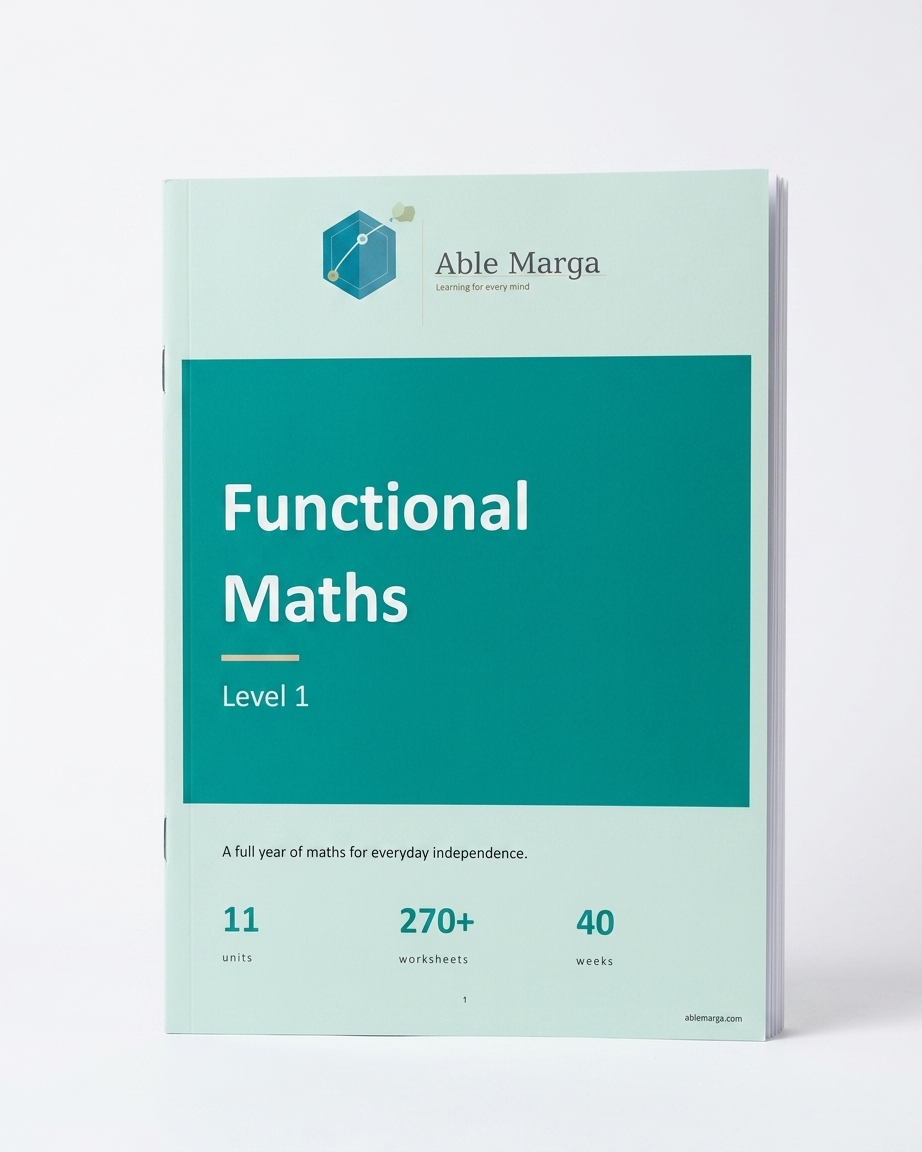
Start with matching Able Marga Functional Maths Level 1 printable curriculum
Functional Maths

Matching, sorting and early concepts

Build visual attention and early thinking skills through concrete, structured activities before expecting formal number work.

A good fit when The learner is beginning to notice similarities, differences and simple groups.
  • Matching identical pictures and objects
  • Sorting by colour, type or familiar category
  • Understanding same, different, more and less
Build daily independence Able Marga Life Skills Level 1 printable curriculum
Life Skills

Simple routines with a clear purpose

Connect early learning to familiar activities such as dressing, hygiene, food, safety and following everyday routines.

A good fit when The learner responds best to familiar objects, actions and activities from daily life.
  • Recognising familiar personal-care items
  • Following one-step everyday directions
  • Learning the order of a simple routine
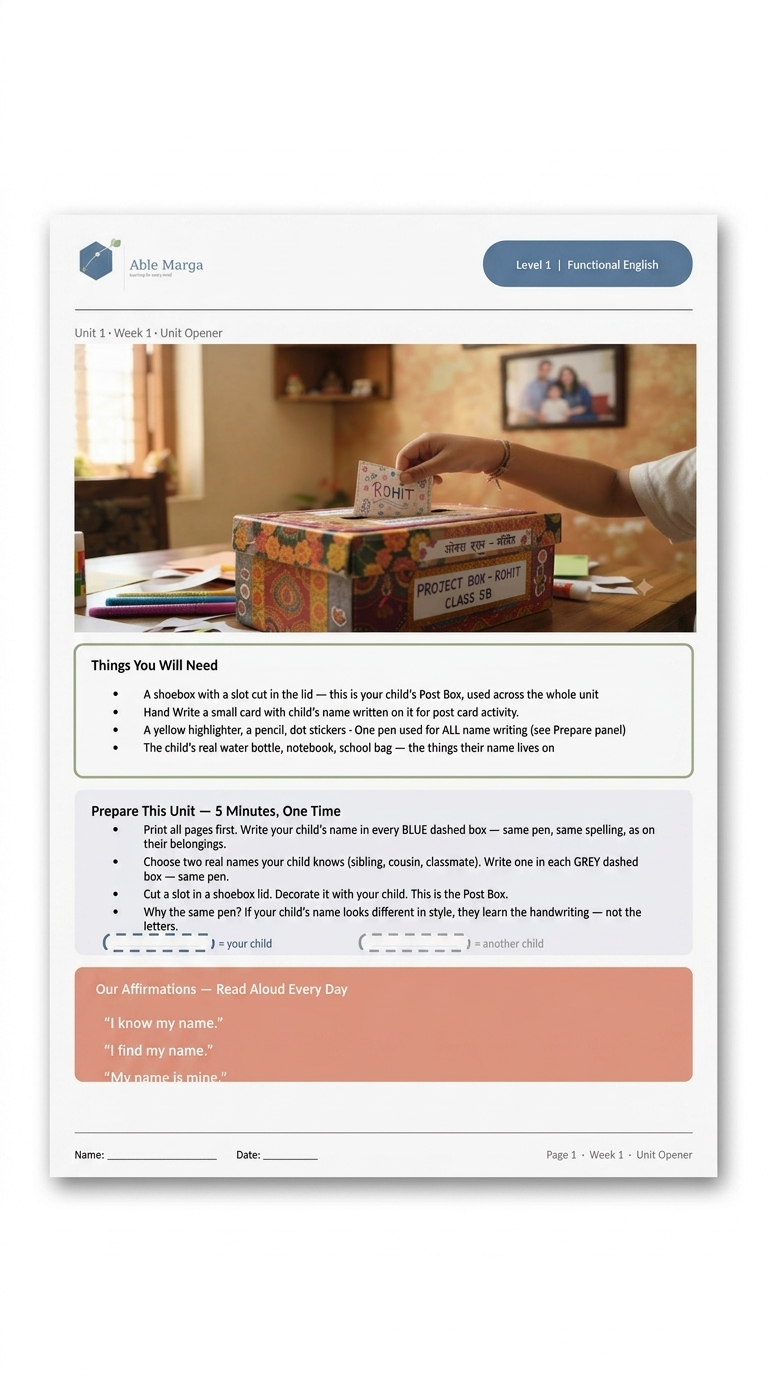
Try before choosing Simple Able Marga printable matching worksheet for early foundational learning
Free starter activity

Observe how your child responds

Try a short printable first. Notice whether the learner can look, choose, point, match or place a card and how much support is needed.

Use it to observe Whether the activity feels manageable and which response method works most comfortably.
  • Begin without committing to a full curriculum
  • Repeat the activity across short sessions
  • Use pointing or card placement instead of speech
What you get

Ready to use, easy to repeat

Able Marga resources are designed for practical use by parents, therapists and educators. The pages are already structured, so you can focus on supporting the learner instead of preparing activities from scratch.

Download and usage

A print-ready PDF delivered instantly to your account and email. Print at home, in sessions or in class, as many times as you need for your own child or students. INR pricing; download once, use anywhere in the world.

Everything needed for a clear learning session

Exact contents may vary by subject, unit and product.

Structured printable activities

Clear pages that focus on one manageable learning objective at a time, reducing unnecessary visual and instructional overload.

Visual learning supports

Familiar pictures, word cards and activity elements that support pointing, choosing, matching and card-placement responses.

Guidance for the adult

Practical instructions help parents, therapists and educators understand how to introduce and support each activity.

Repeatable practice

Reprint pages when extra practice is needed, or reuse prepared cards across several short and familiar learning sessions.

Progress monitoring

Selected resources include pre-tests, post-tests or structured review activities to help you observe changes over time.

Flexible response methods

Activities can often be completed by pointing, matching, choosing or placing a card, without requiring speech or handwriting.

Use the resources:
At home
In therapy sessions
In school or preschool
Questions from families

Developmental delay and GDD FAQs

Practical answers about beginning early learning activities, choosing an appropriate starting point and using Able Marga resources alongside professional support.

What activities help with global developmental delay at home?

Start with short activities connected to the child’s current abilities. Useful early activities include object and picture matching, sorting familiar items, choosing between two options, identifying body parts and following one-step daily routines.

Keep the instruction clear, provide enough help for the child to respond successfully and repeat the activity across short, predictable sessions.

Where do we start if my child can’t match yet?

Begin before worksheet-level matching. Use two identical, familiar objects and demonstrate placing one beside the other. You can then move from object-to-object matching to object-to-picture matching and, later, picture-to-picture matching.

  • Use only one or two choices initially.
  • Choose large, visually clear and familiar items.
  • Guide the response when needed, then reduce help gradually.
  • Stop before the child becomes tired or frustrated.
Can I use these alongside early intervention therapy?

Yes. Able Marga printables can be used for additional practice at home, in preschool or during a professional session. Share the resources with your child’s therapist or early intervention team so activities can support the learner’s current goals and use consistent prompts.

The worksheets are educational resources and do not replace an individual developmental assessment, diagnosis or therapy plan.

Should I choose worksheets according to my child’s age?

Choose according to the child’s current functional skills rather than chronological age alone. A learner may be ready for age-appropriate topics but still need simpler response methods, fewer choices or more visual support.

The Able Marga placement guide can help you identify a more suitable starting point.

What if my child does not speak or write yet?

Speech and handwriting are not required for many early Able Marga activities. A learner may respond by looking, pointing, touching, choosing, matching or placing a picture card.

Use the response method the child can access most reliably and accept AAC or other established communication methods where appropriate.

Important: These resources are intended for educational support. Questions about development, diagnosis or individual treatment should be discussed with an appropriately qualified healthcare or developmental professional.
Begin with one manageable step

Start gently. Practise consistently. Build from success.

You do not need to begin with a full academic task. Start with one clear activity your child can access today, observe the response and move forward at a comfortable pace.

Print-ready PDF resources
Suitable for home and sessions
Choose by functional skill level