The teacher’s note says it again: “Does not complete classwork. Easily distracted.” At home, homework that should take 15 minutes takes an hour of reminders. If your child has ADHD, autism or a learning difference, or simply finds focusing hard, you may feel you have tried everything.
Here is something hopeful: attention and working memory are skills, and skills can be practised, in small, daily, enjoyable doses.
How can I improve my child’s attention and memory at home?
Practise attention and memory in short daily sessions of about 15 minutes, using tasks that train one skill at a time: spot-the-difference, finding a target in a busy picture, copying patterns, remembering a set of objects, mazes and simple logic puzzles. Keep each task short, increase difficulty slowly, and pair practice with good sleep, movement breaks and less screen time.
What is working memory, and why does it matter?
Working memory is the brain’s “sticky note”: holding information for a few seconds while using it. A child uses it to follow “Take your bag, put your bottle inside, and wear your shoes”, or to copy a word from the board. When working memory is weak, instructions seem to “disappear”. That is not laziness; it is a skill gap.
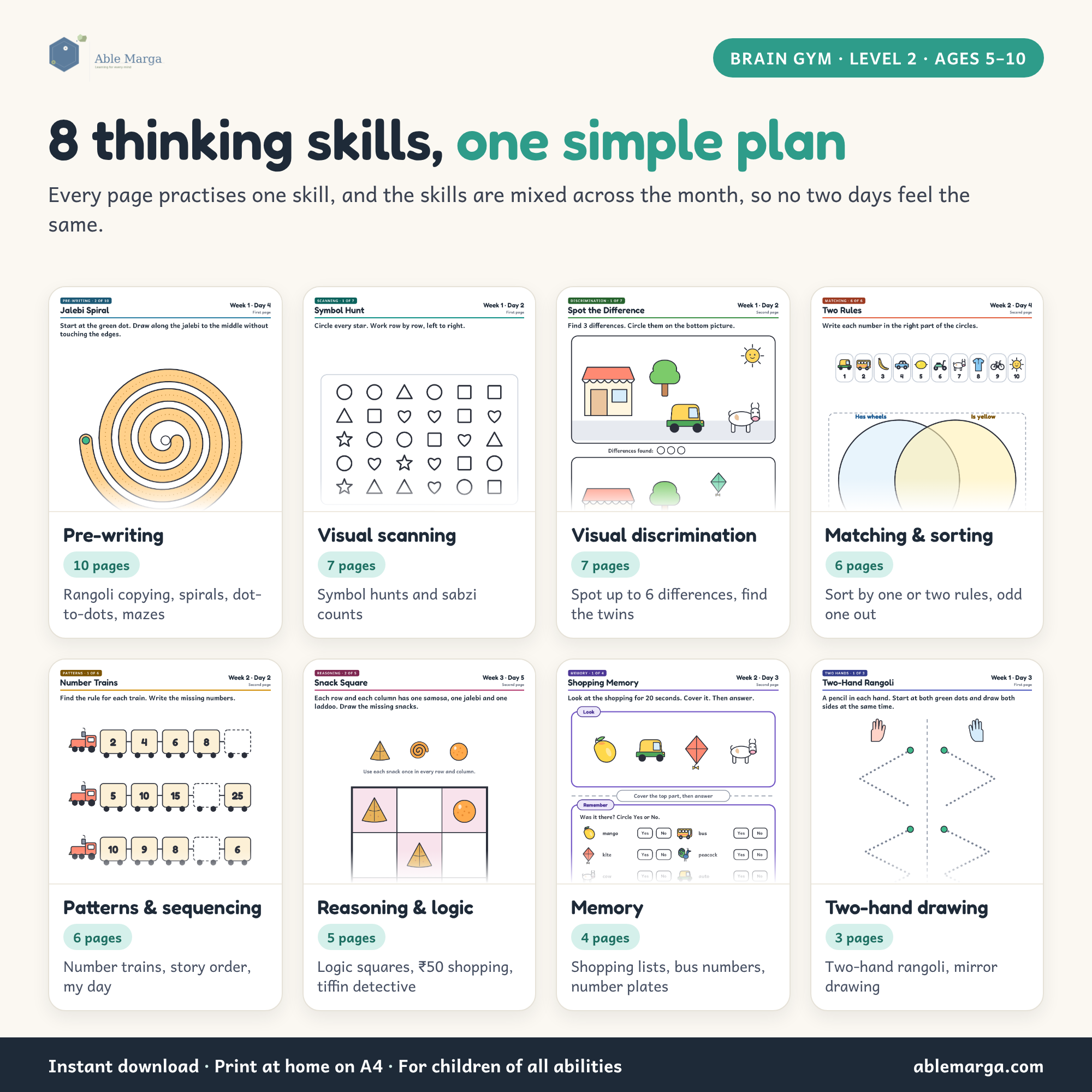
8 thinking skills to practise between 5 and 10
- Pre-writing control: steady lines and shapes
- Visual scanning: searching a page from left to right, top to bottom
- Visual discrimination: spotting small differences
- Matching and sorting: grouping by more than one rule
- Patterns and sequencing: what comes next?
- Reasoning and logic: odd one out, simple puzzles
- Memory: remember, cover, recall
- Two-hand drawing: coordination of both sides of the body
Everyday attention games (no printing needed)
- Kim’s game with steel katoris: show 5 kitchen items, cover with a cloth, remove one. What is missing?
- Simon says, Indian style: “Touch your nose and then the door.” Add a step each week.
- Spot the colour on the road: in the car or auto, count only red vehicles for 2 minutes.
- Shopping list memory: ask your child to remember 3 things to pick at the kirana shop.
Tip for ADHD: Put a short movement break before the task, not after. Ten jumping jacks or a run to the gate often makes the next 10 minutes calmer.
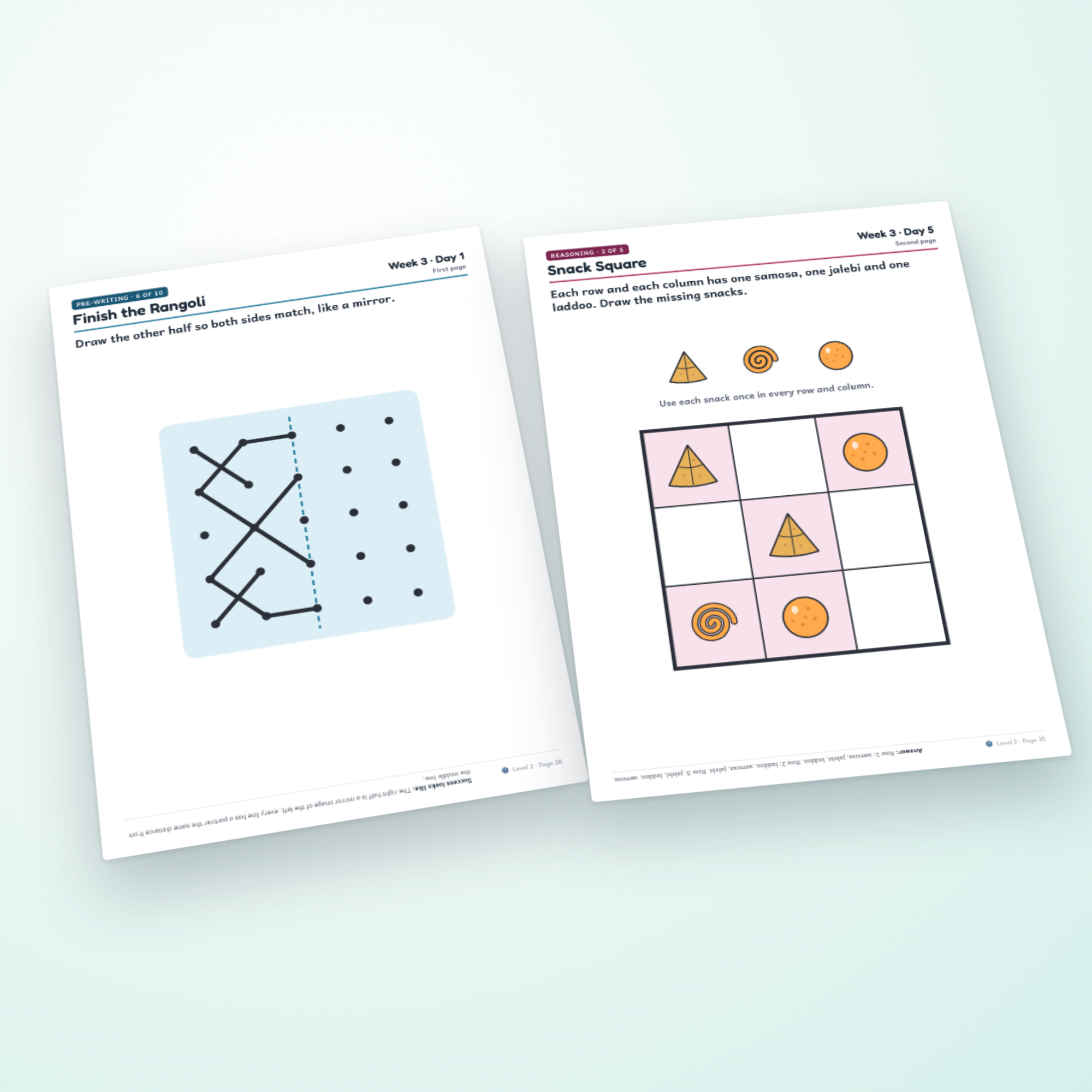
Brain Gym Level 2: 15 minutes a day, for 4 weeks
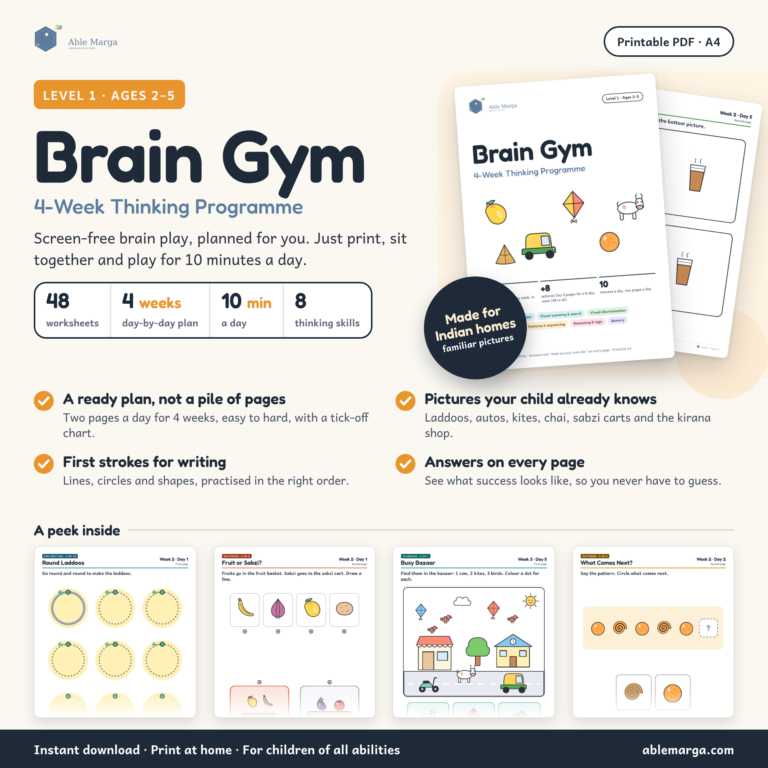
Brain Gym Level 2 is a 4-week printable thinking programme for every child aged 5 to 10, designed to work just as well for children with ADHD, autism, Down syndrome or learning differences.
- 15 minutes a day, with every day planned for you
- All 8 thinking skills, mixed across the month so your child practises each one every few days
- Moves from easy to hard, with answers included
- Indian everyday pictures, so the focus stays on thinking
- Instant PDF, print at home on A4
It costs ₹99. For younger children, start with Brain Gym Level 1 (ages 2–5).
Frequently asked questions
Can worksheets cure ADHD?
No. ADHD is a neurodevelopmental condition, and no worksheet cures it. Regular practice can strengthen specific skills such as scanning and memory, alongside any support your doctor recommends.
My child gets frustrated quickly. What should I do?
Start one level easier than you think, do one page instead of two, and stop on a success.
Is it suitable for a 10-year-old working at a younger level?
Yes. Choose the level by ability, not age. Many older children start with Level 1 and move up quickly.
Focus grows the way muscles grow: a little, every day.