
A worksheet cannot teach your child to wash their hands. It can teach them what order the steps come in — and that turns out to be the part most children are missing when a routine keeps breaking down.
Do life skills worksheets actually work?
Life skills worksheets work when they are paired with real practice. The worksheet teaches the sequence — what happens first, next and last — while the actual skill is learned by doing it in the real place at the real time. Used alone, a worksheet teaches recognition but not the skill.
The teach–practise–check loop
This is the whole method, and it takes about ten minutes a day.
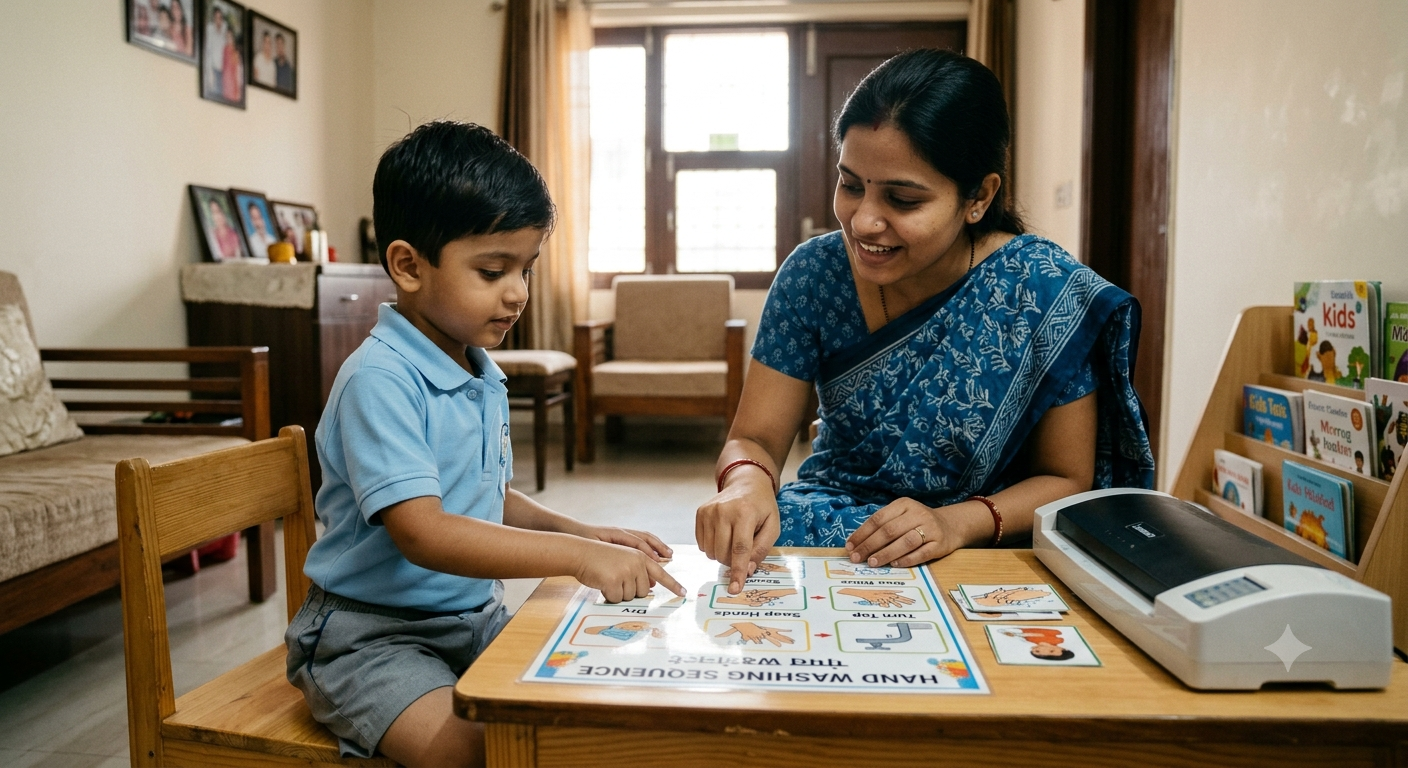
- Teach the sequence on paper. Look at the step pictures together. Have your child point to what comes first, then next.
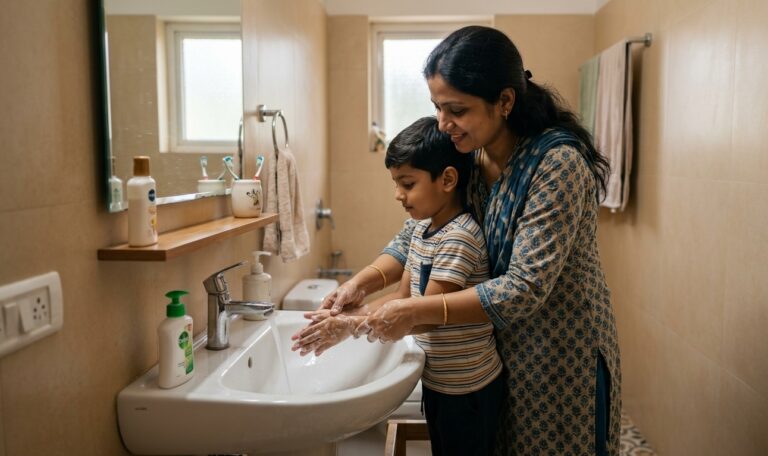
- Practise in the real place. Do the actual skill at the natural moment — hand washing before lunch, not as a 4pm exercise.
- Check on paper again. Can they order the steps unprompted now? That tells you whether it is going in.
Most home programmes do step two only, then wonder why progress is invisible. The paper stages are what make progress measurable.
Which skills to teach first
- Start with: hand washing, toileting, removing and putting on simple clothing, eating with a spoon
- Then: brushing teeth, dressing with fasteners, bathing with prompts, packing a bag
- Later: full hygiene routine, preparing a cold snack, sweeping, road safety, paying at a shop
Follow your child’s current level rather than their age. A twelve-year-old still working on dressing is exactly where they should be.
Making the worksheet do its job
A good life skills sheet shows one skill, broken into three to six steps, with a clear image per step and no writing required. Your child should be able to point, circle or place a cut-out card in order.
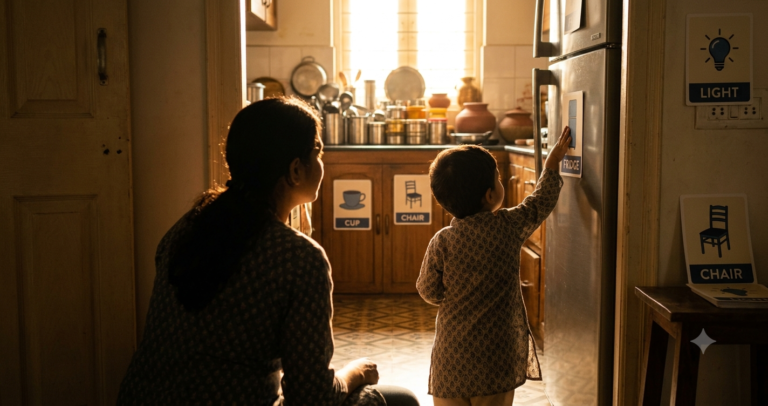
Print two copies — one for the teaching session, one laminated and stuck where the skill happens. The bathroom sequence belongs by the sink, not in a folder.
Backward chaining is your friend here. For most self-care skills, do all the steps except the last and let your child finish. Finishing is naturally rewarding, so every attempt ends in success. Then hand over the second-to-last step, and so on.
Tracking without it becoming a project
You need one line a day. Which step did they do alone? What help did they need? After two weeks you will see either a clear upward trend or a plateau — and a plateau usually means the steps need splitting further, not more repetition.
Frequently asked questions
My child can order the pictures but cannot do the skill.
That is normal and it means the sequence is learned. The gap is motor or prompting — practise the physical steps with hand-over-hand help, then fade.
How long before we see progress?
Usually two to six weeks of daily practice for a single self-care skill. If nothing has shifted in a month, split the steps smaller.
Should the worksheet come before or after practice?
Both — teach the sequence first, practise, then check on paper again.
Able Marga Life Skills units are built as exactly this loop — sequence pages, real-life practice, then a post-test.https://ablemarga.com/