
Children with Down syndrome have a fairly consistent learning profile — a set of genuine strengths alongside specific difficulties. Teaching that works with that profile rather than against it makes a striking difference, and most of it is straightforward once you know what to aim for.
How do children with Down syndrome learn best?
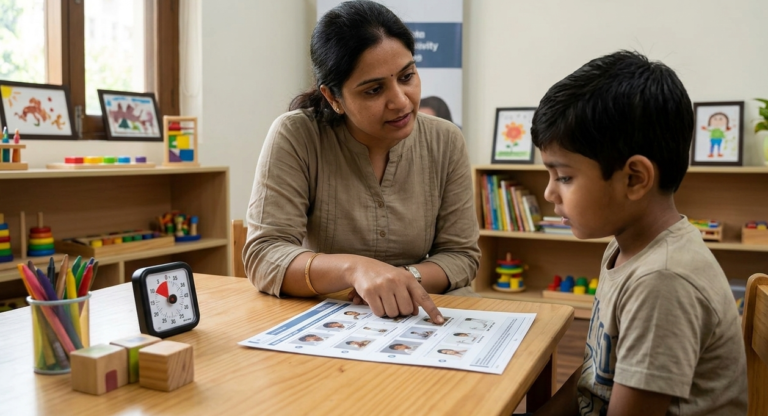
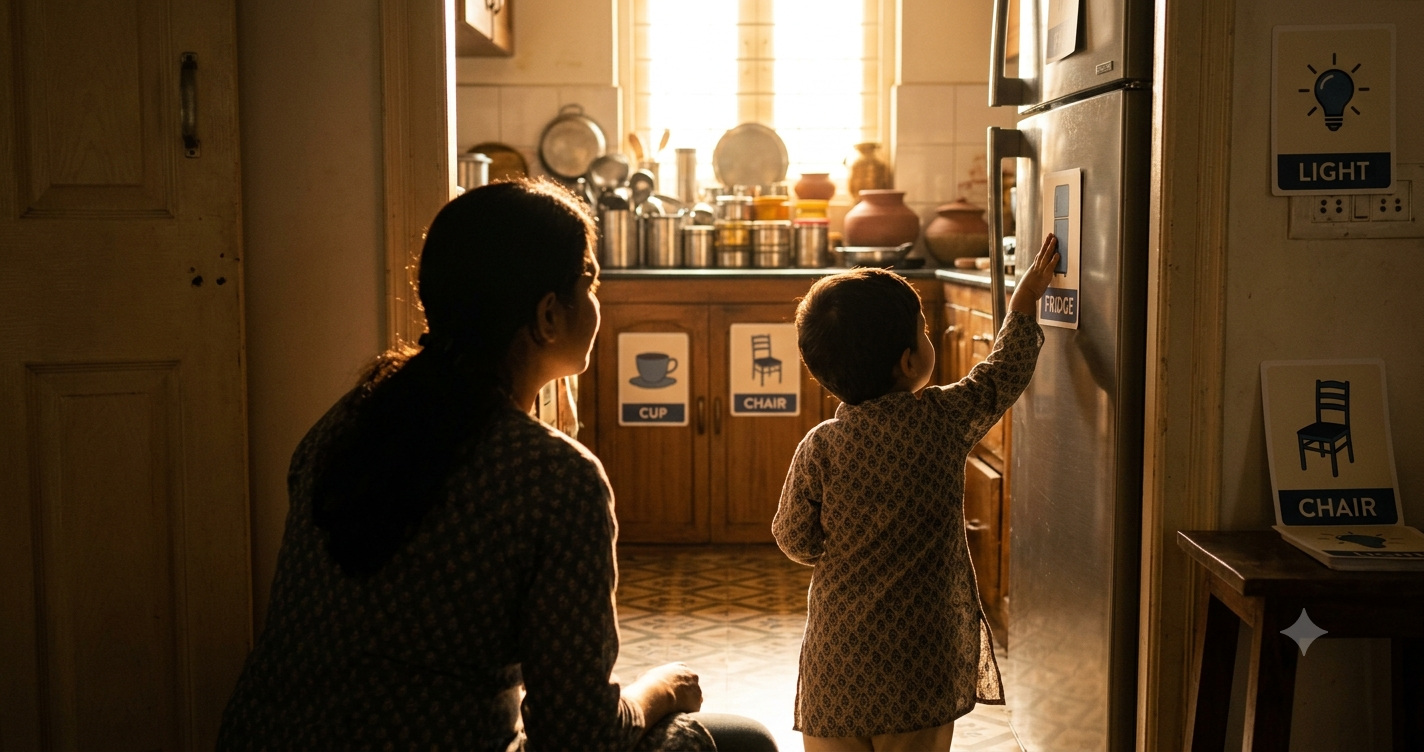
Children with Down syndrome are typically strong visual learners with relative difficulty in auditory processing and short-term verbal memory. Teaching works best when instructions are shown rather than only spoken, tasks are broken into short steps, and reading is introduced early using whole-word sight recognition.
The strengths to build on
- Visual learning — what they see is retained far better than what they only hear
- Social understanding — often a real strength, and a route into learning
- Imitation — modelling a task is usually more effective than explaining it
- Reading — many children with Down syndrome read well, often better than their spoken language would suggest
The difficulties to design around
Auditory processing and verbal memory. A spoken instruction with three parts will often lose the last two. Show it, write it, or use pictures alongside speech.
Speech clarity. Understanding usually runs well ahead of the ability to speak clearly. Never assume that unclear speech means limited comprehension — that assumption does real damage.
Motor skills. Low muscle tone affects handwriting, fastening buttons and cutlery. Allow more time and alternative responses rather than treating it as unwillingness.
Consolidation. Skills may appear and then seem to disappear. Regular revisiting is needed, and this is not regression.
Teaching reading early
Reading is frequently a genuine strength, and there is good reason to start earlier than school might suggest. Use whole-word sight recognition rather than phonics-first: pair a photograph with a printed word, ask the child to match, then fade the picture.
Reading also supports speech, because seeing the whole word gives a stable target that a fleeting spoken word does not.
Practical teaching adjustments
- Give one instruction at a time, and show it as you say it
- Wait longer after asking than feels natural — processing takes time
- Keep sessions short and end while it is still going well
- Use real objects and real settings wherever possible
- Build in daily repetition rather than long weekly sessions
On expectations. Outcomes for children with Down syndrome have shifted enormously in a generation, and many now read, work and live with substantial independence. Pitch your teaching to what your child can build towards, not to an outdated assumption about what is possible.
Health matters that affect learning
Hearing and vision difficulties are more common in Down syndrome and both directly affect learning — a child who is not responding may simply not be hearing clearly. Regular hearing and eye checks are worth keeping current, and worth ruling out before concluding that a teaching approach is not working.
Frequently asked questions
Should my child attend mainstream or a special school?
Both can work well, and it depends on the individual child and the support each school will actually provide. Ask specifically what adjustments will be made.
When should we start teaching reading?
Earlier than many people expect — sight word recognition can often begin in the preschool years.
Will my child speak clearly?
Speech clarity varies. Speech therapy helps, and visual supports ensure communication is never blocked while speech develops.
Able Marga units are visual-first with printed words paired to pictures throughout, which suits this learning profile closely.