
Curriculum shopping for a special-needs child is uniquely difficult. Everything is described as evidence-based and individualised, the sample pages all look reasonable, and you cannot tell whether it will suit your child until you have paid. These seven questions cut through most of it.
What should I look for in an autism curriculum?
A good autism curriculum has clear levels with prerequisites, teaches one concept at a time, requires no reading or writing from the child, includes pre- and post-tests to measure progress, gives the adult scripted guidance, and uses culturally familiar images and situations.
1. Does it have levels, and can you tell which one your child needs?
Content sold as a single undifferentiated bundle is a red flag. Look for defined levels with stated prerequisites, and a way to place your child before you buy. If you cannot work out where to start, neither can the publisher.
2. Is there a pre-test and a post-test?
Without a baseline you cannot tell whether anything is working. This is the single most-skipped feature in printable curricula and the one that matters most, because six months in you need to answer “is this helping?” with evidence rather than a feeling.
3. What does your child have to be able to do to use it?
Many worksheets marketed for autism quietly assume the child can read the instruction and write the answer. For a large proportion of learners that makes the material unusable. Check what the response method actually is — pointing, circling and matching are far more inclusive.
4. Is the adult told what to say and do?
You are not a trained special educator, and you should not have to be. Good material includes the prompt hierarchy, what to do when the child gets it wrong, and when to move on — printed on the page, not buried in a separate manual nobody reads.
5. Does it look like your child’s life?
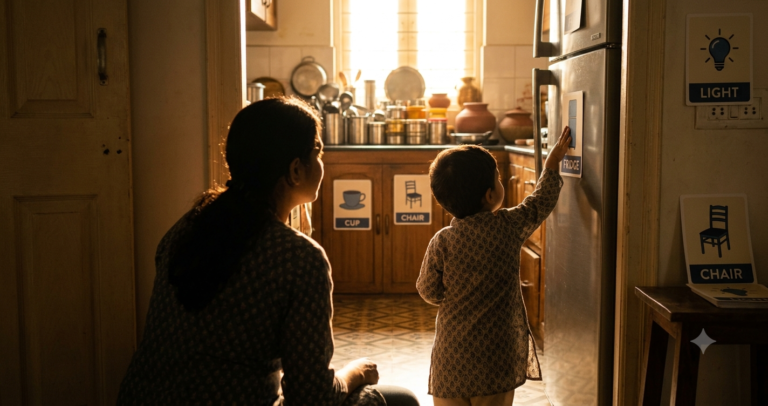
A child learning to lay a table with a picture of a Western dinner setting is learning something they will not use. Food, clothing, festivals, transport, household objects, family roles — these should be recognisable. Cultural fit is not decoration; it determines whether the skill transfers to real life.
6. Does it teach generalisation?
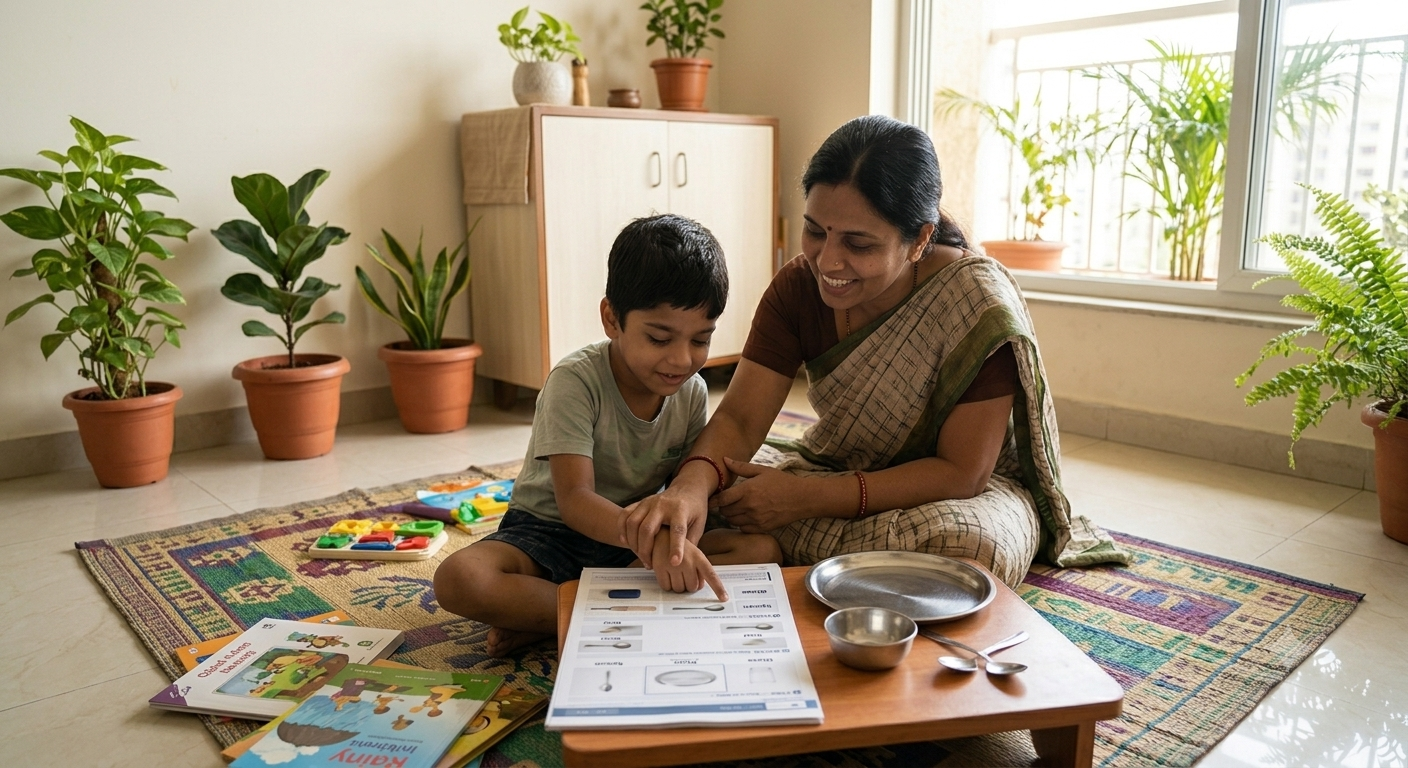
Skills learned only on paper stay on paper. Look for real-life practice activities built into each unit, not just worksheets. If there is no instruction to take the skill into the kitchen, the shop or the street, expect a gap.
7. Is progress reasonably paced?
Scan the sample pages. If unit one is matching two objects and unit three is counting to twenty, the steps are too big for most learners. Small increments feel slow to adults and work far better for children.
What price does and does not tell you. Expensive does not mean suitable, and free does not mean poor. Judge on the seven questions above. The genuinely expensive option is two years spent on material your child cannot access.
Try before you commit
Any publisher confident in their material will let you sample it. Run a free or single unit for two weeks and watch three things: does your child engage rather than avoid, can you deliver it without lengthy preparation, and can you see any measurable change. If all three are yes, buy more. If not, you have lost two weeks rather than a year.
Frequently asked questions
Should I choose an autism-specific curriculum?
Not necessarily. Well-designed functional and special-needs material often suits autistic learners well. Design quality matters more than the label.
Printable or digital?
Printable suits most young learners better — less distraction, and the physical page can be used in the real setting.
Can I mix curricula?
You can, but a single sequenced programme for a core subject makes progress much easier to track.
Able Marga was designed against exactly these seven questions — levels with prerequisites, pre- and post-tests, no reading or writing required, adult scripts, and Indian context throughout. Get a free sample of Functional maths worksheet here – Functional Maths Free sample