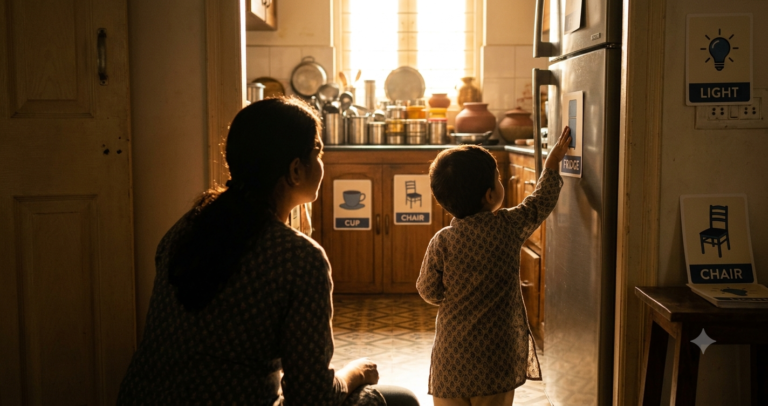
“Mummy, I made it myself.” Few sentences carry more pride. For a child or teen with autism, Down syndrome, ADHD or a learning difference, making a simple snack is not just a fun activity. It is planning, sequencing, fine motor work, maths, safety and independence, all on one plate.
And you do not need a stove to start.
Why are cooking activities good for children with autism?
Cooking activities teach real independence through a fixed, visible sequence of steps. A child practises following instructions, fine motor skills (squeezing, stirring, spreading), counting and measuring, waiting, hygiene and safety, and ends with a reward they can eat. No-cook recipes remove the stove and flame, so learners can practise these skills safely from an early age.
The secret: break every recipe into small photo steps
Special educators call it task analysis: breaking a task into small, clear steps. “Make nimbu paani” is one big, confusing instruction. Broken down, it becomes:
- Wash your hands.
- Take a glass, a spoon, a lemon, sugar and water.
- Squeeze the lemon into the glass.
- Add 2 spoons of sugar.
- Pour water up to the line.
- Stir 10 times.
- Taste. Clean up.
Each step is one action with one photo. The learner looks, does, and ticks it off.
5 tips for a calm kitchen session
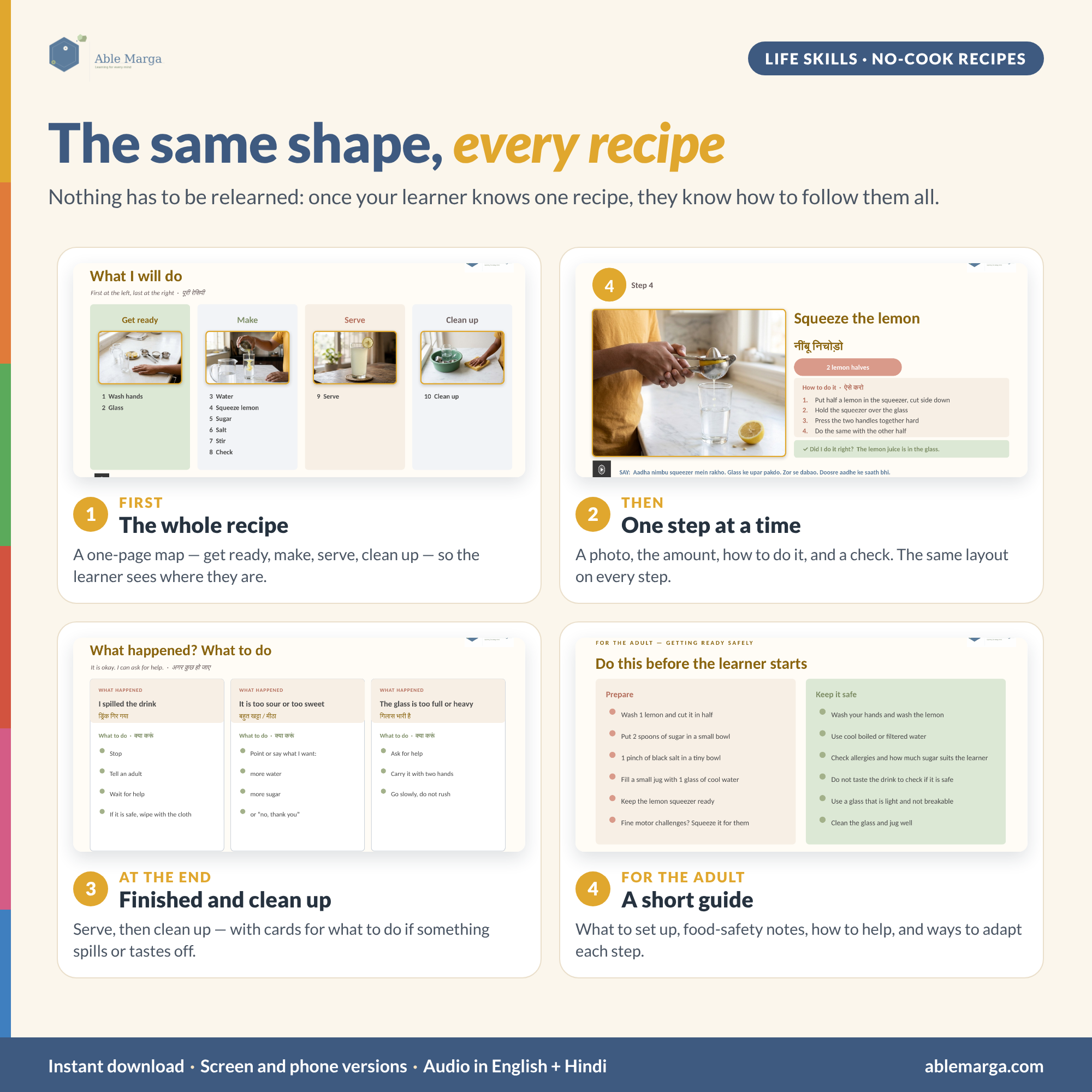
- Same layout every time. When every recipe looks the same, learners know what comes next.
- Lay out everything first. Put all the ingredients and tools on a tray before you begin.
- Help with the hard step, not the whole task. If squeezing a lemon is too hard, you squeeze and let your child pour. Then fade your help.
- Use backward chaining for learners who get frustrated: you do all the steps except the last, and they finish it. Success at the end builds motivation.
- Clean-up is a step too. Put it on the list from day one.
Safety first: Supervise any cutting, check for food allergies (some recipes use peanuts), and keep knives with the adult until your learner is ready.
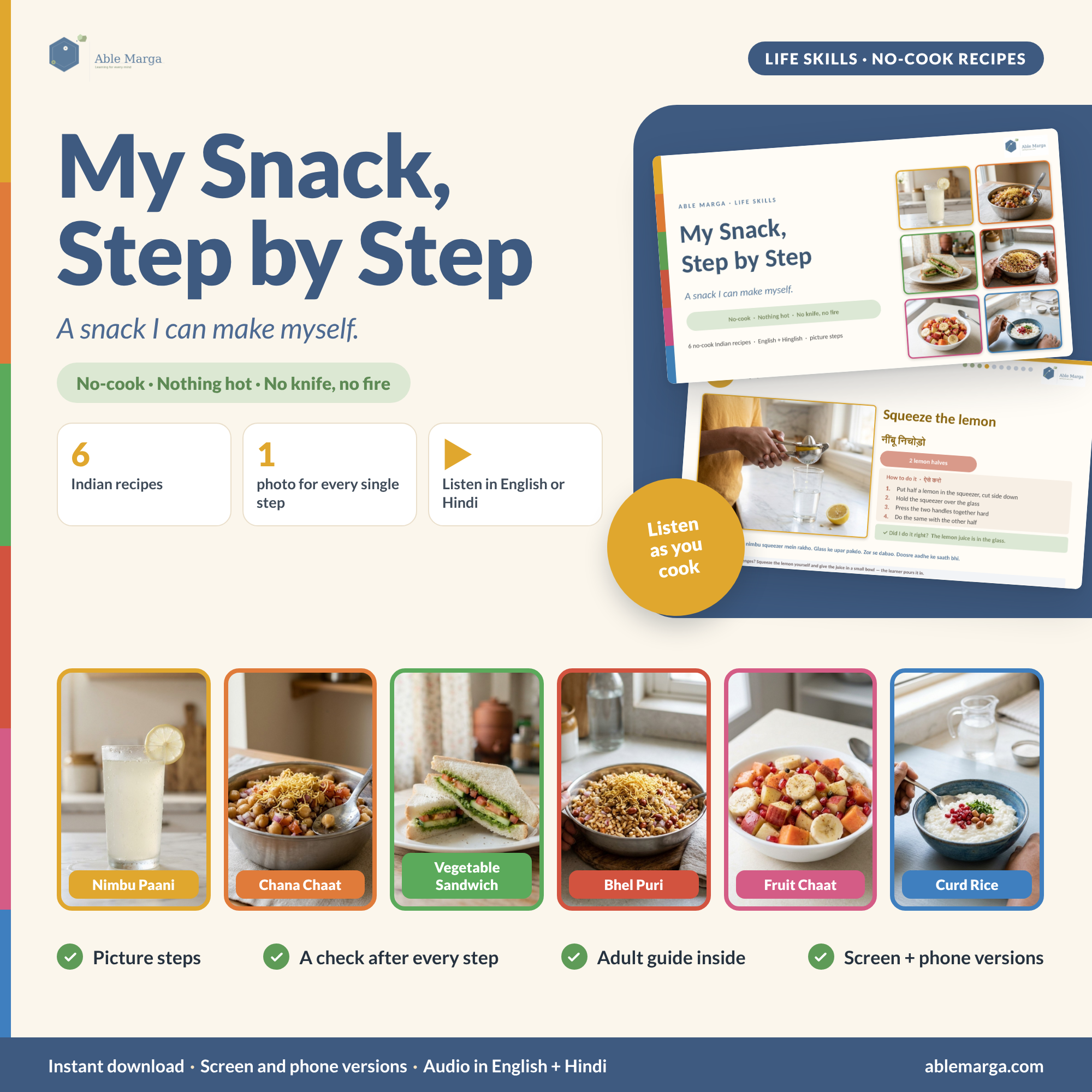
My Snack, Step by Step: 6 Indian no-cook recipes
My Snack, Step by Step teaches six familiar Indian snacks with real photo steps, for children aged 8 and above, teens and adults, readers and non-readers alike.
- 6 recipes, easiest first: Nimbu Paani, Chana Chaat, Vegetable Sandwich, Bhel Puri, Fruit Chaat and Curd Rice
- Every recipe uses the same layout: what you need, one step at a time, then “check my snack”
- Listen as you cook: audio support in English and Hindi
- Screen and phone versions, so the steps can sit right on the kitchen counter
- No stove, no flame
Coming soon: My Grocery Mission. Our next kit takes the learner from the kitchen to the shop, with real photos for making a list, finding items and paying. Follow us so you hear first.
Frequently asked questions
What age can my child start cooking?
Simple steps like washing fruit or stirring can start very young. The full recipes in My Snack are written for ages 8 and up.
My child cannot read. Can they still follow a recipe?
Yes. Photo steps and audio mean reading is not needed.
My teen eats only a few foods. Will this help?
Many families find that children are more willing to try food they made themselves. Go slowly and never force a taste. For serious feeding concerns, speak to an occupational therapist or feeding specialist.
One recipe, one step at a time, one proud “I made it.”