
The most common question I am asked is not how to teach a skill. It is which skill to teach next. Parents know their child needs to become more independent but cannot see the order, so they either pick at random or wait for school to decide. Here is the sequence, laid out.
In what order should daily living skills be taught?
Teach in this rough order: self-care first — toileting, hand washing, dressing and eating; then household tasks such as tidying, laying the table and simple food preparation; then community skills including road safety, money and asking for help. Follow your child’s current level rather than their age.
The sequence by stage
Foundation (roughly ages 4–6, or wherever your child is starting)
- Washing and drying hands
- Toileting with support, then independently
- Removing simple clothing, then putting it on
- Eating with a spoon, drinking from a glass
- Putting toys into a box
Building (roughly ages 6–9)
- Brushing teeth with a visual sequence
- Dressing fully, including simple fasteners
- Bathing with prompts
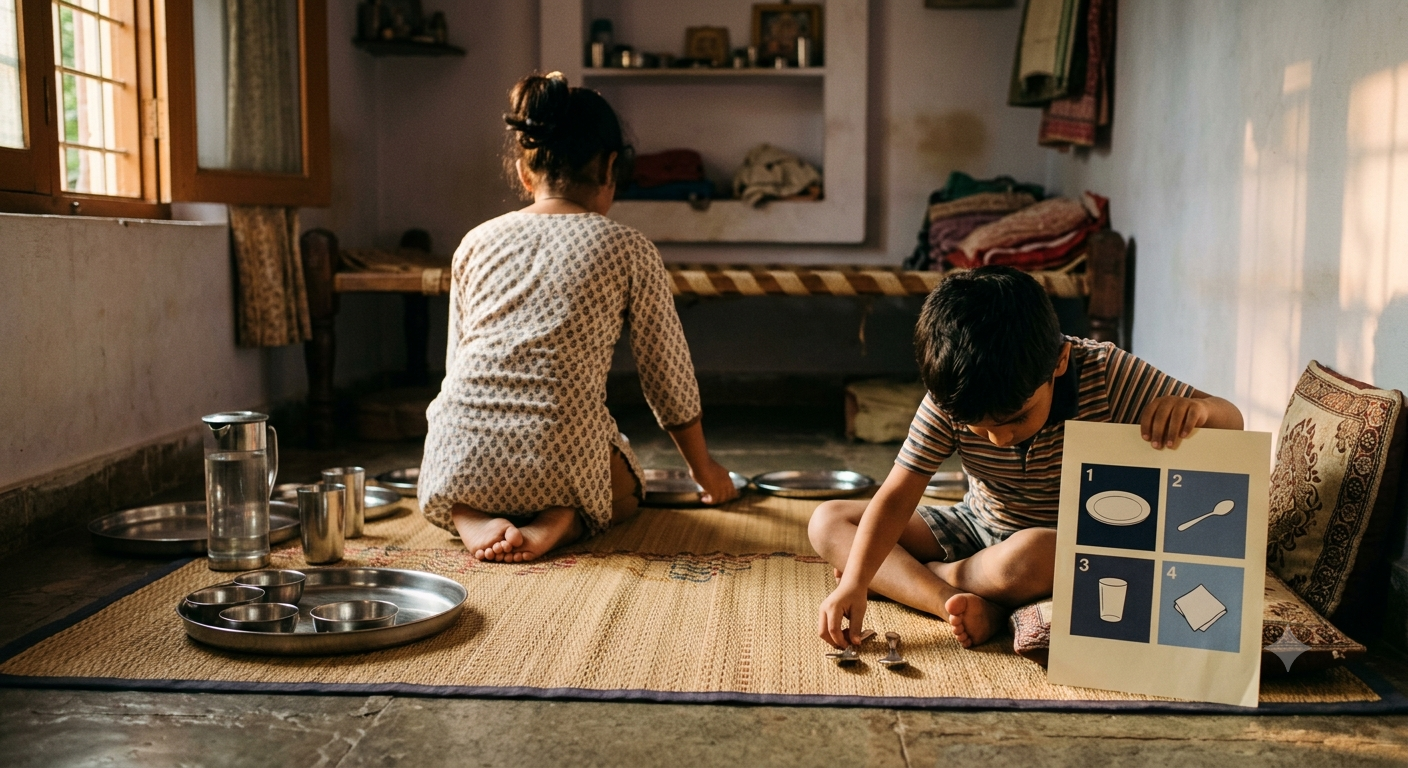
- Carrying a plate, laying the table
- Putting clothes in the wash, sorting laundry
- Packing the school bag from a picture list
Extending (roughly ages 9–12)
- Full personal hygiene routine independently
- Preparing a simple cold snack
- Sweeping, wiping a table, watering plants
- Road safety and travelling with an adult
- Paying at a shop with the next-rupee strategy
- Asking a safe person for help
Ages are a guide, not a rule. A twelve-year-old still building foundation skills is exactly where they should be. Start where your child is, teach the next step, and ignore the age labels entirely if they are unhelpful.
How to teach any skill on this list
- Break it into steps. Watch your child attempt it and write down every step you see.
- Choose a chaining direction. Backward chaining — where you do everything except the last step and let your child finish — works well for self-care, because every attempt ends in success.
- Prompt, then fade. Start with as much help as needed, then reduce along the ladder: physical, model, gesture, wait.
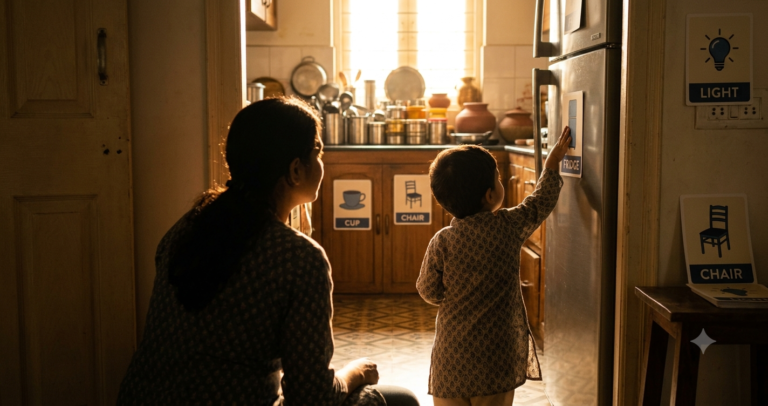
- Use a visual sequence placed where the skill happens.
- Practise at the natural time — dressing at dressing time, not as an exercise at 4pm.
Where worksheets fit
A worksheet cannot teach your child to button a shirt. What it can do is teach the sequence, so they know what comes next before their hands are involved — and give you a way to check understanding without standing in a bathroom. Teach the sequence on paper, practise it in the real place, then check it again on paper. That loop is what makes it stick.
Frequently asked questions
How many skills should we work on at once?
One or two. More than that and neither gets the consistent daily practice it needs.
My child can do it at home but not at their grandmother’s house.
That is a generalisation gap, and it is very common. Practise the same skill in different settings with different people.
Is it too late to start at twelve?
No. Daily living skills can be taught at any age, and older learners often progress faster because the skills are immediately relevant.
Able Marga’s Life Skills levels follow exactly this sequence, unit by unit, with a pre-test so you know where to begin.