
If you are starting home teaching from nothing, the temptation is to download fifty things. Four is better. These four cover most of what a beginning home programme needs, and each one earns its place.
What printables do I actually need to start teaching at home?
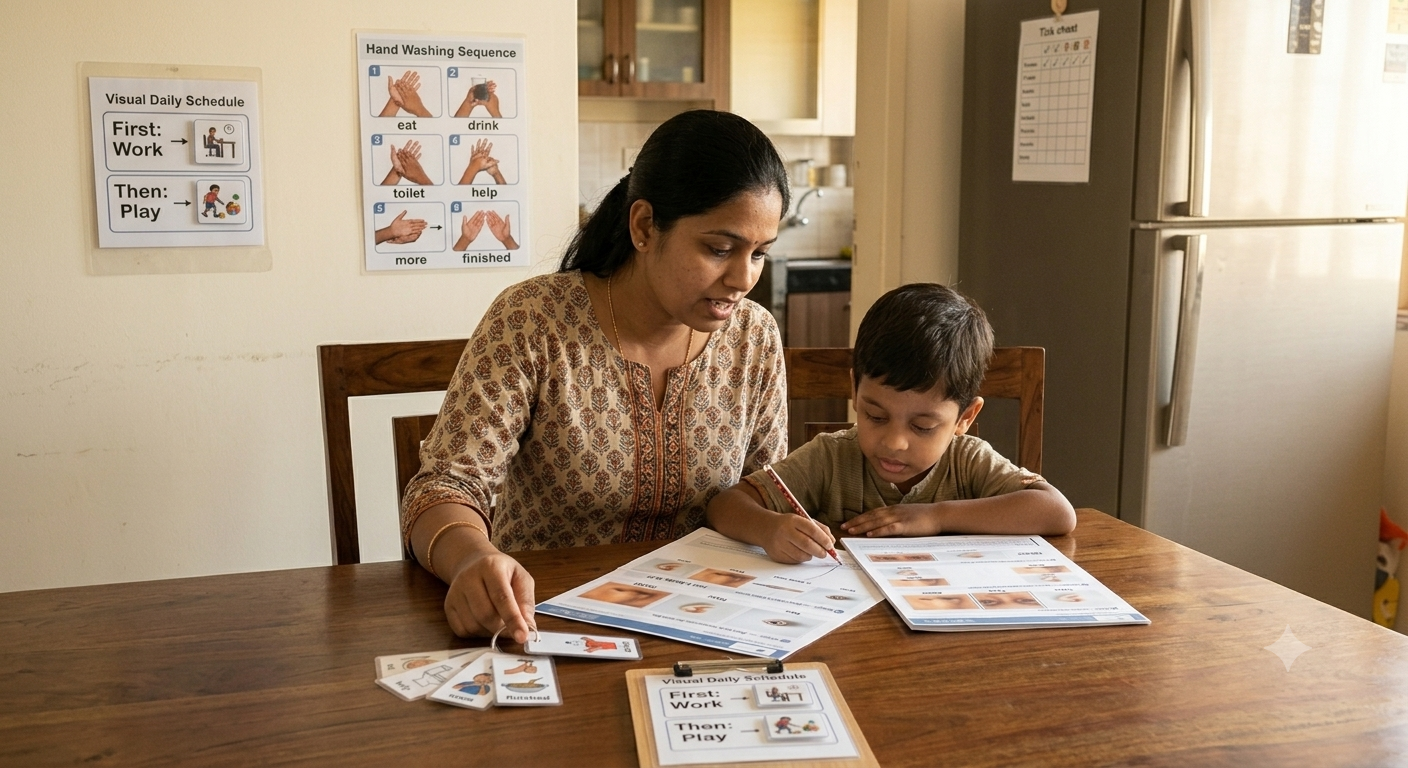
A useful starter set includes a visual daily schedule, a small set of communication picture cards, one step-by-step life skills sequence, and simple matching worksheets. Begin with these four and add subject-specific material only once your child is engaging consistently.
1. A visual daily schedule
The highest-value single sheet you will print. It makes the day predictable, cuts transition battles, and reduces how often you repeat yourself. Start with a first-then version — two pictures only — if your child is new to visuals.
Print it, put it where the routine happens, and use it every day rather than only on difficult ones.
2. Communication picture cards
A small set of six: eat, drink, toilet, help, more, finished. These give a child with limited or unclear speech a way to ask, which reduces frustration behaviour more reliably than almost any behaviour strategy.
Laminate them, put them on a ring or a fridge strip, and respond immediately every time your child uses one.
3. One life skills sequence
Choose the skill that would change your daily life most — usually hand washing, dressing or toileting. A three-to-six step picture sequence, stuck where the skill happens, teaches the order and gives your child something to check rather than asking you.
4. Matching worksheets
Matching is the foundation of almost all early learning — it underpins sorting, number sense, reading and categorisation. It is also easy to succeed at, which makes it a good first experience of a worksheet for a child who has previously refused paper.
Four sheets used daily beat forty used once. The most common home-teaching mistake is breadth. A small set, used consistently in the right places, produces visible change within weeks.
Setting up so it actually happens
- Print two copies of everything — one to use, one to replace the inevitable damaged sheet.
- Laminate anything going on a wall.
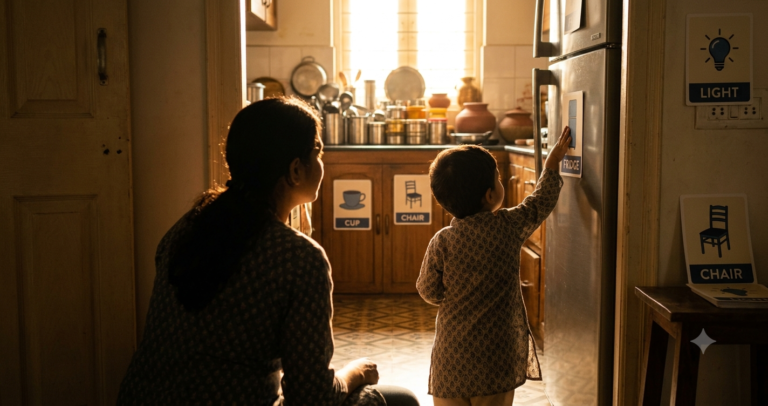
- Put each item where it is used, not in a folder.
- Pick fixed times — after breakfast, before dinner. Unscheduled teaching does not happen.
- Keep a tick sheet on the fridge so you can see progress.
When to add more
Add new material when your child is using the current set independently and you have run out of things to teach with it — not when you feel bored of it. Adults tire of repetition far sooner than children stop benefiting from it.
Frequently asked questions
Do I need a colour printer?
Colour helps for picture cards, but black and white works for schedules and sequences. Do not let printing costs stop you starting.
How long should a home session be?
Ten to fifteen minutes, two or three times a day, is more effective than one long session.
What if my child ignores the printables?
Check the level and the placement. Material that is too hard, or kept out of sight, gets ignored for predictable reasons.
Able Marga’s free unit includes all four of these built into one sequenced set, with adult guidance printed on each page. Free functional maths sample unit