Place by current ability
Use the Placement Guide to find the right starting level for each subject. A learner can be at different levels in Maths, English, Life Skills and Communication.
All four Level 1 subjects are live — structured printable PDFs for functional learning. Explore Level 1 →
Structured functional academics · Ages 2+
Able Marga is a structured, printable special needs curriculum covering Life Skills, Functional Maths, Functional English, and Social & Communication. Learners begin at their current ability—not their age—and progress through calm, practical activities one step at a time.
Level 1 is live in all four curriculum subjects.
How the curriculum works
Every subject follows the same clear teaching rhythm. Start from what the learner can do today, offer the right support, practise with familiar real-life examples, and check progress before moving forward.
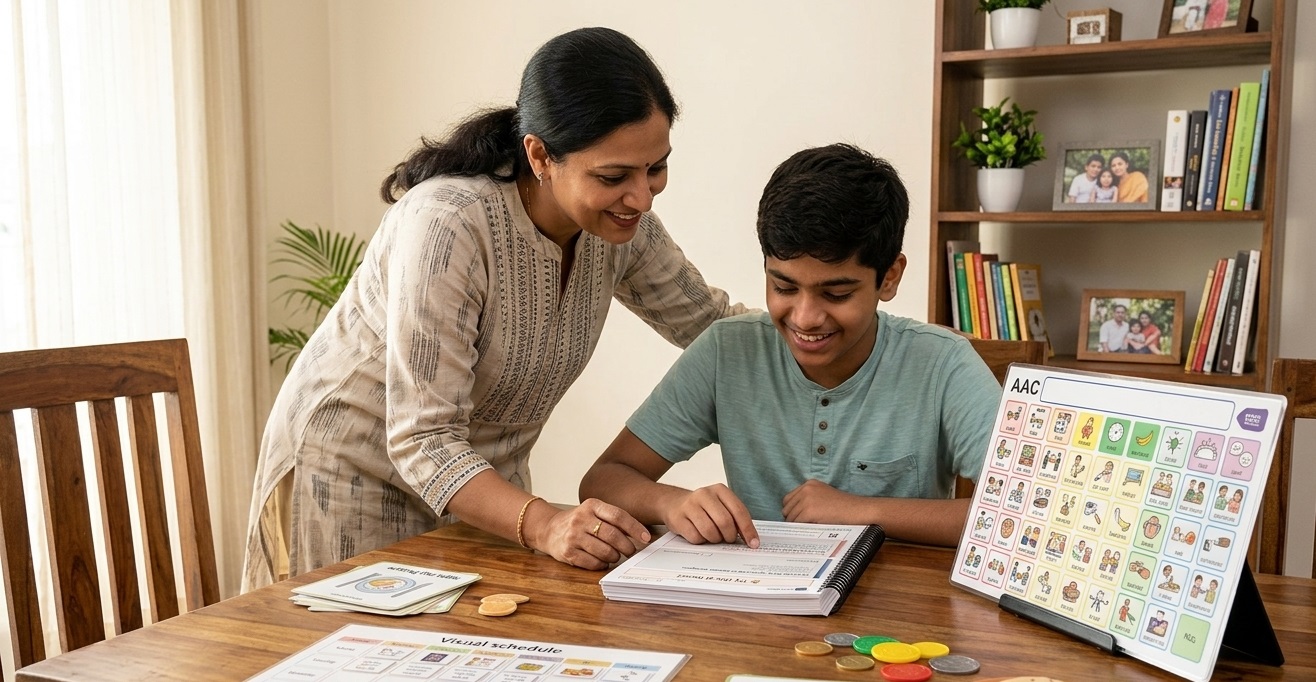
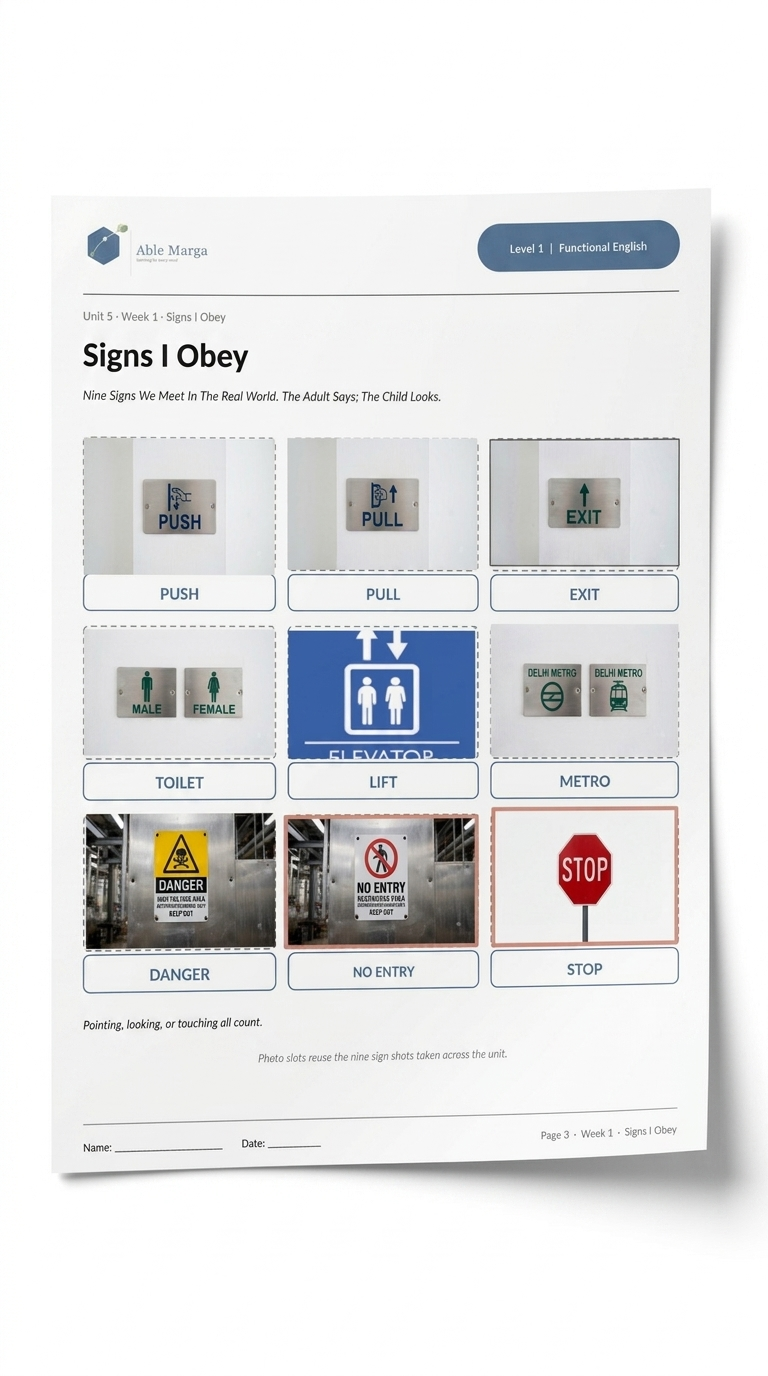 Ready to print. Easy to follow. Built for real life.
Use the Placement Guide to find the right starting level for each subject. A learner can be at different levels in Maths, English, Life Skills and Communication.
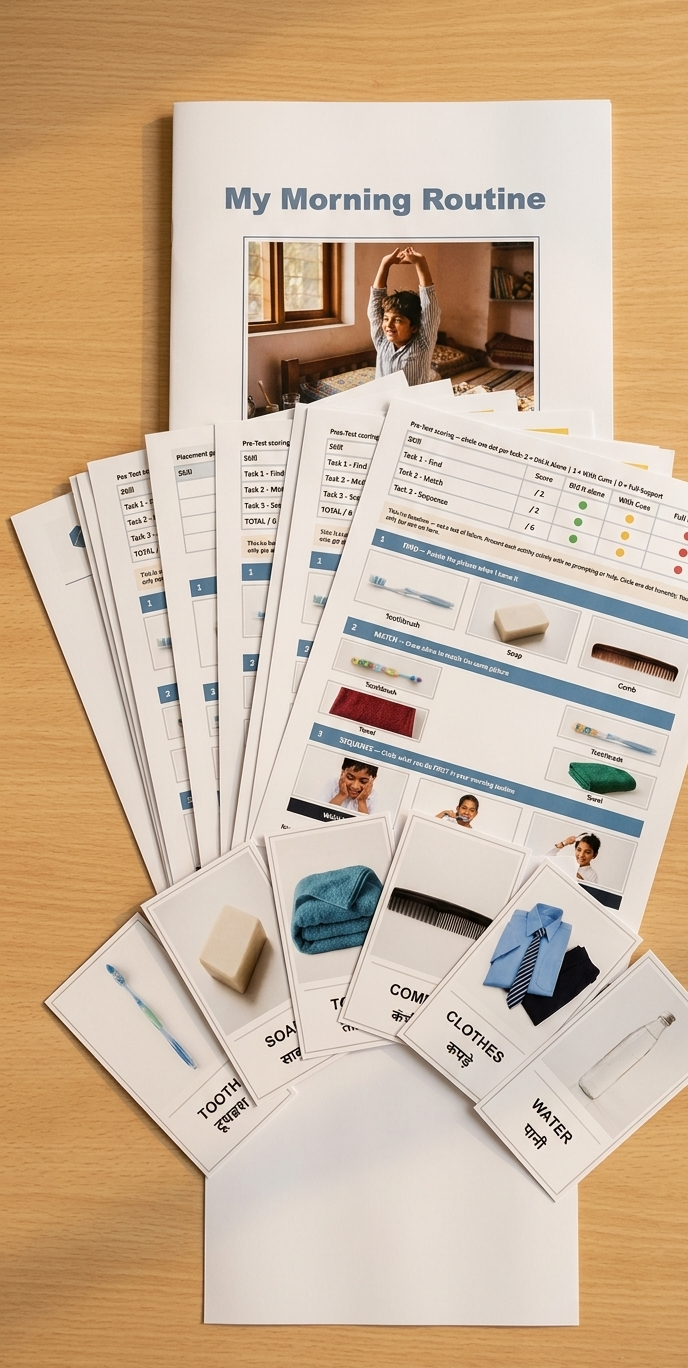
Each page focuses on one practical concept, keeping instructions and visuals calm enough for the learner to understand what to do.
Begin with the help the learner needs. Gradually reduce prompts as confidence grows and practise the same skill using everyday objects and situations.
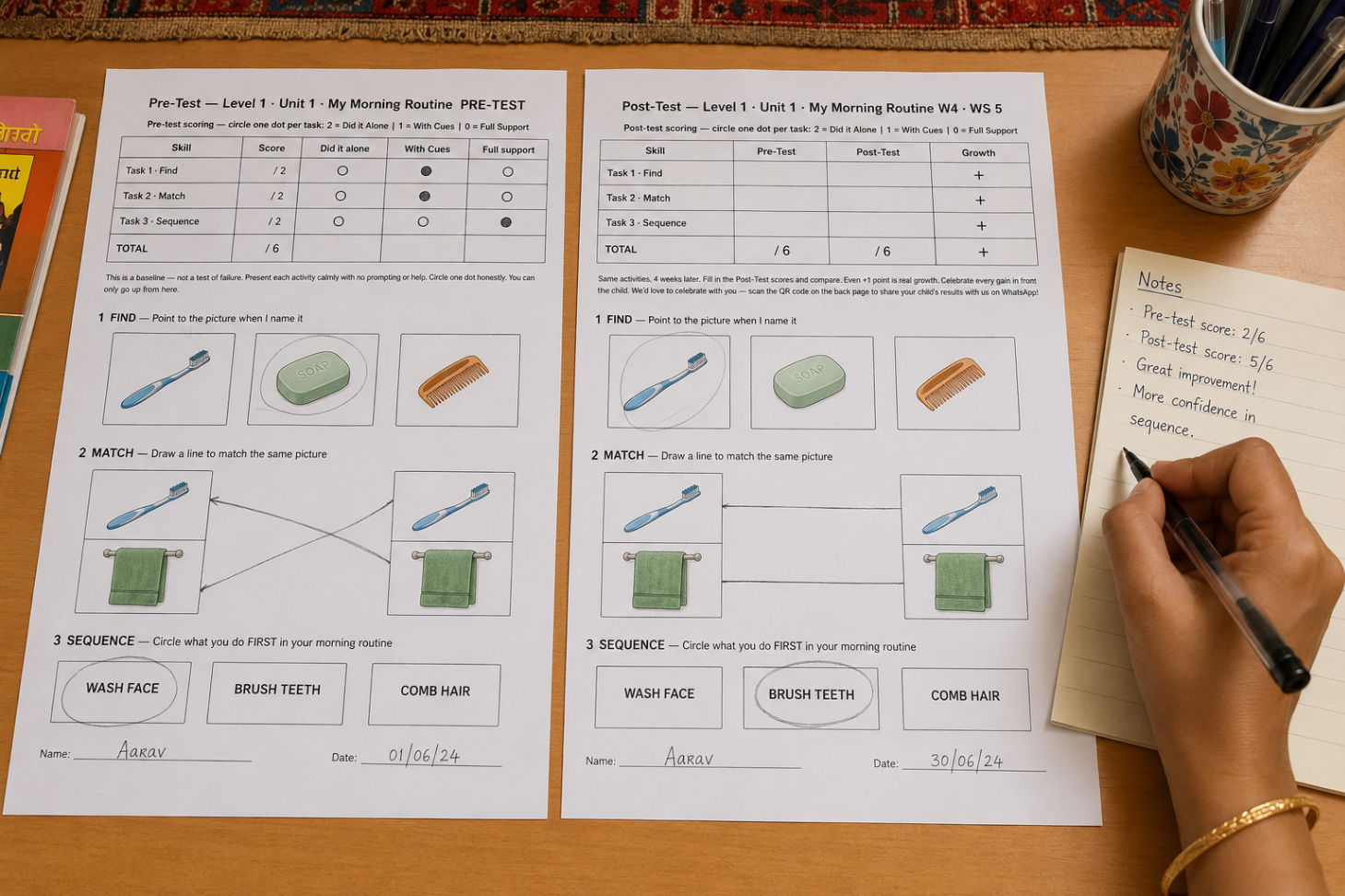
Built-in pre- and post-checks help parents and educators see what has changed, what needs more practice and when the learner is ready to continue.
Choose a single subject or build a balanced programme across all four.
Explore the complete curriculum
Each Level 1 subject contains 11 structured units and accepts the learner's most accessible response—pointing, matching, circling, placing a card, writing, speaking or using AAC.
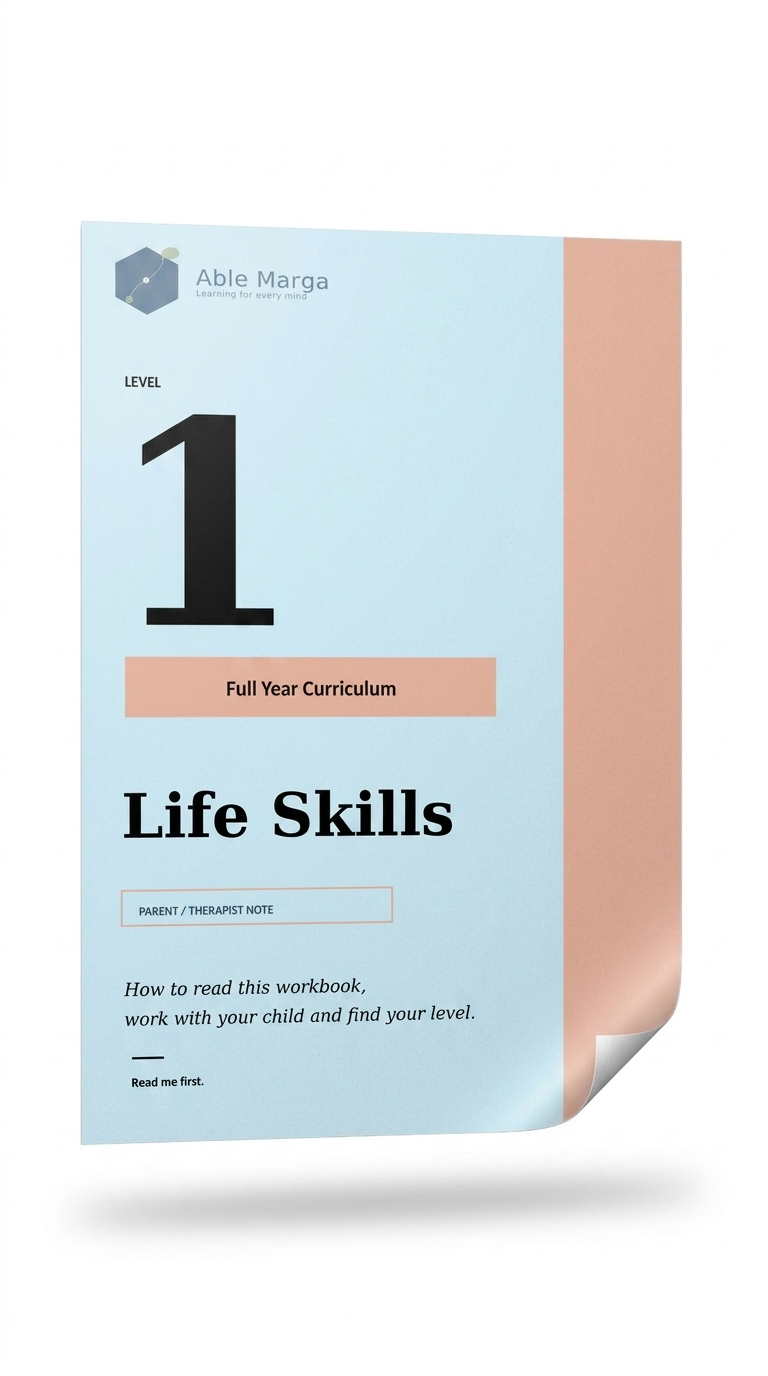 Level 1 live
Daily independence
Morning routines, body awareness, hygiene, meals, dressing, home responsibilities, asking for help and familiar community places.
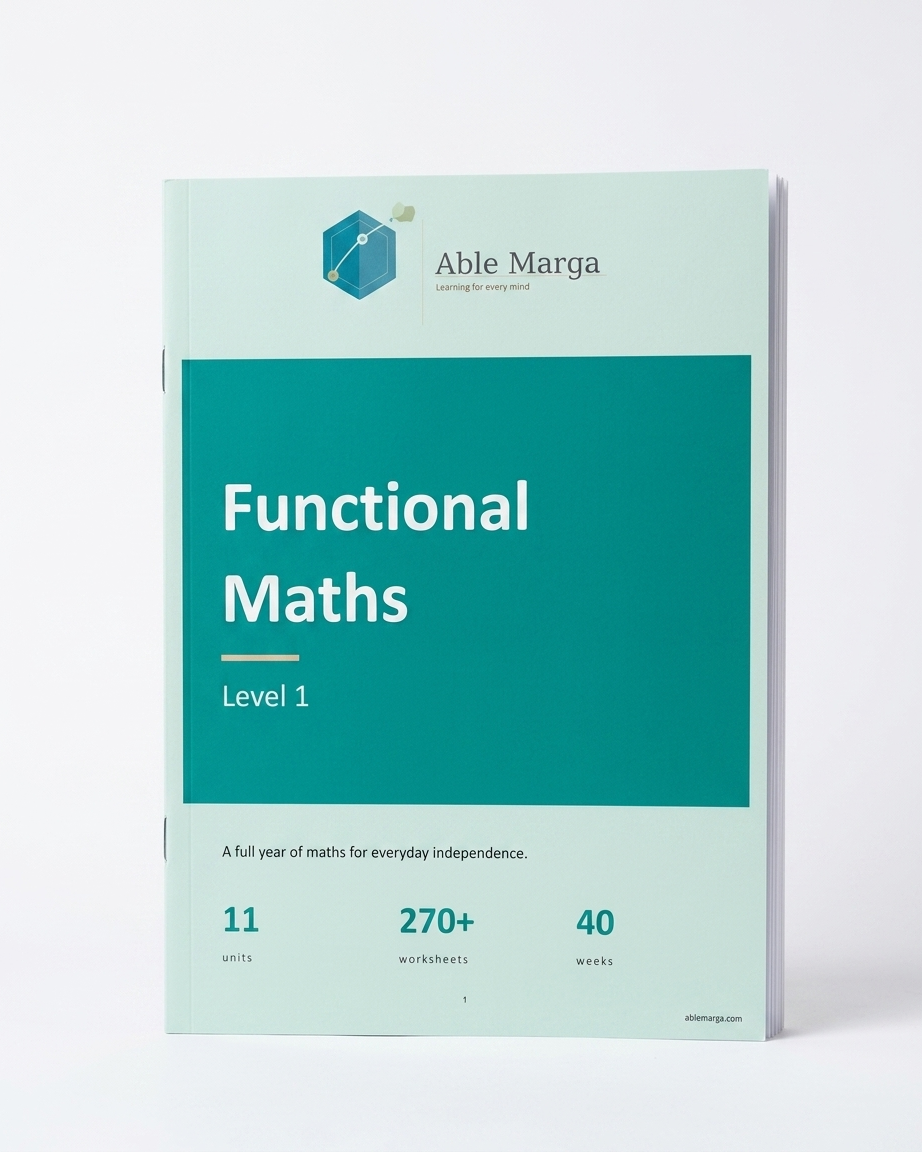
Level 1 liveUseful numeracy
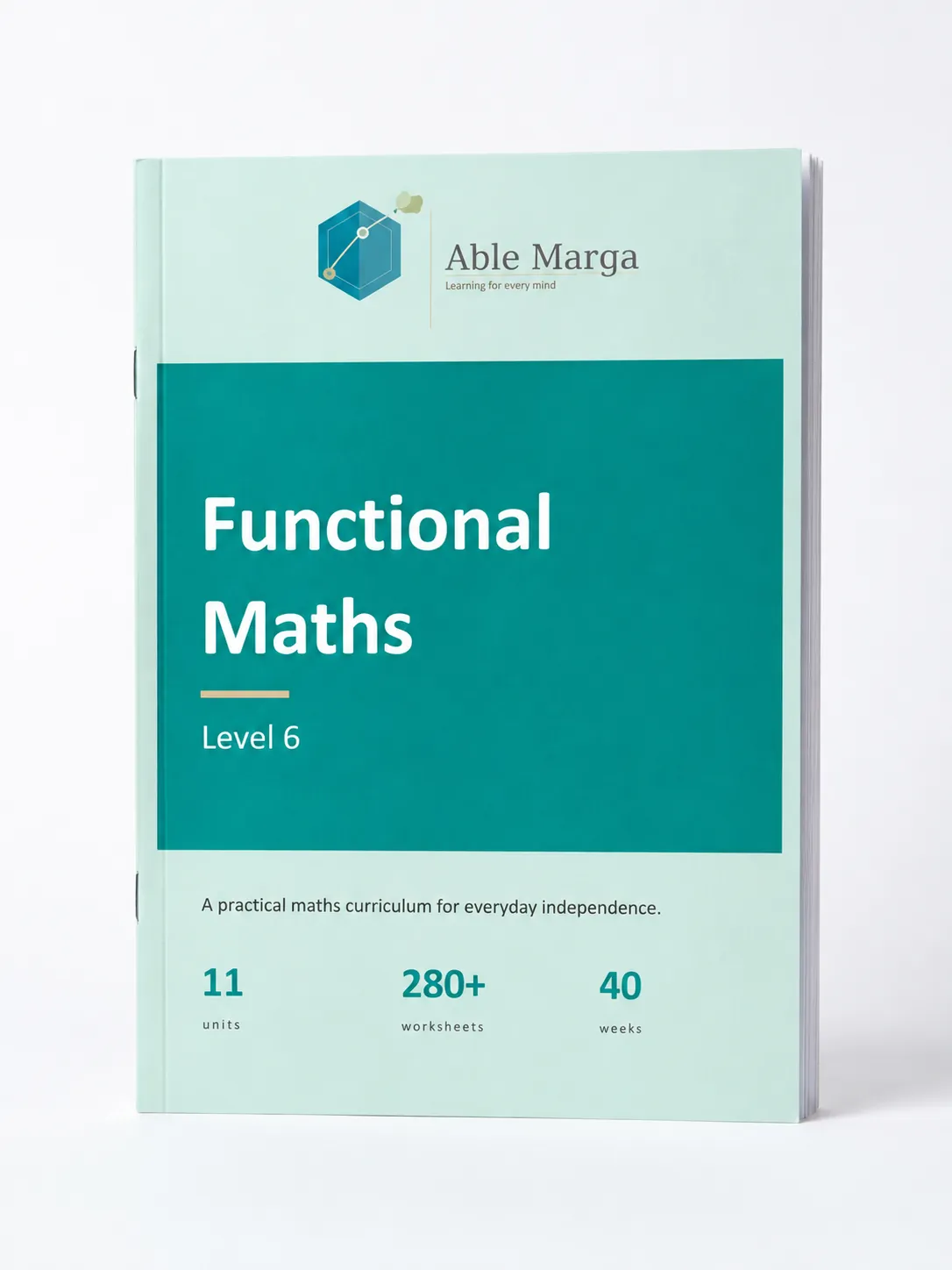
Matching and sorting, colours and size, counting real daily-use objects, recognising numbers, and identifying different Indian coins and notes.
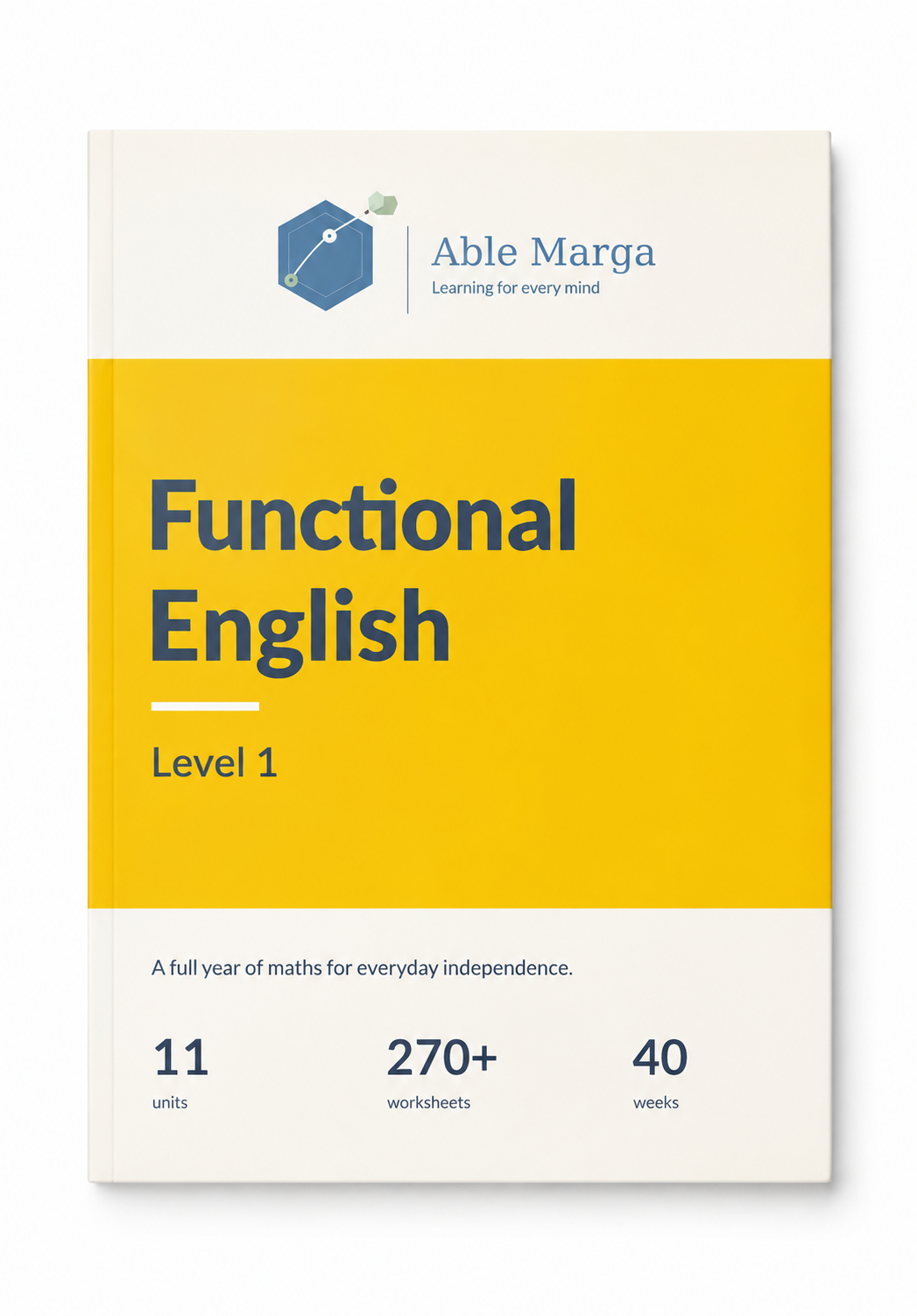 Level 1 live
Reading the world
The learner's name, first words, sight words, action words, everyday signs and symbols, family names, food labels and picture reading.
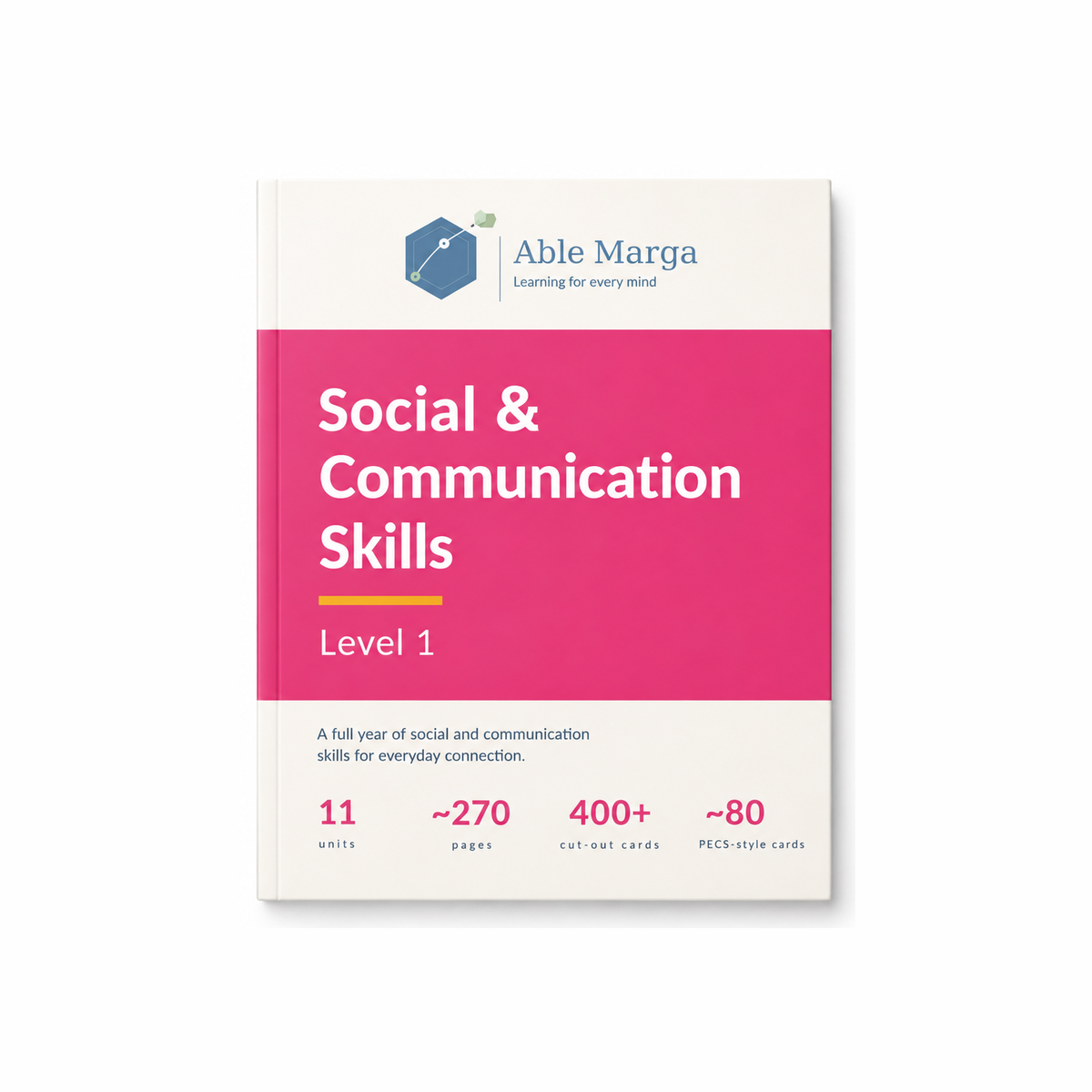 Level 1 live
Connection and expression
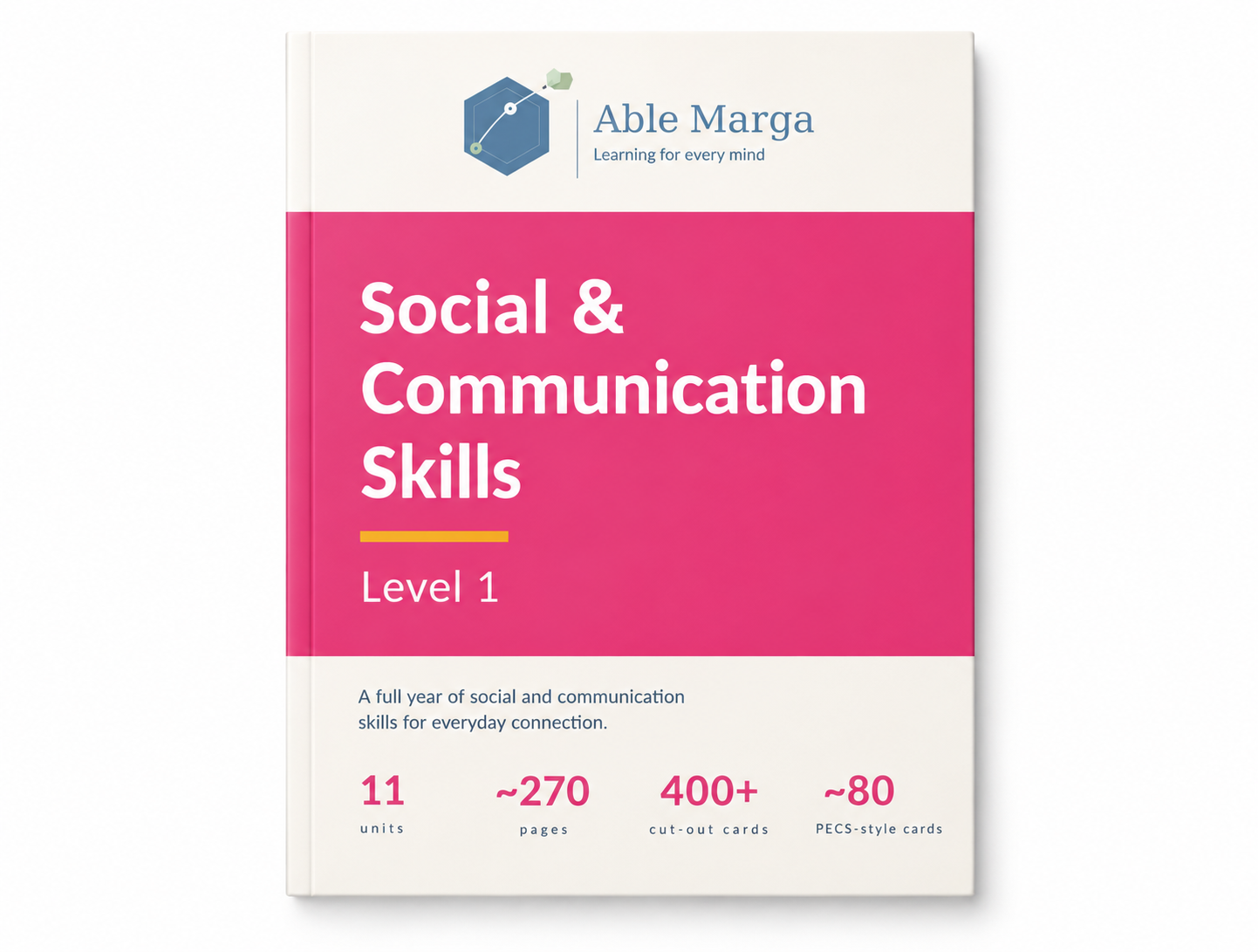
Greetings, requesting, yes or no choices, body and feeling states, emotions, action words, WH questions, sequencing and turn-taking.
 One subject · 11 sequenced units
Inside every Level 1 unit
The structure stays predictable so the learner can focus on the skill instead of decoding a new format every day. Parents, therapists and educators always know what comes next.
Introduce the idea with full support and make the first response achievable.
Repeat the skill with clear choices while gradually reducing prompts.
Generalise the same concept using familiar objects, places and routines.
Use a simple post-check to record progress and plan the next step.
Frequently asked questions
Start with the learner's present ability. You do not need teaching experience, reading, writing or spoken language to begin Level 1.
Functional academics teaches reading, maths and communication through skills used in everyday life—recognising signs, counting real objects, identifying coins and notes, following routines and asking for help. Able Marga organises these skills across four subjects and six ability-based levels.
Use the free Placement Guide and choose by what the learner can already do, not by age or school class. When unsure, begin one level lower to create an achievable and confident start.
Yes. Level 1 is available for Life Skills, Functional Maths, Functional English, and Social & Communication Skills. Each subject includes 11 structured units designed for a full year of consistent practice.
Yes. Level 1 accepts responses through pointing, matching, circling, placing a card, a gesture, a sign or an AAC device. Speech is not required, and the supporting adult can use the learner's most accessible communication method.
Yes. The curriculum is ready to print and each activity gives the supporting adult a clear next step. Parents can use one short activity a day at home, while therapists and educators can use the same structure in sessions or classrooms.
Yes, and this is common. A learner may need Foundation work in Functional English but be ready for Early Routines in Life Skills. Place and review every subject independently.
No. Download a free curriculum sample to see the visual format, adult guidance and activity structure before choosing a complete subject.