Skip to content

Level 1 worksheet sets are live — instant PDF download. New subjects & levels dropping soon. Shop Level 1 →

Need help choosing?
Communication without a speech requirement

Printable activities for nonverbal children and AAC users

Able Marga offers printable, AAC-friendly activities that let nonverbal children show understanding without speech or handwriting. Learners can answer by pointing, eye gaze, matching or placing a picture card.

Adults can model language using an AAC device, communication board or PECS system while practising Life Skills, Functional Maths and Functional English.

Ways a learner can respond Speech is not required
Point
Eye gaze
Match
Place a card
Use AAC
No speech required Receptive-language friendly Instant printable PDF
Adult guiding a child to point at an Able Marga visual matching worksheet
Understanding can be shown in many ways A spoken answer is only one possible response.
Communication options Model and respond
Presume competence Offer accessible ways to show an answer.
Communication access first

Why Able Marga works for nonverbal learners and AAC users

Activities separate understanding from speech. A learner can show what they know using an accessible response while an adult models useful words and messages through their existing communication system.

Receptive-first learning

Understanding can come before spoken expression

No speech test
1
Adult shows one clear task

Present a picture, object, choice or short instruction.

2
Learner processes the meaning

Give enough time without immediately repeating or replacing the instruction.

3
Learner answers accessibly

Accept pointing, eye gaze, matching, card placement or an AAC selection.

4
Adult models useful language

Model the related word or message on the learner’s communication system without demanding imitation.

The goal is meaningful participation: the learner should have a reliable way to understand, answer, request, refuse and ask for help.

No-speech required

Speech is never the only way to answer

Activities do not depend on spoken words, sentence repetition or oral naming before the learner can participate.

Accessible responses

Pointing, eye gaze and matching are accepted

The learner can use the most reliable response available rather than being marked wrong because they cannot speak or write.

AAC compatible

Pairs with devices, boards and picture systems

Adults can model relevant vocabulary on an AAC device, communication board or PECS-based system during the activity.

Clear visual tasks

One concept reduces language overload

Short instructions and uncluttered pages make it easier to focus on the meaning of the task and the available response choices.

Communication rights

Requests and refusals are meaningful responses

Communication includes choosing, requesting help, asking for more, saying no and indicating that a break is needed.

AAC modelling during worksheets

Model the word without requiring the learner to copy you

HELP Model

Select “help” on AAC.

WAIT Pause

Allow processing time.

ACCEPT Respond

Accept an accessible answer.

Explore the teaching method
Recommended starting points

Begin with a message that matters to the learner

Start with a useful communication purpose—asking for help, recognising familiar words or making a clear choice. Accept the learner’s most reliable response rather than requiring speech.

Choose the right functional level
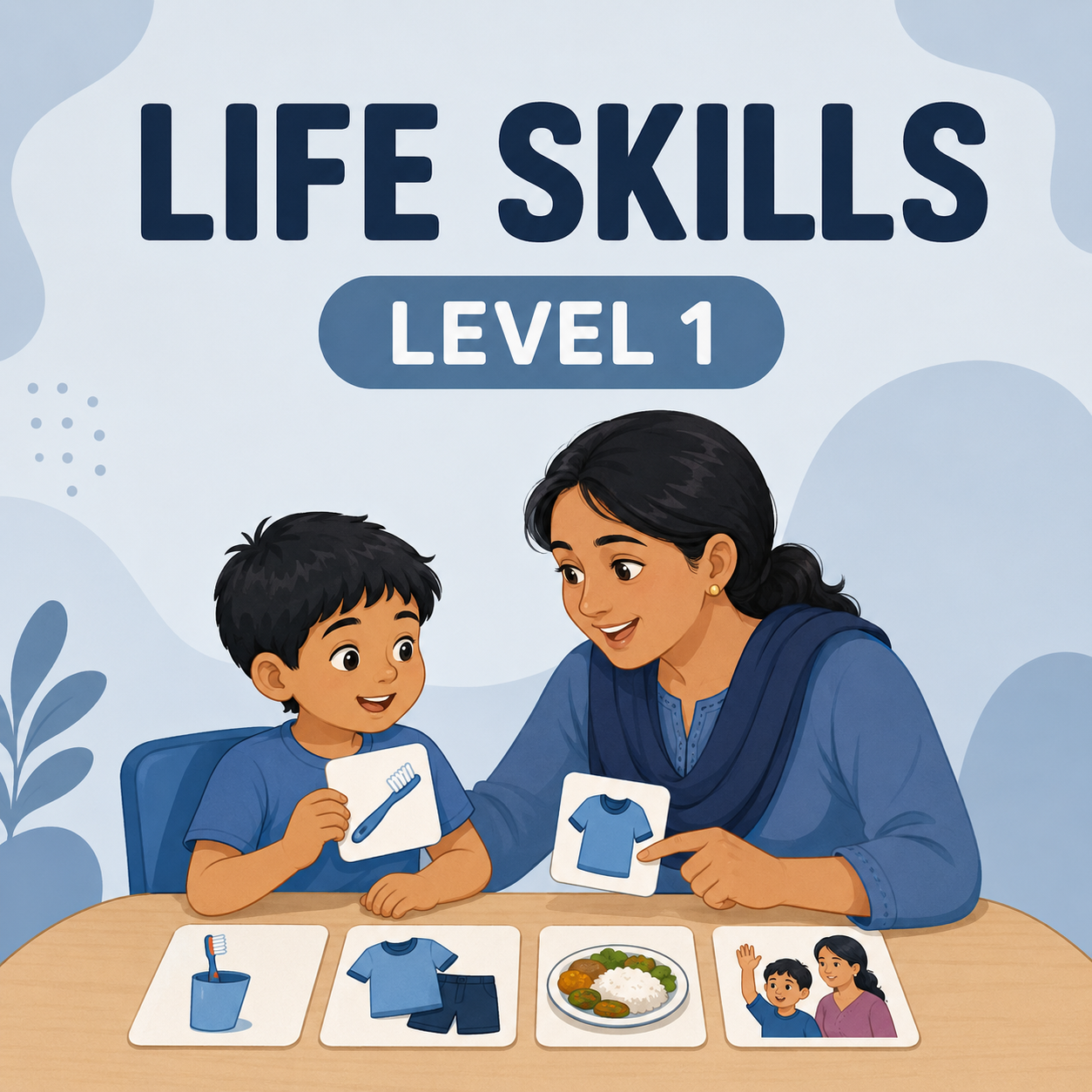
Able Marga Life Skills Level 1 printable curriculum Highest-priority message
01
Safety and self-advocacy Life Skills Level 1

Start with asking for help

Teach the learner to recognise a Safe Person and communicate when support is needed. Model the message “help” using their AAC device, board, picture card or established gesture.

Possible responses
Point to “help” Give a help card Select help on AAC

A reliable way to ask for help can support safety across home, school and community settings.
Explore Life Skills
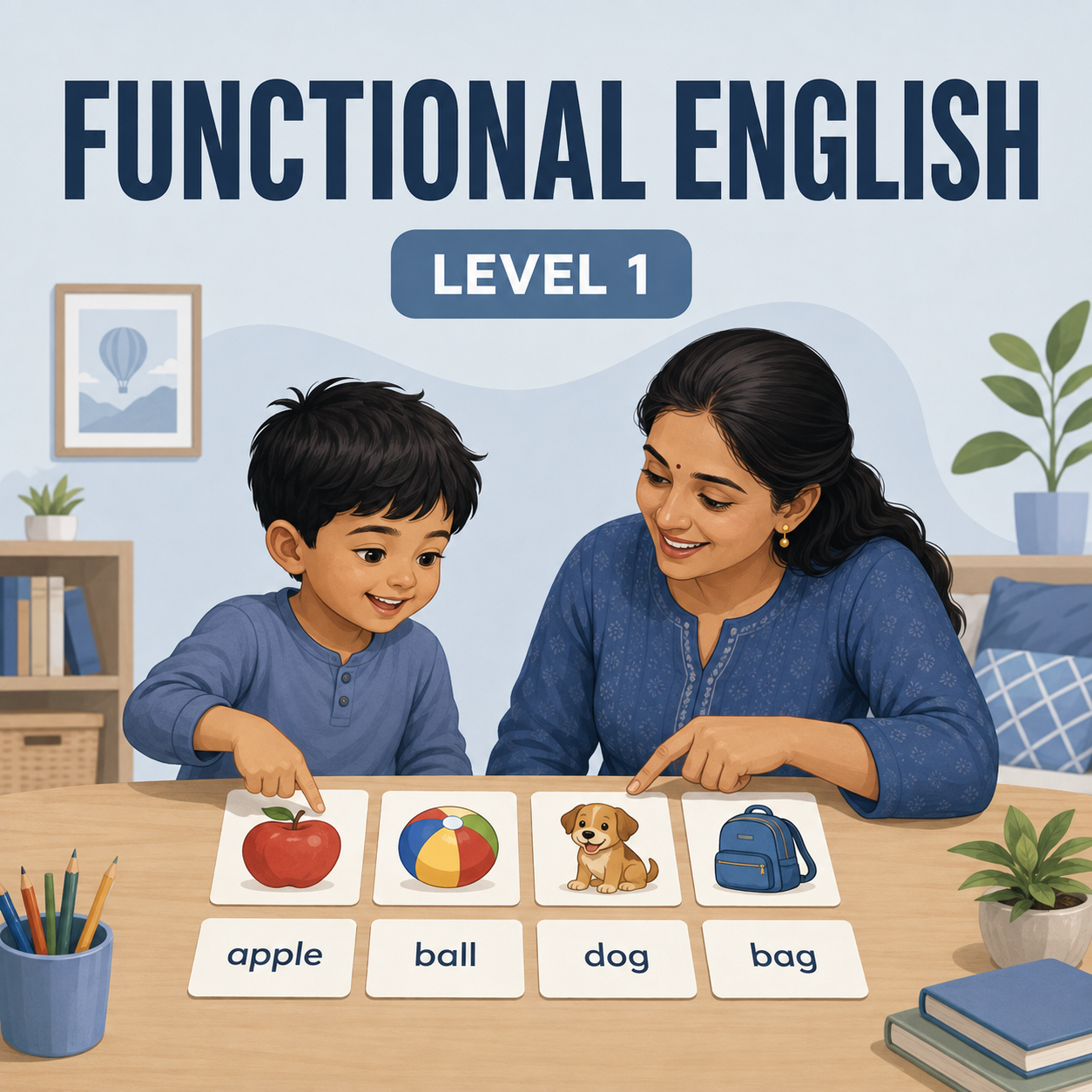
Able Marga Functional English Level 1 printable curriculum Picture-based language
02
Recognition and meaning Functional English Level 1

Build recognition using familiar pictures

Begin with pictures of familiar people, objects and useful words. The learner can match or point while the adult models the related vocabulary on their communication system.

Possible responses
Match two pictures Look toward a choice Select an AAC symbol

Picture recognition supports shared understanding without requiring the learner to name or write the word.
Explore Functional English
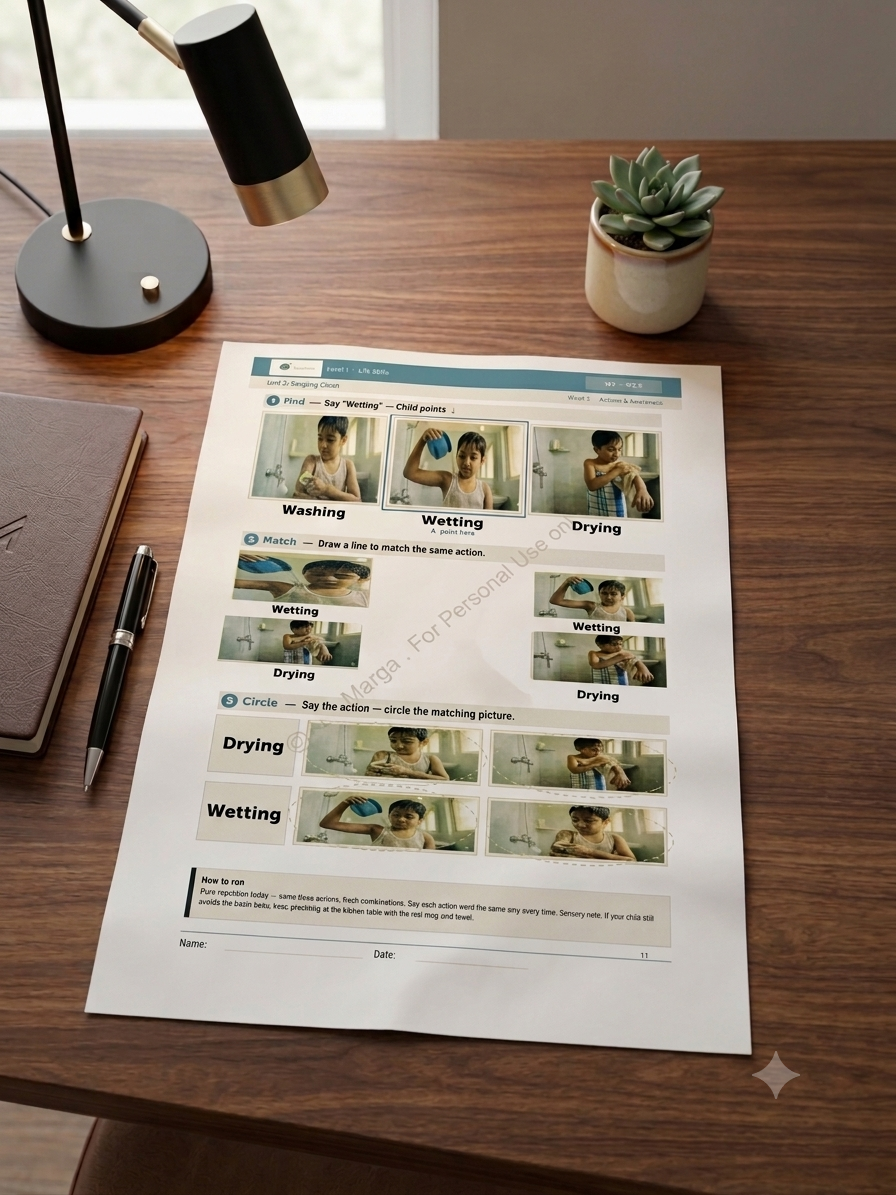
Able Marga visual life skills printable worksheet Free to try
03
Identify access needs Free starter worksheet

Find the learner’s easiest response method

Try one activity and observe whether the learner responds most clearly by pointing, eye gaze, matching, placing a card or selecting a symbol on their communication system.

Observe
Response accuracy Motor access Prompt level needed

Use the most reliable response consistently before expecting a more physically or linguistically demanding answer.

Get a free worksheet
AAC modelling reminder

Model language without turning it into a test

Select the relevant symbol while you speak, then continue the activity. The learner does not need to immediately copy your selection to benefit from seeing their communication system used.

Read the teaching guide
What you receive

Printable activities that work alongside the learner’s communication system

A print-ready PDF delivered instantly to your account and email. Print at home, in sessions or in class, as many times as you need for your own child or students. INR pricing; download once, use anywhere in the world.

Use with the learner’s existing AAC

The printable worksheets do not replace an AAC device, communication board, PECS book or individual communication plan. Use them together and model relevant vocabulary during the task.

Inside the digital resource

Flexible ways to teach and respond

PDF

Structured printable pages

One-concept activities with a clear task and manageable visual choices.

Visual matching materials

Use pointing, matching and picture-card placement instead of spoken or written answers.

Adult prompts and guidance

Follow simple support notes while accepting the learner’s accessible response.

Flexible repeat printing

Reprint selected pages to practise the same message, choice or response again.

Compatible response options
Pointing Eye gaze Matching Card placement AAC selection
Digital delivery

From checkout to communication practice

1 Choose a resource

Select a subject and functional level.

2 Complete checkout

Purchase through the secure checkout.

3 Receive your PDF

Access it through your account and email.

4 Print and model

Use it alongside the learner’s AAC system.

Personal and classroom use: Reprint for your own child or your own students. Please do not share or redistribute the original PDF outside your home or class.

Nonverbal and AAC activities FAQ

Supporting understanding without requiring speech

Practical answers about choosing worksheets, accepting accessible responses and using Able Marga activities alongside AAC devices, communication boards and picture systems.

01

What are the best worksheets for a nonverbal child?

Start with activities that offer clear visual choices and a practical communication purpose. Asking for help, identifying familiar people, matching pictures and sorting objects are strong starting points. Choose pages that allow pointing, eye gaze, matching or card placement rather than depending on spoken or written answers.

02

Do these work with an AAC device or PECS?

Yes. Able Marga worksheets can be used alongside an AAC device, communication board or PECS-based system. Model the relevant word or message while presenting the activity, then accept the learner’s established response. Continue following the individual AAC plan recommended by their speech-language or communication team.

1 Show the worksheet
2 Model on AAC
3 Accept the response
03

How can a nonverbal child show an answer?

A learner may answer by pointing, looking toward a choice, matching two pictures, placing or handing over a card, using an established gesture or selecting a symbol on AAC. Use the most reliable accessible response and adapt page position, choice size and motor demands when needed.

Point Eye gaze Match Place a card Gesture AAC selection
Communication can begin without speech

Choose one useful message and make the response accessible

Start with asking for help, recognising familiar pictures or a free activity that helps you identify the learner’s most reliable way to answer.

No speech required Point, match or use AAC Instant printable PDF
Choose a starting goal

What would you like to practise?

Level 1

Keep the learner’s AAC device, board or picture system available throughout the activity.

Unsure which resource or functional level should come first?