

If you have ever tried to teach a child with autism to brush their teeth, make a sandwich, or get dressed — and felt like it was impossible — forward chaining might be the method that changes everything. It is not complicated. It is not expensive. And it works.
What Is Forward Chaining?
Forward chaining is a teaching method that breaks a complex skill into individual steps and teaches them in order, from first to last. You teach Step 1 first. Once the child can do Step 1 independently, you add Step 2. Then Step 3. Building the full skill one link at a time — which is where the term “chaining” comes from.
Why Forward Chaining Works for Children with Autism
Children with autism often struggle with multi-step tasks because they cannot hold the whole sequence in mind at once. Forward chaining solves this by focusing attention on one step at a time, building mastery before moving to the next.
It also uses errorless learning — rather than letting the child struggle and fail, you provide just enough support (prompting) so they succeed at each step, and gradually reduce that support as their skill grows. This preserves motivation and builds genuine confidence.
A Simple Example: Teaching Handwashing
A task analysis of handwashing might include six steps:
- Turn on the tap
- Wet hands
- Apply soap
- Rub hands together
- Rinse hands
- Dry hands
Using forward chaining, teach Step 1 first. Once your child can independently turn on the tap every time without prompting, add Step 2. You continue supporting Steps 3–6 until Step 2 is mastered. Then add Step 3. And so on.
How Worksheets Support Forward Chaining
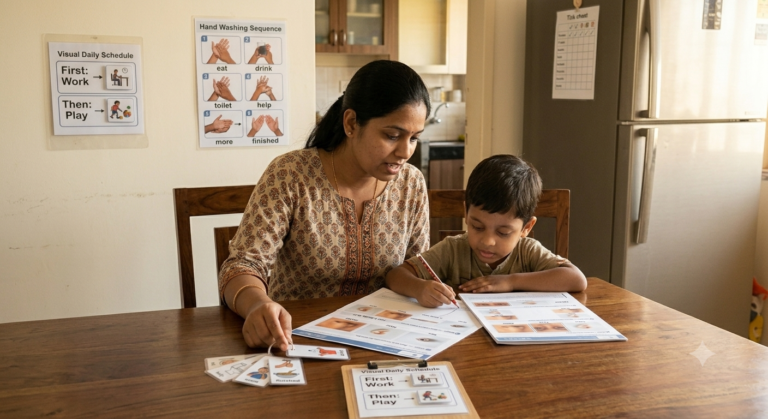
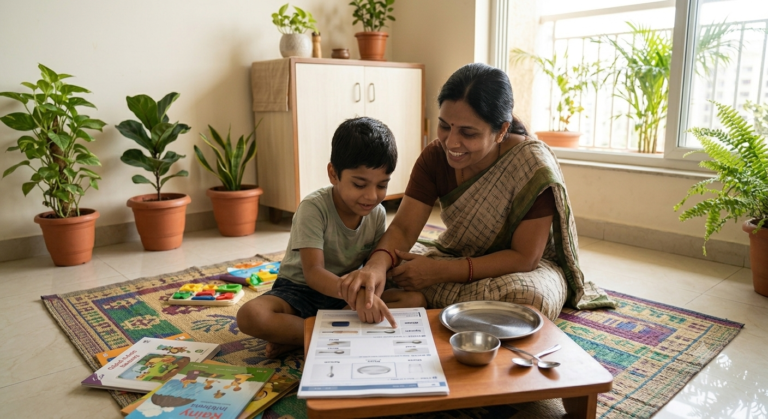
A well-designed life skills worksheet shows the task in steps, with picture support and space for tracking which steps the child has mastered. This is exactly how Able Marga worksheets are structured — each daily worksheet focuses on building the next step in the chain, while the pre-test and post-test document exactly which steps have been achieved independently.
The guidance notes on every page tell you how many prompts to use, how to fade them over time, and what to do if your child gets stuck at a particular step.
What Success Looks Like Over Time
Forward chaining takes patience. The first few weeks, you are doing most of the work. By the end of a month, you are doing less. By the end of the unit, your child may be completing the full skill with minimal or no prompts. That is independence — built one step at a time.
Start teaching life skills using forward chaining with the Able Marga curriculum. Download the free Unit 1 at ablemarga.com.